
Vintage Brass Weights
Vintage brass weights are utilitarian metal objects that bring functional industrial charm to a desk or shelf.
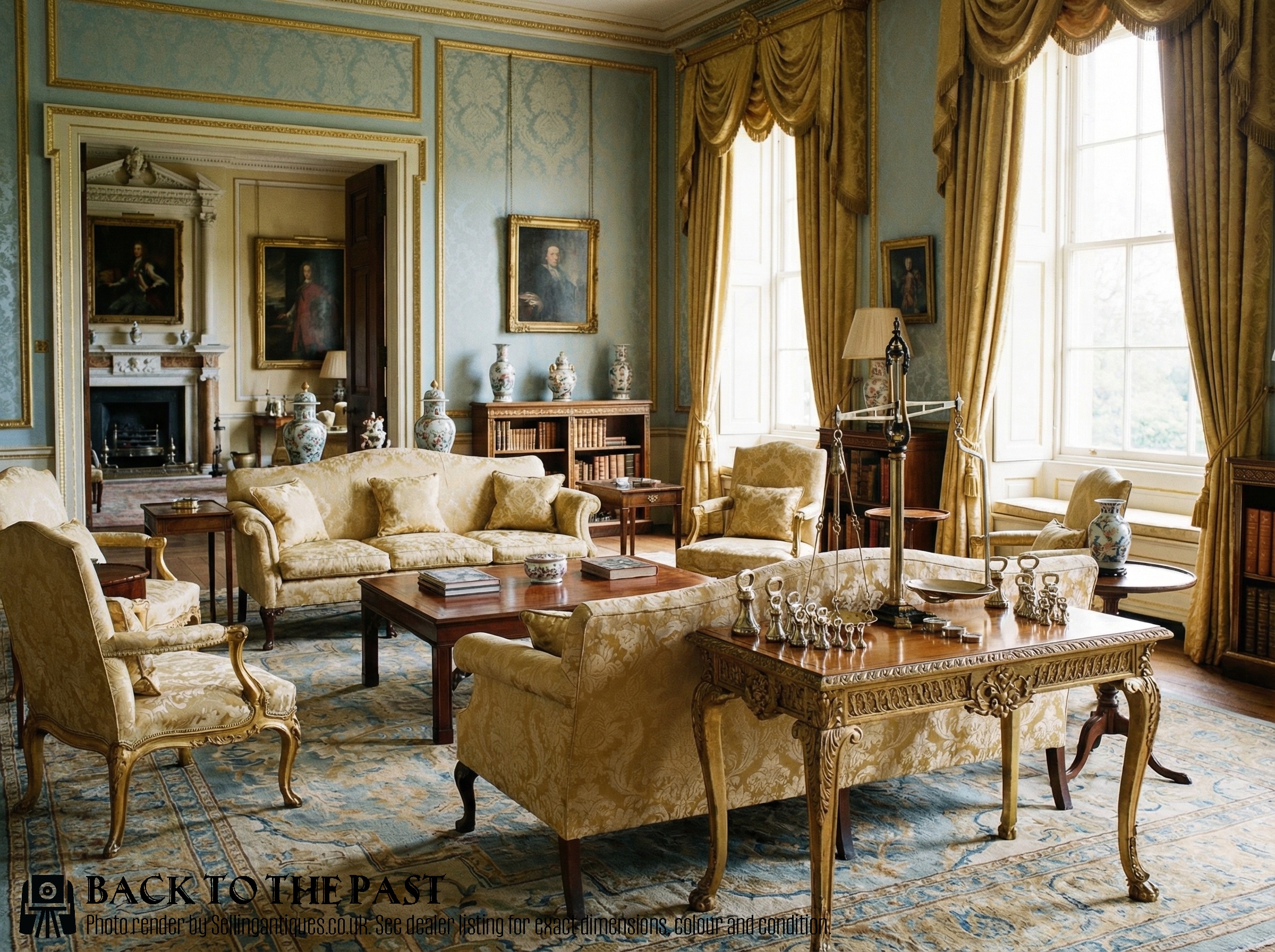
Vintage Brass Weights
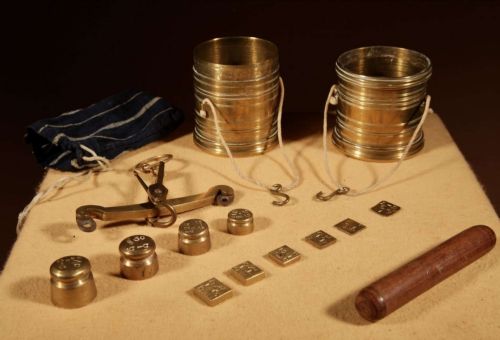
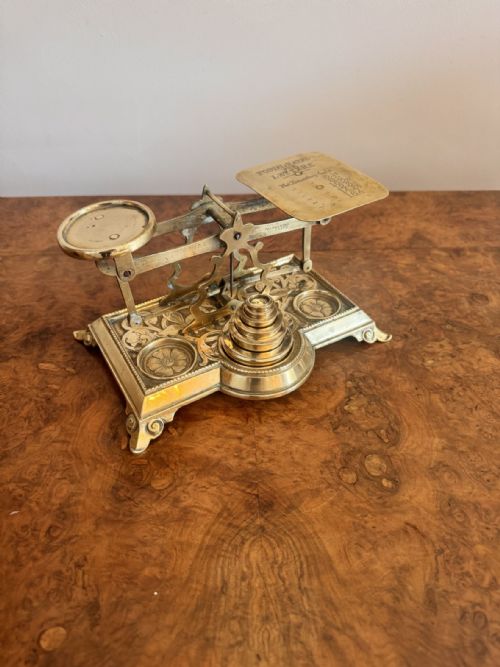
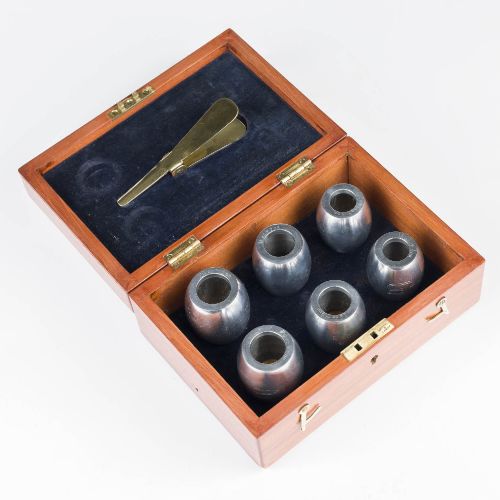
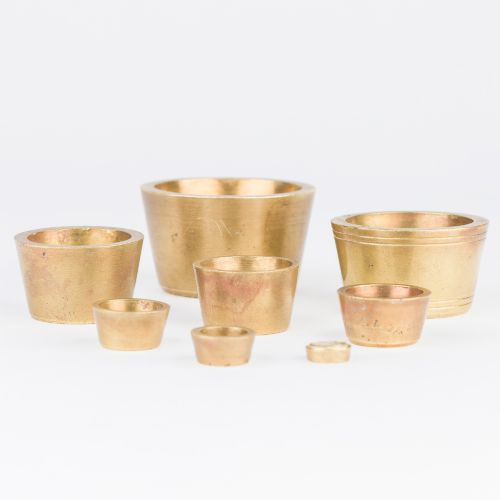
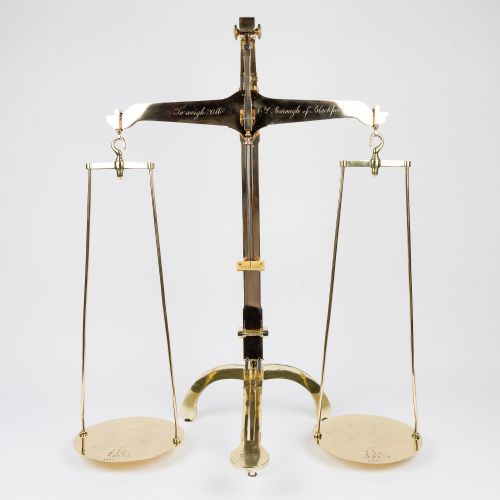
Vintage brass weights include sets used for postal measurement, apothecary balances, and official standard systems, appearing in Victorian, Edwardian, and nineteenth-century forms. These pieces often arrive complete in fitted wooden boxes or on brass beams, reflecting their original commercial or domestic function.
Buyers will encounter individual desk pieces alongside matched sets originating from makers associated with scales and weighing apparatus. The material shows the distinct wear of working instruments, carrying the marks of past measurement and handling.
Materials and construction
These items rely principally on cast brass, often paired with mahogany, oak, or walnut bases and fitted wooden storage compartments. The production involved durable metal casting combined with precision finishing to ensure accurate mass.
Makers utilised iron and steel for specific internal mechanisms or reinforcement within scale sets, while wooden boxes featured dovetailed joints and turned brass knobs.
Some tiny apothecary weights are so small they require tweezers to lift them without losing them down the sofa.
Assessing quality and completeness
Quality rests upon the crispness of the cast details, the legibility of stamped maker marks or official verification stamps, and whether a complete matched set remains intact within its original housing. Pieces produced by noted scale makers display superior finishing and more refined proportion than standard utility items.
The survival of original fitted wooden cases and the presence of matching adjustment cavities within sets separate standard examples from finer collector pieces.
De Grave Short And Co·S Mordan London·W And T Avery·Day And Millward
The Vintage Brass Weights Glossary
- Troy ounce
- A system of units of mass used for precious metals. These specific weights appear frequently in apothecary and assay contexts.
- Avoirdupois
- A system of weights based on a pound of sixteen ounces. This scale served for general commercial goods and postal use.
- Beam scales
- A weighing instrument comprising a horizontal lever with arms of equal length. Weights sit on one pan to measure an object on the other.
- Postal scales
- Desk apparatus designed for weighing letters and parcels. They frequently incorporate graduated brass weights on dedicated platforms.
Vintage Brass Weights: Frequently Asked Questions
How do I clean antique brass?
Dust gently with a soft dry cloth to preserve the aged surface. Avoid harsh chemical polishes that remove historic patination.
Leaving the natural oxidation intact maintains the character accumulated over decades of use.
Were these used in homes?
Many sets served in domestic hallways for weighing correspondence before postage rates were standardised. Others remained in shops and surgeries for daily trade.
Postal varieties sat upon writing desks alongside inkstands and stationery.
How are complete sets identified?
A complete set usually fits snugly into a dedicated wooden block with graduated recesses for each piece. Stamped numbers or verification marks often correspond across the components.
Missing elements leave empty slots within the original storage box.
What periods do these date from?
The available pieces predominantly date from the Victorian and Edwardian eras, spanning the nineteenth and early twentieth centuries. Official verification stamps often provide exact dates of service.
Earlier eighteenth-century examples remain scarce and typically relate to scientific or trade use.