


Vintage Brass Twin Bedstead
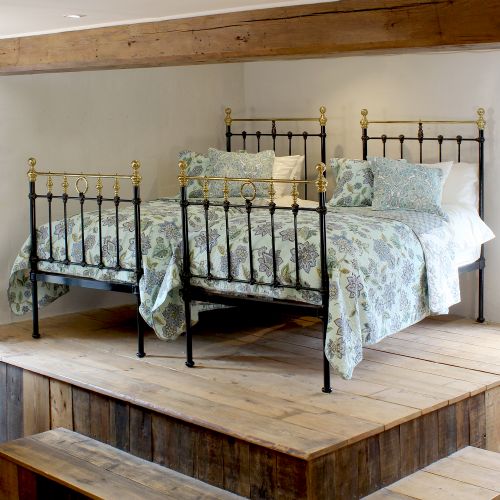
A vintage brass twin bedstead brings warm metallic weight and solid Victorian or Edwardian architecture straight into a modern bedroom.
Vintage Brass Twin Bedstead
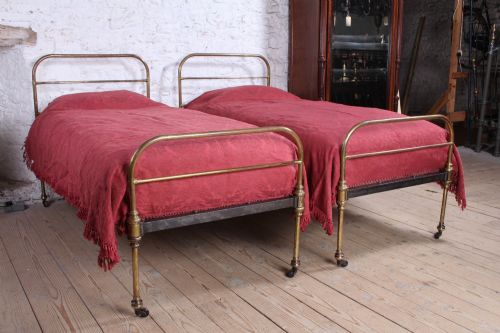
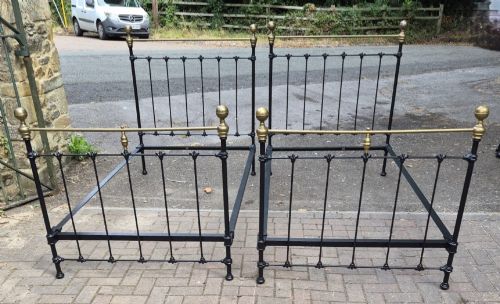
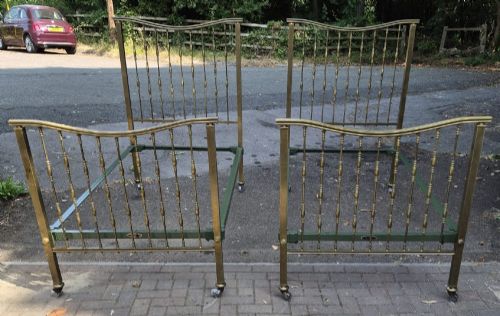
A vintage brass twin bedstead offers a robust single sleeping frame, often constructed with sturdy iron structural cores clad in polished or patinated brass components. These pieces frequently appear in pairs designed to be joined together or used separately, reflecting historical domestic requirements for flexible chamber arrangements.
The materials span combinations of brass, cast iron, wrought iron, and occasional walnut accents, anchoring the form in late nineteenth and early twentieth century manufacturing traditions. Victorian and Edwardian examples dominate the selection, showing distinct stylistic shifts from ornate cast decoration to simpler, more restrained silhouettes.
Makers such as Hoskins & Sewell and R W Winfield represent the industrial output of the period, alongside Portuguese traditional variants from around nineteen hundred. Buyers searching this phrase encounter both all-brass constructions and hybrid forms that pair dark cast iron frames with bright brass finials and rails.
How they were made
Foundries combined heavy cast iron for internal structural integrity with thin brass tubing and sheet metal casings rolled over iron cores. Manufacturers used sophisticated casting techniques for decorative junctions, joints, and collars, securing components with threaded fittings and internal spigots.
Surfaces were frequently finished with protective lacquer over polished brass, whilst iron elements received durable dark paintwork or were left in their forged state. Selected models incorporated ceramic casters, hand-turned walnut side panels, and applied brass rings or decorative castings to soften the industrial metalwork.
Materials recorded across the inventory include cast iron, wrought iron, walnut, ceramic, and painted elements.
What varies in quality
Quality rests upon the structural integrity of the frame joints and the thickness of the brass tubing used in the primary uprights and rails. Heavier castings and substantial metal gauges ensure the bedstead remains rigid when assembled, whereas lighter commercial variants show more flex in the side rails.
The finesse of the decorative brass work and the original crispness of the foundry marks separate standard production from superior pieces by known makers. Preservation of the original surface patination, complete brass fittings, and matching components dictate the desirability of pairs intended to be joined together.
Hoskins & Sewell·R W Winfield
The Vintage Brass Twin Bedstead Glossary
- Bedstead
- The complete framework of a bed, comprising headboard, footboard, and side rails, excluding the mattress and base. It provides the architectural support for modern bedding adaptors.
- Cast iron
- A hard, brittle iron-carbon alloy poured into moulds to create intricate structural and decorative components. It forms the unseen backbone of many brass-mounted frames.
- Wrought iron
- Tough, malleable iron beaten and worked by hand or machine into strong structural shapes. This material offers high tensile strength for supporting heavy side rails.
- Finial
- A decorative terminal ornament topping the vertical posts of a bedstead. These elements screw directly into the top of the main brass pillars.
- Caster
- A small swivelling wheel attached to the base of each bed post for ease of movement. Ceramic wheels are typical of the period.
- Spigots
- Internal joining spigots used to connect separate sections of metal tubing securely. They allow large bed frames to be dismantled for transport.
Vintage Brass Twin Bedstead: Frequently Asked Questions
Can these beds take modern mattresses?
Most vintage brass twin bedsteads accommodate standard modern mattress sizes with the addition of a suitable modern slatted base or concealed wooden support platform.
Historical frames were built for narrower or specific historic dimensions, so measuring the internal span between side rails ensures a proper fit for contemporary bedding.
How do twin beds join together?
Pairs designed to be joined often feature matching side rails or interlocking brackets that allow two single frames to lock securely side by side into a larger sleeping surface.
This modular design gave nineteenth-century households the versatility to use the furniture either as separate single beds in guest rooms or combined as a larger bed.
How should I clean brass frames?
Maintenance typically requires only gentle dusting with a soft cloth and occasional wiping with a neutral cleaner to preserve the aged surface patination. Aggressive metal polishes strip away historical lacquer and the warm tones accumulated over decades, altering the authentic appearance of the metal.
How do I date a brass bedstead?
Dating relies on stylistic clues such as the transition from ornate Victorian castings with heavy collars to simpler Edwardian profiles, alongside maker stamps.
Material combinations also guide the timeline, as nineteenth-century examples frequently combine heavy cast iron structures with robust brass mounts.