


Antique Brass Twin Bed
An antique brass twin bed brings warmth and period character to a guest room, combining robust metal frames with traditional craftsmanship.
Antique Brass Twin Bed
An antique brass twin bed spans single sizes, large single proportions, and paired formats designed to be joined together. These pieces originate across the Victorian and Edwardian eras, alongside late nineteenth-century workshops.
Makers utilised brass, cast iron, and wrought iron, occasionally incorporating walnut or ceramic details and painted finishes. Styles range from standard Victorian and Edwardian aesthetics to Portuguese traditional forms.
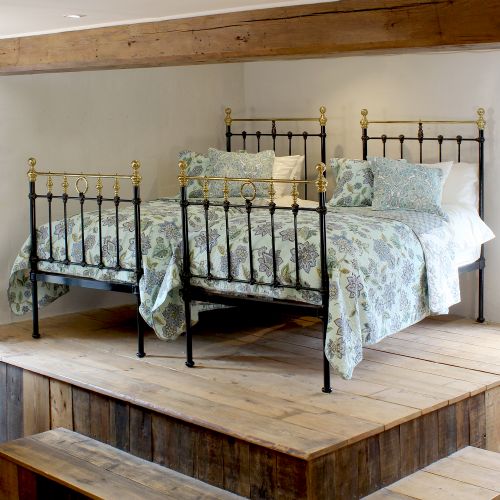
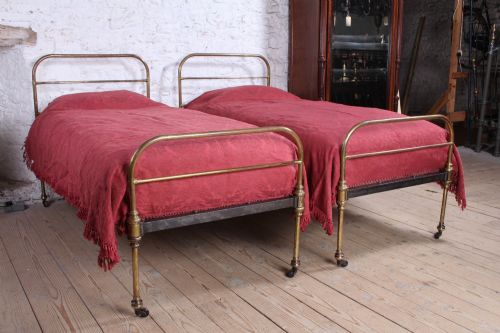
Single bed frames and bedsteads form the core of this selection, offering period proportions suitable for modern bedrooms. Many examples survive as matched or identical pairs fitted with rings and brass decoration.
How they were made
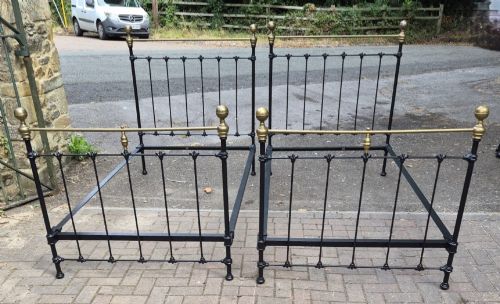
Frames combine structural cast iron and wrought iron with decorative brass components to ensure stability and visual warmth. Makers joined metal parts using traditional casting and fastening techniques common to the nineteenth century.
Surfaces feature polished brass tubing, painted iron elements, and occasional walnut components. Ceramic castors and applied rings provide functional mobility and decorative detail.
Current listings feature pieces spanning the 1870s through to the Edwardian period, utilising brass, cast iron, wrought iron, and walnut.
What varies in quality
The standard of an antique brass twin bed depends on the integrity of the metalwork, the retention of original painted surfaces, and the crispness of brass castings. Pairs that survive complete with matching rings and decorative mounts represent a higher level of original design.
Construction methods distinguish standard production from works by documented firms like Hoskins & Sewell or R W Winfield. The balance between iron structural elements and decorative brass dictates the visual weight of each bedstead.
Hoskins & Sewell·R W Winfield
The Antique Brass Twin Bed Glossary
- Bedstead
- The complete framework of a bed, including headboard, footboard, and side rails. This term frequently appears in nineteenth-century maker descriptions.
- Cast iron
- A strong, hard iron alloy poured into moulds to create shaped components and structural frames. It forms the rigid skeleton of many brass and iron beds.
- Wrought iron
- Iron beaten or rolled into shape rather than cast, valued for its toughness and fibrous structure. It provides durable support within period bed frames.
- Edwardian
- The period spanning the reign of King Edward VII from 1901 to 1910, known for lighter designs. Furniture from this era often combines brass with timber elements like walnut.
Antique Brass Twin Bed: Frequently Asked Questions
Can antique brass twin beds be joined together?
Many twin and single beds from this era are constructed to function either independently or linked side by side. Pairs often retain original fittings that allow them to be connected securely.
Buyers frequently seek out these adaptable formats for guest rooms where flexibility in room layout matters.
What periods do these metal beds come from?
The selections date primarily from the late Victorian and Edwardian eras, spanning the decades between 1870 and 1900. Design details shifted gradually from heavy Victorian proportions to lighter Edwardian styles.
Maker practices evolved across these decades, influencing the mix of brass, iron, and walnut found in surviving pieces.
Are these beds made entirely of brass?
Most examples combine brass components with structural iron frames to provide necessary strength and support. Cast iron and wrought iron form the hidden skeleton, while brass tubing and decorative mounts create the visible aesthetic.
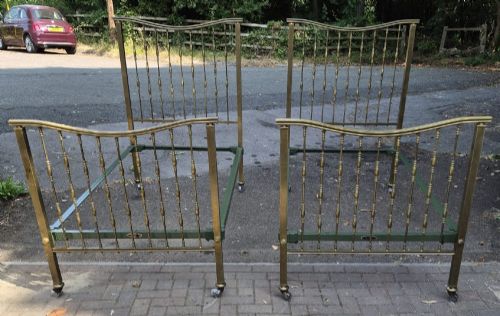
Some exceptional pieces utilise all-brass construction for headboards, footboards, and side rails.