
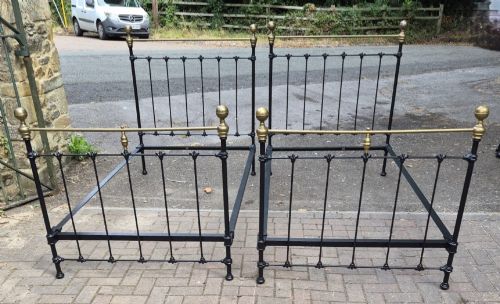
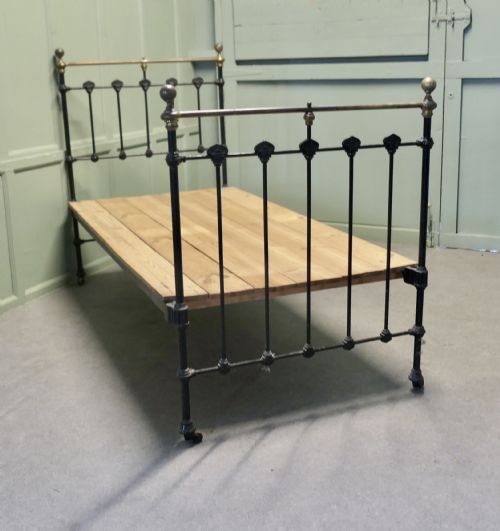
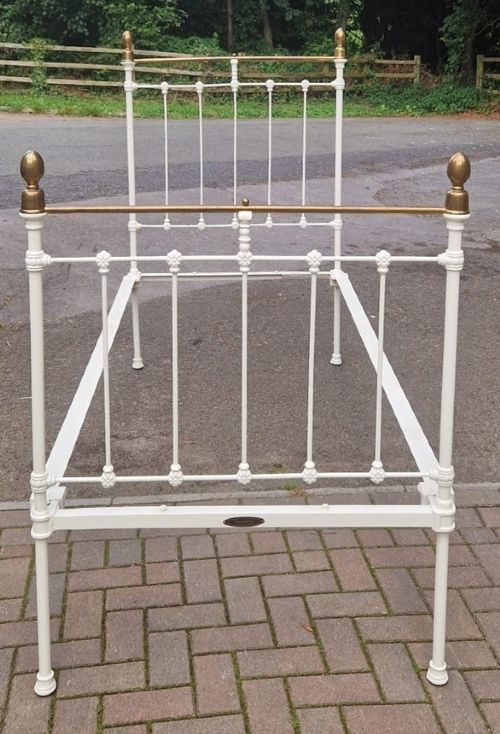


Cast Brass Single Bedstead
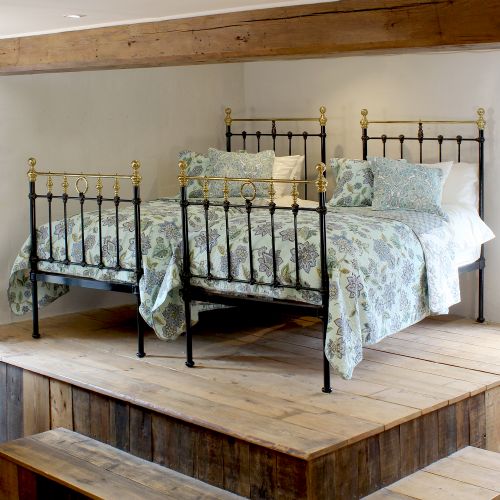
These cast brass single bedstead designs bring substantial Victorian and Edwardian metalwork into a bedroom.
Cast Brass Single Bedstead
When you search for a cast brass single bedstead, you encounter nineteenth and early twentieth-century sleeping furniture built on a metal frame. These pieces span the Victorian, Edwardian, and 1920s periods, emerging in forms designed for single sleepers.
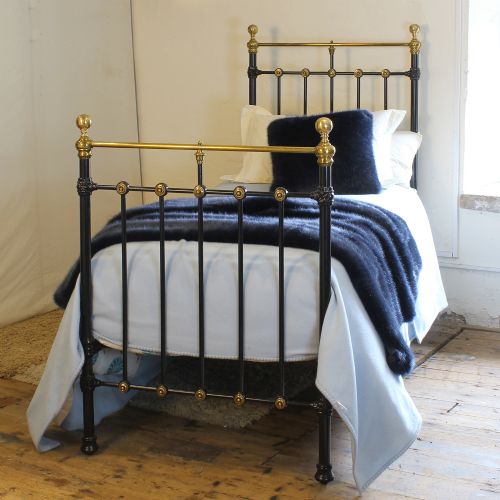
The versions most commonly met on this page combine cast iron with brass components, often featuring standard three-foot widths or larger single proportions. Many examples incorporate decorative elements like rings, painted finishes, or ceramic details alongside the metal framework.
Origins trace across the nineteenth century from the 1850s onward, capturing the shift toward robust metal furniture production in British domestic interiors.
How they were made
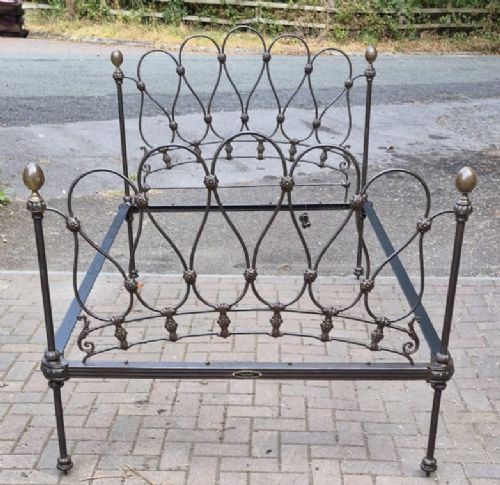
Makers utilised cast iron for the structural load-bearing framework and hand-forged wrought iron for specific decorative or supporting members. Brass components were then integrated to provide prominent visual highlights on the headboards and footboards.
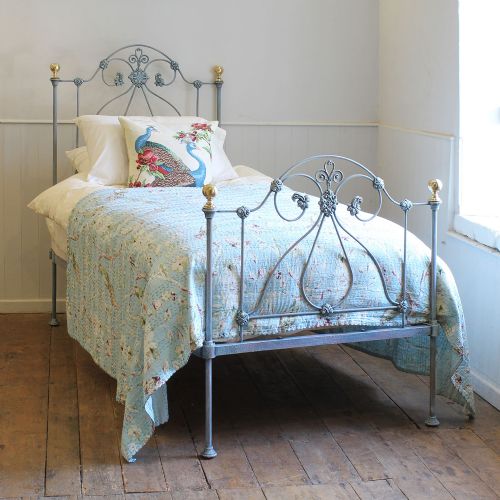
Surface treatments included painted finishes in colours like blue verdigris or black, applied over the iron elements to protect the metal and provide aesthetic contrast. Ceramic and wood elements occasionally appeared alongside the primary metal structures to complete the design.
The listings show pieces spanning the 1850s to the 1920s, utilising brass, cast iron, wrought iron, ceramic, and wood.
What varies in quality
The distinction between standard examples and finer pieces rests upon the complexity of the brass decoration and the precision of the iron casting. Pieces by documented makers like R W Winfield demonstrate superior finishing in the metal joints and decorative brass work.
Overall construction solidity, the presence of matching pairs, and the preservation of original painted or verdigris surfaces further separate the range of available bedframes.
R W Winfield
The Cast Brass Single Bedstead Glossary
- Cast iron
- A strong, rigid iron alloy poured into moulds to create intricate bedframes and structural components. It forms the heavy base of many nineteenth-century frames.
- Wrought iron
- Iron beaten into shape by hand tools rather than poured into a mould. This material was used for hand-forged sections requiring high tensile strength.
- Verdigris
- A green patina formed naturally on brass or copper through atmospheric exposure, or deliberately simulated with paint. It provides a distinct aged appearance on certain metal surfaces.
- Platform style
- A specific bedstead configuration that positions the mattress base rigidly within the metal frame. This construction provides a distinct low-profile silhouette.
- Bedstead
- The complete framework of a bed, including the headboard, footboard, and side rails. These metal structures support the mattress platform above the floor.
Cast Brass Single Bedstead: Frequently Asked Questions
How do I measure for a single bedstead?
Check the internal width dimensions against standard mattress sizes, noting that nineteenth-century single proportions often measure around three feet across.
Account for the exterior footprint including the protruding headboard and footboard posts when planning your bedroom layout.
Are these beds suitable for daily use?
The robust iron and brass construction provides a sturdy framework capable of supporting modern mattress weights.
Ensure the side rails and joint fixings are properly secured before regular sleeping use.
How do I care for brass and iron?
Dust the metal surfaces regularly with a dry cloth and avoid harsh chemical abrasives that can strip protective lacquers or original paint.
Preserve painted black or verdigris finishes by keeping the bedstead in dry conditions away from damp environments.
How do I distinguish Victorian from Edwardian frames?
Victorian examples often feature heavier cast iron structures combined with ornate brass rings and detailed ironwork dating from the mid to late nineteenth century.
Edwardian pieces tend to display lighter proportions with simpler lines and a greater emphasis on polished all-brass elements.