
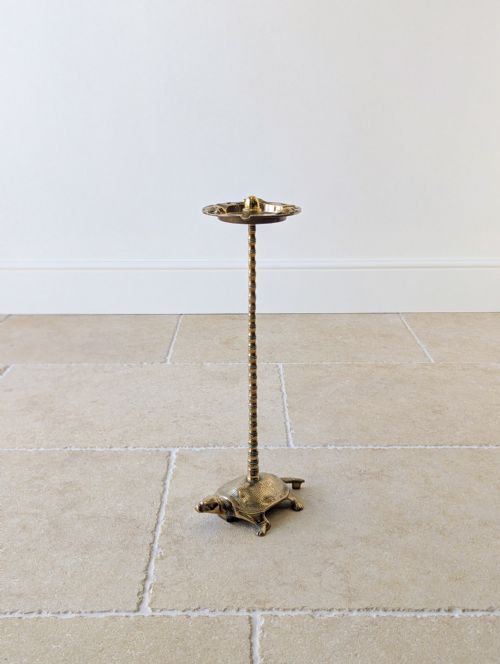
Vintage Brass Tray Stand
These vintage brass tray stands combine functional metalwork with timber supports, offering a practical surface for daily use.
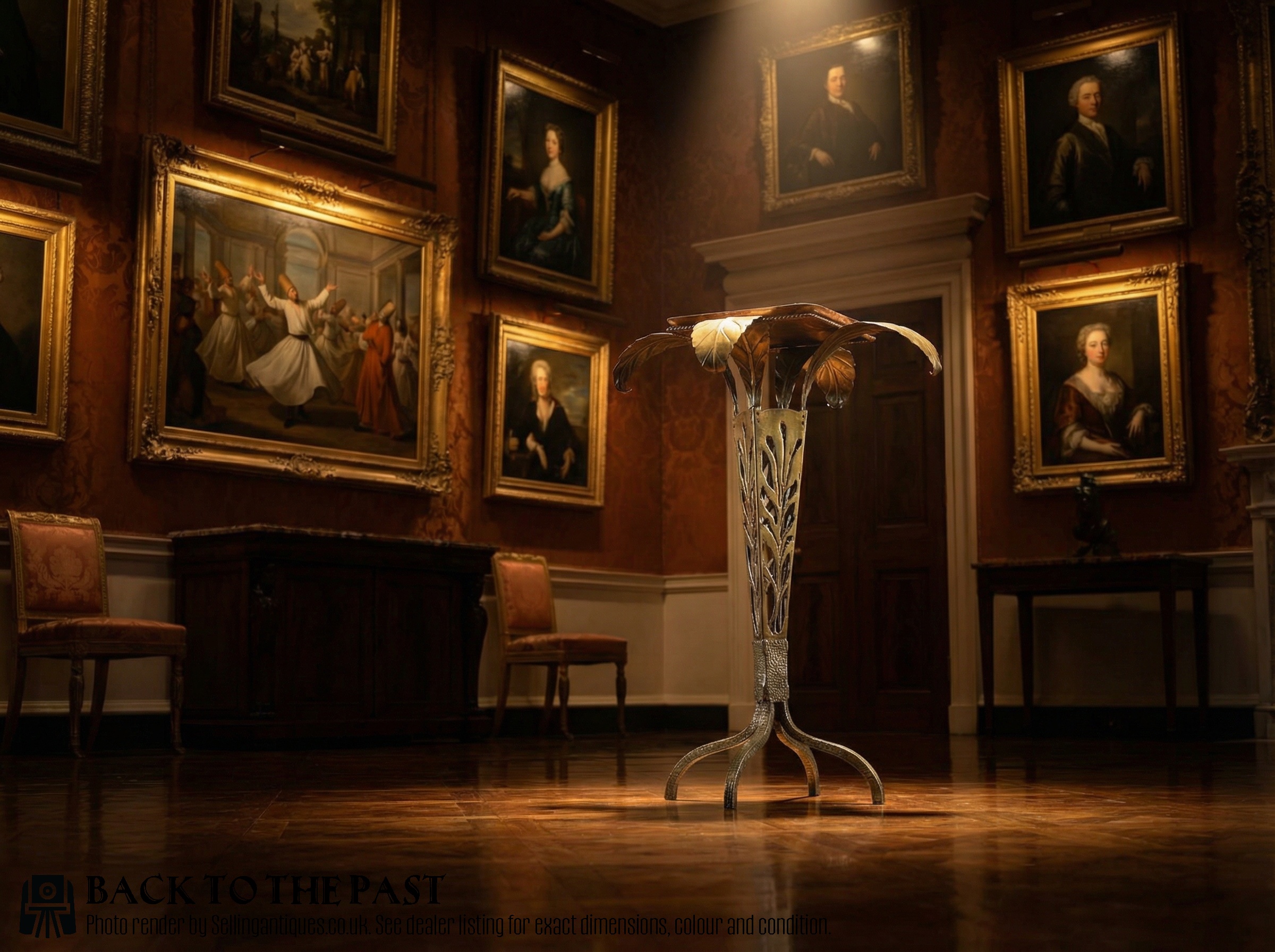
Vintage Brass Tray Stand
A vintage brass tray stand brings together utility and decorative metalwork, frequently appearing as a removable tray paired with a folding or fixed base. When you search for a vintage brass tray stand, you encounter pieces designed for serving or display, spanning the Victorian, Edwardian, and early twentieth-century periods.
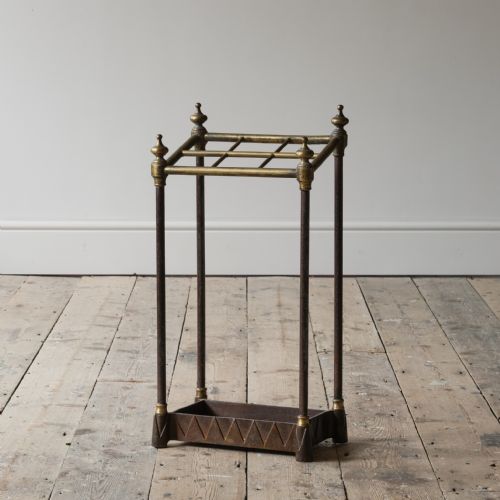
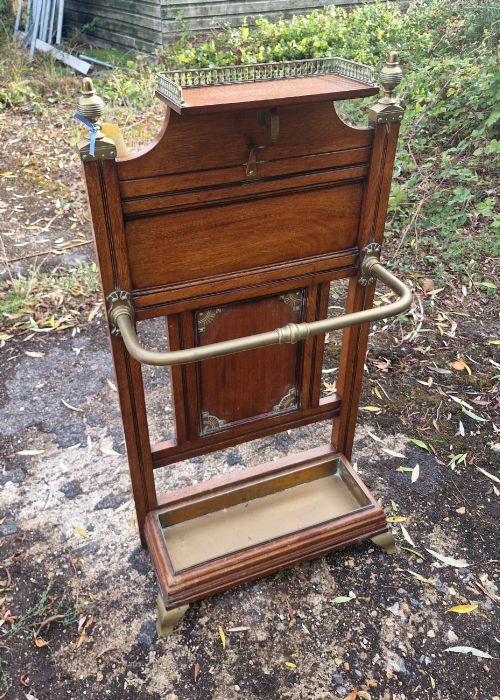
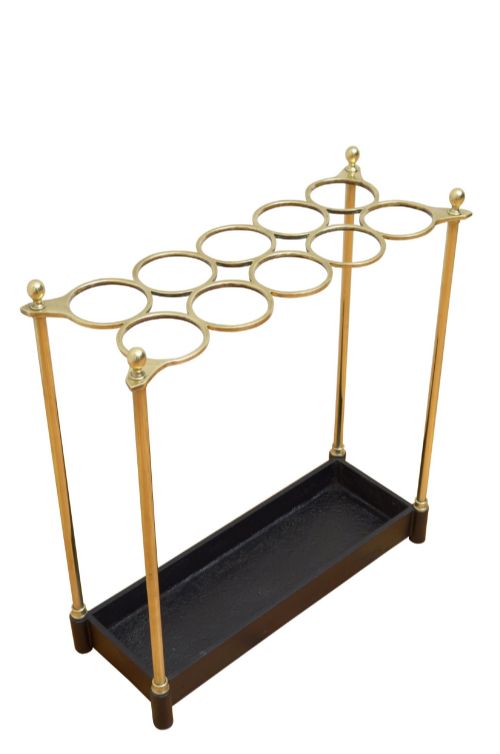
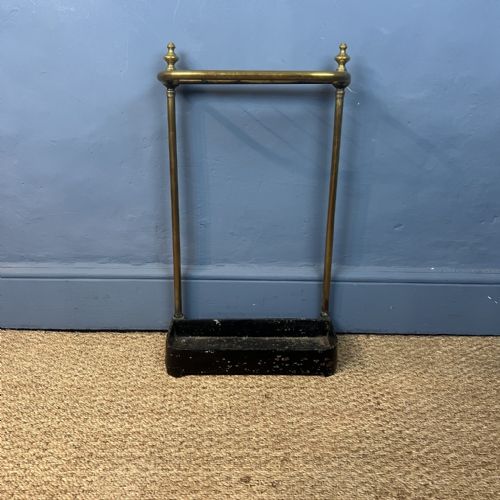
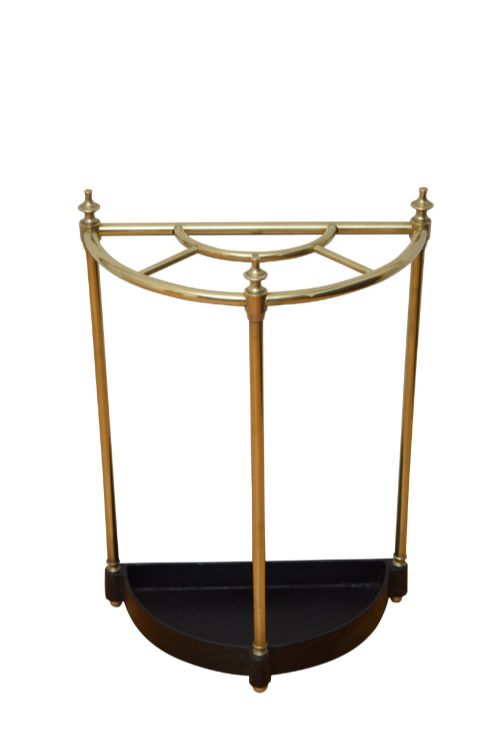
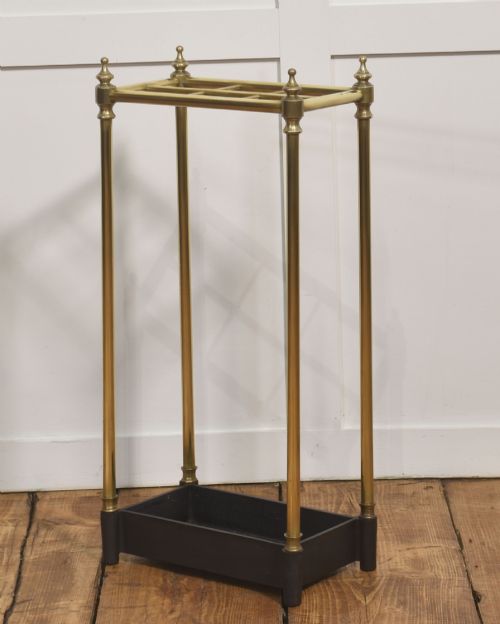
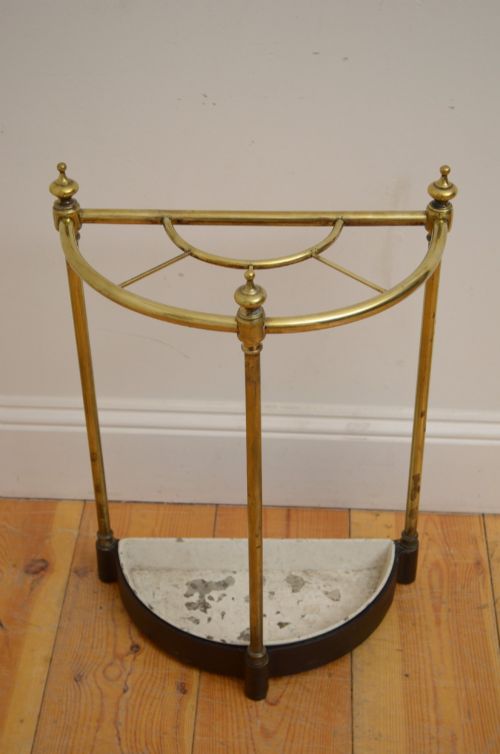
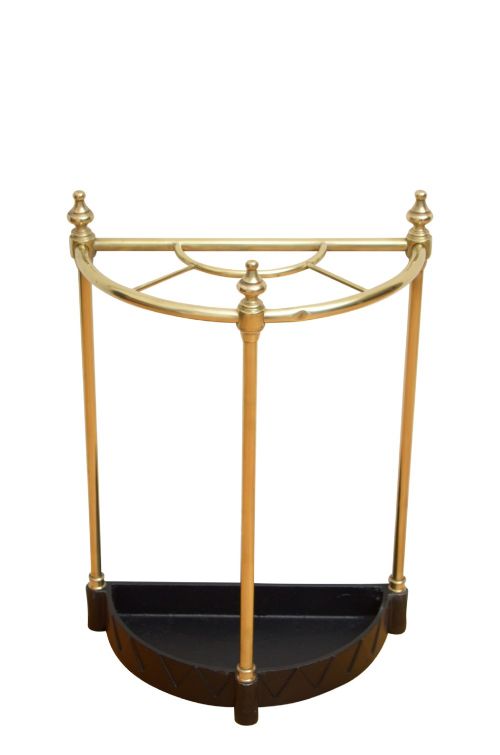
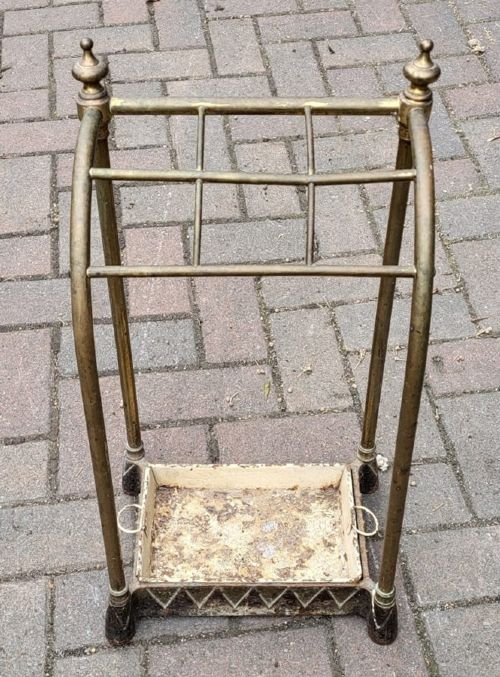
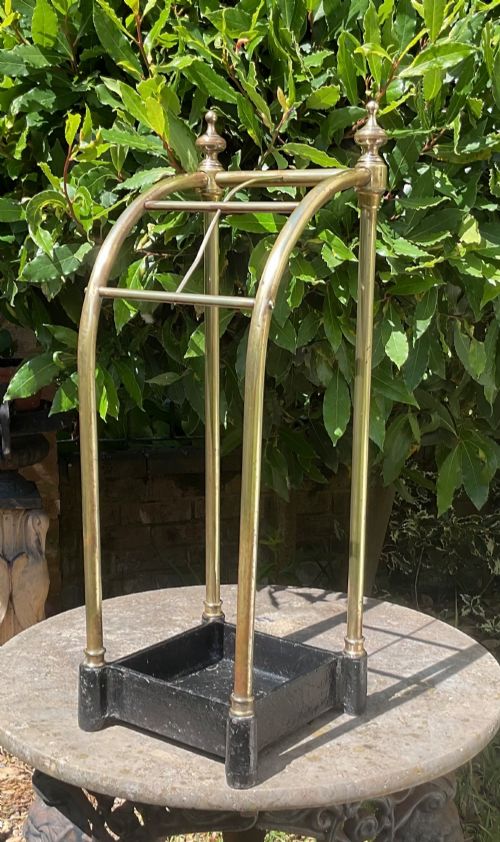
The materials recorded in these listings include brass, copper, mahogany, oak, and cast iron, often shaped into demi-lune umbrella stands, butler trays, and side tables. The version most commonly met on this page combines a metal top or tray with a supporting frame made of wood or iron.
Originating from English, continental, and Anglo-Indian workshops, these items reflect diverse stylistic influences ranging from Gothic Revival and Art Nouveau to plain utilitarian designs. They serve equally well as hallway accessories or low occasional tables in modern interiors.
How they were made
Makers utilised sheet brass, cast iron, and solid hardwoods such as mahogany and oak to construct these stands, joining metals with rivets and securing wooden frames with traditional joinery. Copper and steel also appear in supporting roles, particularly for drip trays or internal reinforcement.
Surface decoration relies on engraving, repousse work, and turning, giving brass trays and stands distinct textural detail. Cast components provide structural stability, while wooden bases utilise natural grain and marquetry inlay to contrast with the polished metal.
Listings feature items spanning the Victorian, Edwardian, and 1920s periods, incorporating brass, copper, mahogany, oak, and cast iron.
What varies in quality
The standard of metal casting and hand engraving distinguishes finer examples from simpler utility pieces, with crisp detailing on finials and tray rims indicating superior craftsmanship. Heavier gauge brass and solid timber frames provide greater durability than thin sheet metal or veneered substitutes.
Design complexity also sets pieces apart, as seen in items incorporating shaped demi-lune frames, decorative ball finials, or integrated drip trays. Cohesion between the tray and its stand, whether original or suitably matched over time, dictates the overall integrity of the piece.
The Vintage Brass Tray Stand Glossary
- Demi-lune
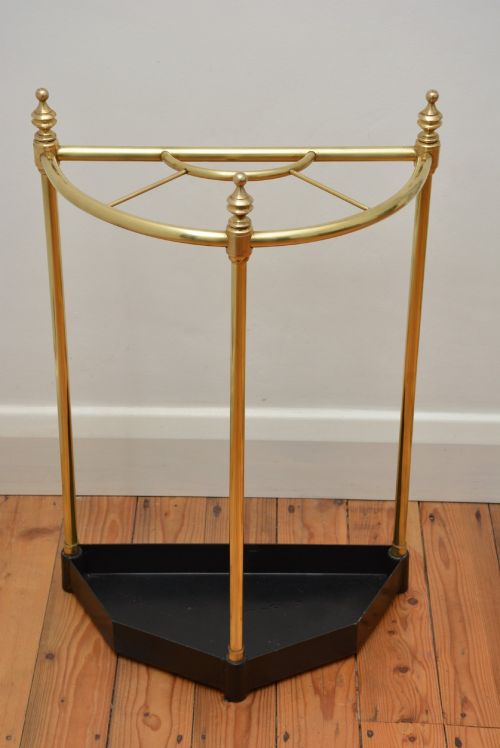
- Half-moon shape. This profile allows umbrella stands and tables to sit flush against a hallway wall.
- Butler tray
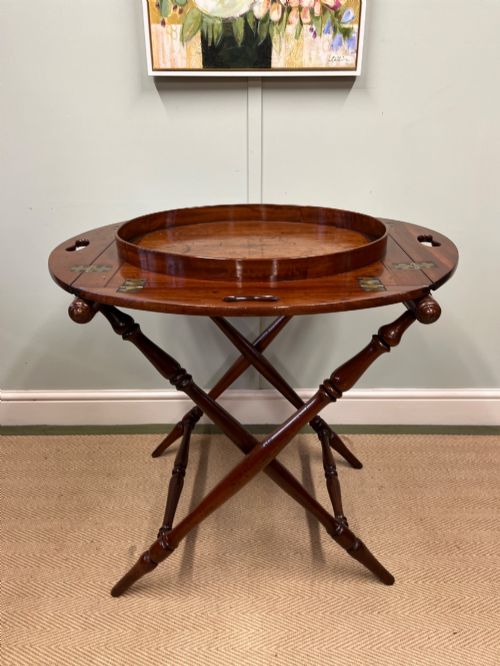
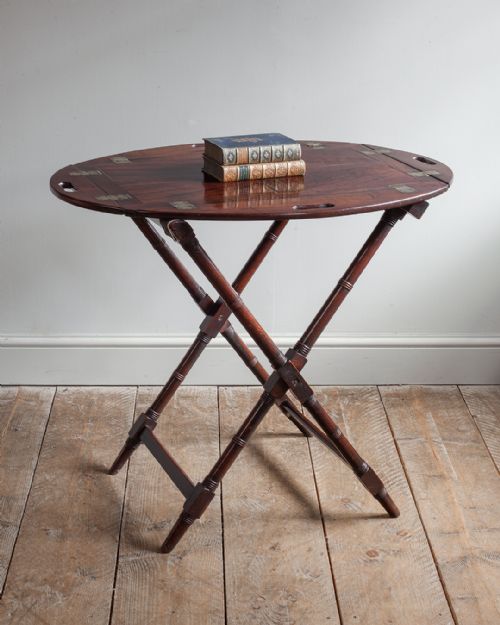
- A portable wooden or metal tray with raised sides. These were traditionally lifted off their folding stands after serving.
- Finial
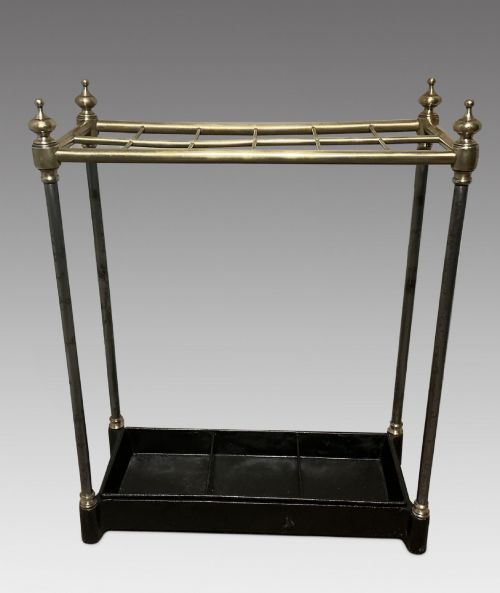
- A decorative terminal ornament. They often top the upright posts of umbrella and stick stands.
- Drip tray
- A shallow base pan. It catches moisture from wet walking canes and umbrellas stored above.
- Marquetry
- Inlaid wood patterns. Craftsmen use contrasting veneers to create pictures and geometric designs on tabletops.
Vintage Brass Tray Stand: Frequently Asked Questions
How do I clean a brass tray?
Use a soft cloth and mild soapy water to remove surface dust without disturbing the aged patina. Avoid harsh chemical cleaners that strip the historic finish.
Dry the metal thoroughly after cleaning to prevent water spotting. A light application of microcrystalline wax can help protect the surface from future tarnishing.
Where should I place a tray stand?
These items fit well in entrance halls, living rooms, or studies as occasional tables or accessory holders. Demi-lune shapes sit neatly against narrow walls.
Keep them away from direct heat sources and damp areas to protect both the metal surfaces and any wooden components.
How do I date an antique stand?
Examine the construction methods, fastener types, and materials used in the frame. Victorian pieces often feature heavy cast iron components and ornate brass ornamentation.
Edwardian and later twentieth-century examples tend toward lighter construction and simpler geometric or Art Nouveau styling.
Are folding tray stands sturdy?
Folding bases rely on hinged wooden or metal X-frames designed for easy storage and portability. Check that the pivot points remain secure.
While suitable for serving and display, they are built to support moderate weights rather than heavy loads.