




Low Circular Accent Table
A low circular accent table grounds a room with compact utility, offering varied finishes from burr walnut to carved hardwood across multiple periods.
Low Circular Accent Table
When searching for a low circular accent table, you find a compact surface designed for drinks, books, or display in a sitting room. These pieces stand low to the floor, functioning as coffee tables or occasional stands.
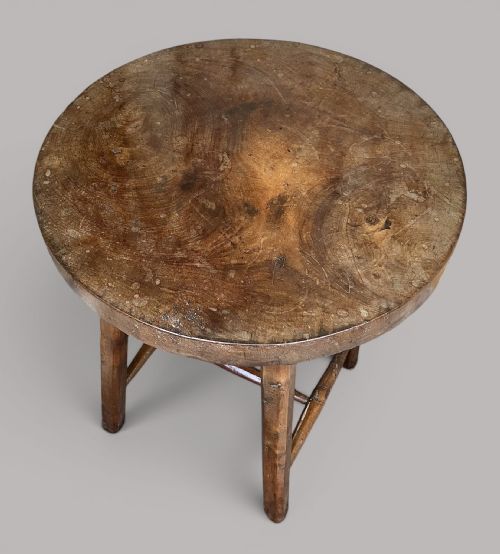
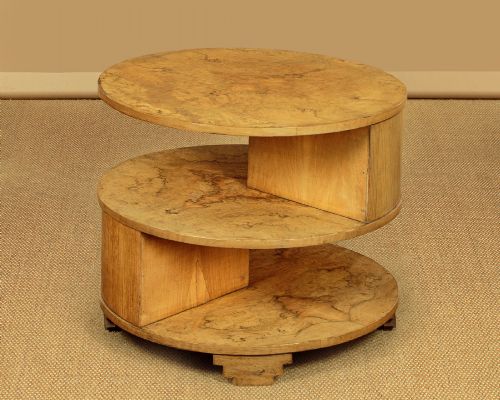
The selections available here range from Georgian primitive solid walnut examples to Art Deco oak and blonde oak coffee tables from nineteen thirty. You will also encounter nineteenth century lowered wine tables and occasional stands.
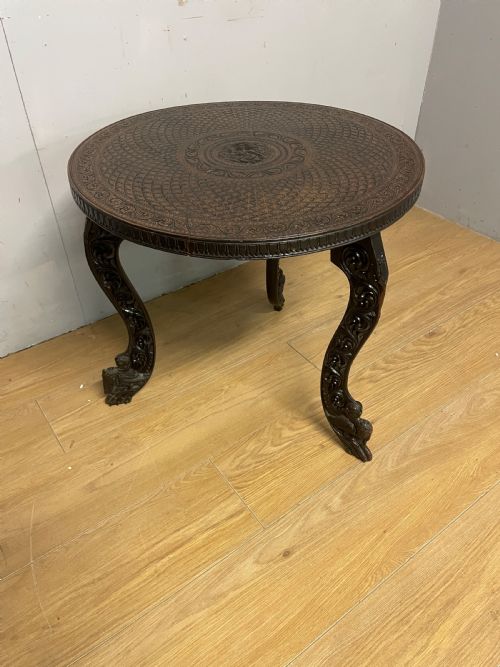
Global influences appear frequently in this category, including carved Anglo-Indian tables, carved Chinese hardwood low coffee tables, French painted and parcel-gilt centre tables with marble tops, and Persian brass top occasional tables.
How they were made
Cabinet makers utilised traditional timbers such as walnut, oak, and general hardwood, often applying burr veneer or solid construction to achieve distinct grain patterns. Surface treatments range from French painted and parcel-gilt finishes to carved detailing.
Specialised regional techniques define the international pieces, such as the intricate carving found on Anglo-Indian and Chinese hardwood examples. Other variations include heavy brass tops on occasional tables and inset marble slabs on French centre stands.
Several tables in this selection double as former wine stands, proving that past generations took their refreshments very seriously indeed.
What varies in quality
The standard of a low circular accent table depends primarily on the depth and crispness of the carving, the selection of timber veneers like burr walnut, and the integrity of structural joints. Pieces featuring specialist elements such as inset marble tops or intricate brass work demonstrate higher levels of workshop specialisation.
Period authenticity and material purity set the better examples apart from simpler utilitarian pieces. The balance between the proportions of the low profile and the quality of the finish ultimately dictates the visual weight of the table in an interior.
The Low Circular Accent Table Glossary
- Burr veneer
- A thin slice of wood taken from a tree growth or burl, highly prized for its swirling, intricate grain patterns. It adds significant decorative movement to a tabletop.
- Parcel-gilt
- A decorative treatment where specific carved details or highlights on a painted surface are partially gilded with gold leaf. This technique accentuates the ornamentation of French neoclassical tables.
- Occasional table
- A small, movable piece of furniture designed for intermittent use around a sitting room or bedroom. They serve functions ranging from holding a lamp to supporting a drink.
- Centre table
- A freestanding piece designed to be viewed from all sides, traditionally placed in the middle of a room rather than against a wall. Examples often feature decorative marble tops or elaborate pedestals.
Low Circular Accent Table: Frequently Asked Questions
Where should I place a low circular table?
These pieces suit positions beside low seating or as a central surface in a compact reception room. Their rounded footprint allows for easy movement around them in tighter spaces.
Because they sit close to the floor, they pair well with deep sofas and low armchairs, keeping drinks and books within easy reach.
How do I identify an Art Deco table?
Art Deco pieces from the nineteen twenties and thirties often display clean geometric lines, blonde oak, or striking veneers. They reject excessive ornamentation in favour of streamlined forms.
Look for simplified pedestal bases and unadorned timber surfaces that highlight the natural grain of the oak or walnut.
What is a primitive Georgian table?
A primitive Georgian piece represents simpler, regional furniture making from the eighteenth century, constructed by local trades rather than high-end metropolitan cabinet makers. These items focus on solid utility rather than courtly fashion.
They usually feature heavy solid walnut construction with straightforward, unpretentious joinery and honest signs of early manufacture.
How do I clean a marble top table?
Marble surfaces require gentle maintenance using a damp cloth and mild, non-acidic soap to protect the polished stone from etching. Avoid harsh chemical cleaners that can dull the glaze.
Promptly wiping away spills prevents staining, particularly on antique French painted and gilt stands where the stone meets sensitive painted woodwork.