





Vintage Brass Studded Chest
A vintage brass studded chest brings practical storage and centuries of travelling craft directly into a modern room.
Vintage Brass Studded Chest
A vintage brass studded chest serves as a robust container for blankets, travel gear, or household items while introducing textural history to an interior. These pieces range from compact travel boxes to large blanket trunks designed for domestic storage or long journeys.
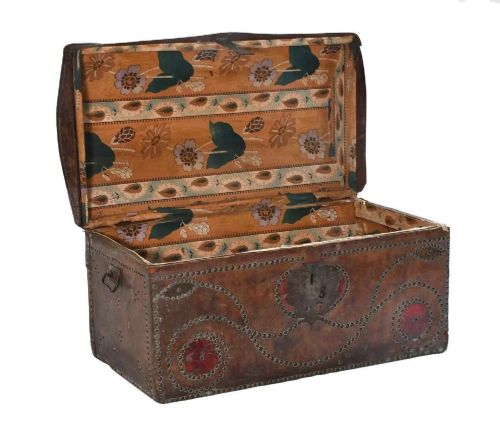
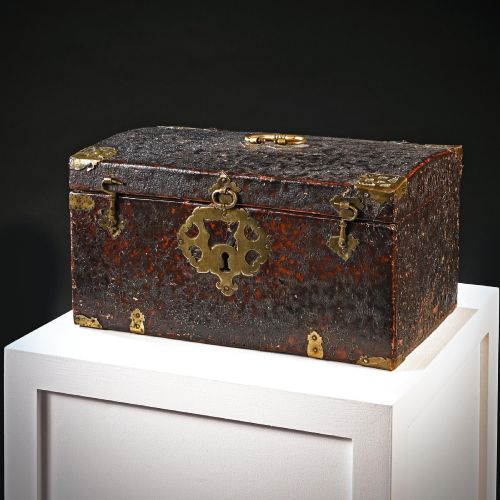
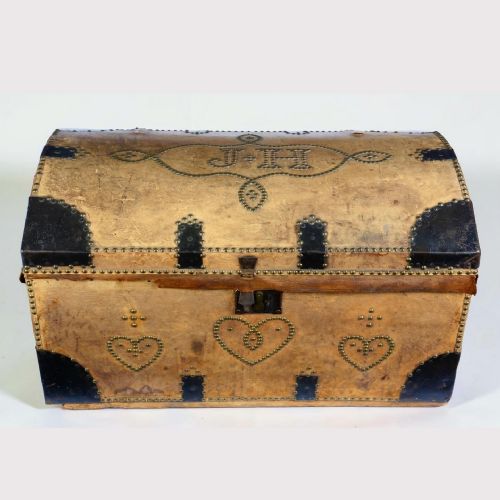
The selections available span multiple centuries, touching upon Victorian domestic trunks, Regency travel pieces, and earlier seventeenth-century European coffers. Buyers encounter items defined by leather cladding, heavy timber construction, and rhythmic metalwork applied along the edges and lids.
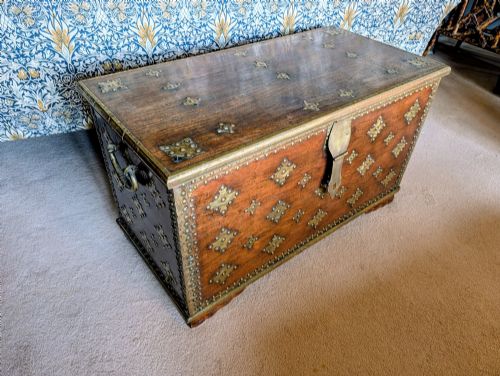
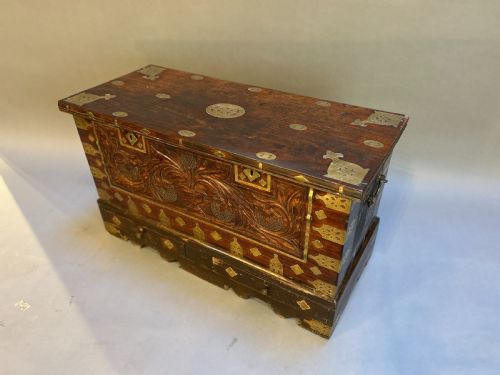
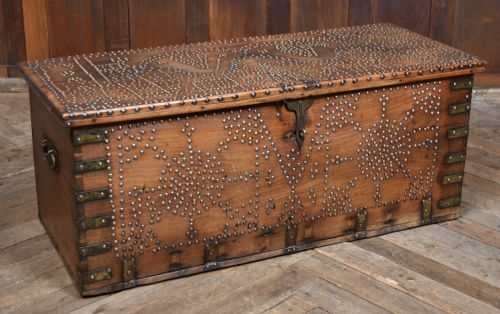
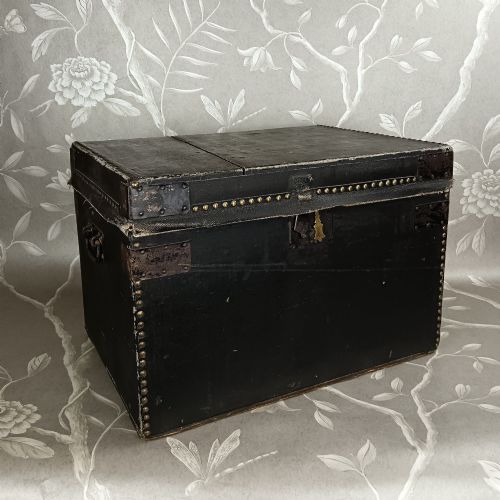
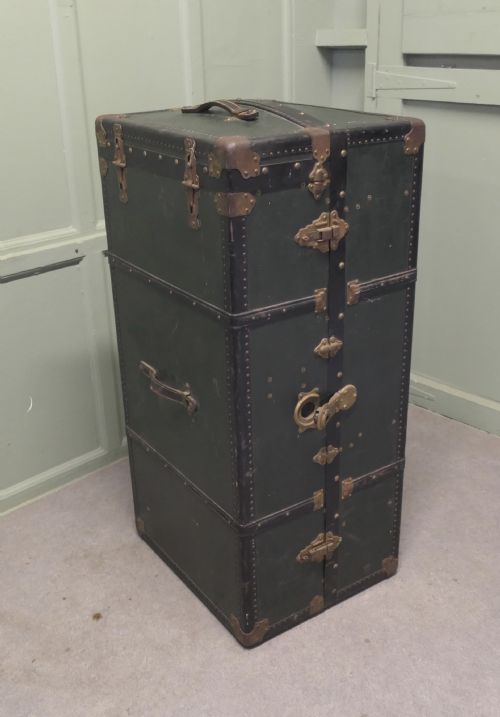
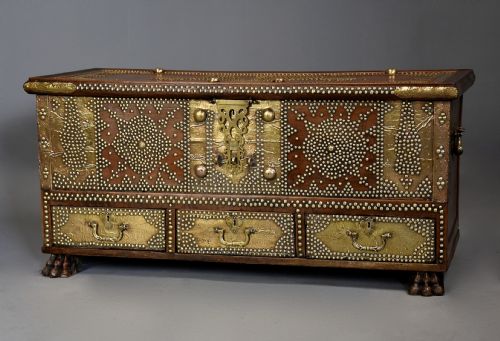
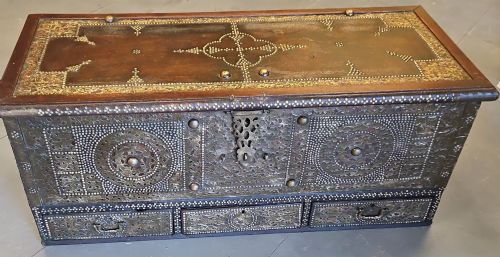
Regional variations appear across the collection, including East African Zanzibar chests, Dutch decorative boxes, and English campaign luggage. Each version reflects the specific utilitarian demands of its origin, paired with decorative brass elements that secured the coverings and reinforced the framework.
Materials and Construction
Makers built these chests using sturdy foundational timbers like teak, camphorwood, padouk, and hardwood, selected for their resilience against travel and climate. Timber panels formed the core structure, often enclosed to protect contents from moisture and wear during transit.
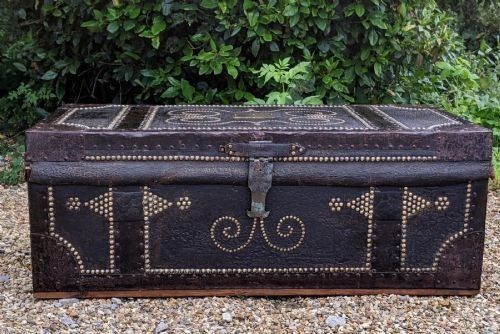
The exterior surfaces typically utilise leather, canvas, or hide stretched tightly over the wood and secured with thousands of individual brass studs or nailhead details. These metal tines served a dual purpose, holding the protective outer skin firmly in place while creating intricate geometric or linear patterns.
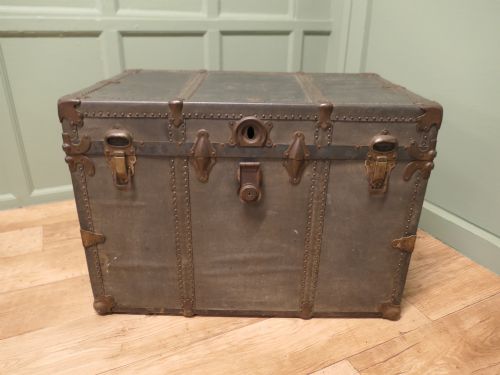
Iron and brass bindings reinforced the corners, edges, and lids to withstand the rigours of coaching, shipping, and domestic use. Drop handles and locking mechanisms completed the construction, executed in forged iron or cast brass to ensure security on the road.
Vintage Brass Studded Chest Retail Price Guide 2026
Typical asking prices for vintage brass studded chest among the pieces listed under this phrase on Sellingantiques today, from the lower quarter to the upper quarter. They describe what is for sale here now, not the wider market.
Materials recur across different forms, uniting hardwood, camphorwood, and padouk with iron bindings and decorative brass studwork.
Markers of Quality and Execution
The distinction between ordinary utility items and exceptional pieces rests upon the precision of the brass studwork and the integrity of the original leather or wood skin. Closely spaced, uniform brass studs demonstrate superior handwork compared to sparse or unevenly hammered fastenings.
Makers who incorporated specialised timbers like camphorwood or padouk alongside fine brass mounts achieved a higher grade of craftsmanship. The survival of original fittings, including working locks, hinges, and side carrying handles, elevates the standing of a piece.
Proportion and decorative restraint dictate the aesthetic success of these trunks, where well-balanced brass placement enhances the underlying timber or leather form without visual clutter.
Samuel Pratt·Wm Insall of Bristol·Arthur Wannop·W Insall
The Vintage Brass Studded Chest Glossary
- Campaign trunk
- A portable storage chest designed for military officers or travellers, built with recessed handles and reinforced corners for frequent transit.
- Zanzibar chest
- A traditional heavy storage box originating from East Africa, characteristically constructed from dense hardwoods and embellished with elaborate brass studding and strapwork.
- Coffer
- A heavy wooden chest, often leather-clad and studded, historically utilised for storing valuables, documents, or textiles.
- Camphorwood
- An aromatic timber frequently employed in overseas trade chests to deter insects and protect stored fabrics.
- Nailhead detail
- Decorative metal tines driven into leather or fabric-clad surfaces to secure the covering material and trace structural outlines.
Vintage Brass Studded Chest: Frequently Asked Questions
How were these chests used originally?
These trunks served as durable luggage for maritime voyages, military campaigns, and long-distance coaching journeys. They protected clothing and valuables from the elements while doubling as furniture upon reaching a destination.
In domestic settings, smaller versions functioned as tabletop storage boxes, while larger trunks rested at the foot of beds or in hallways for household textiles.
Where should I place one at home?
A large trunk suits the end of a bed or serves as a coffee table in a living room, providing hidden storage for spare blankets and cushions. Smaller boxes sit comfortably on side tables, desks, or chests of drawers to contain letters and small objects.
The tactile leather and brass surfaces contrast well against plain plastered walls or natural timber floors.
How do I care for leather and brass?
Leather surfaces benefit from occasional light conditioning with appropriate specialist balms to prevent dryness and cracking. Brass studs and mounts require minimal intervention, needing only gentle dusting rather than aggressive polishing to retain their historic patina.
Keeping the wood dry and away from direct heat sources preserves the structural stability of both the timber frame and the exterior skin.
How can I tell the age of a trunk?
Age is determined by observing construction techniques, such as hand-forged iron hardware, dovetail joints, and the type of timber used in the carcass. Seventeenth and eighteenth-century examples often feature simpler, heavier wooden forms with minimal internal fittings, whereas nineteenth-century pieces frequently show more complex compartments and refined brasswork.
Maker signatures on locks or interior paper labels provide definitive dates when present.