


Vintage Brass Mortar Bowl
These vintage brass mortar bowl pieces are sturdy vessels of weight and function that bring historic kitchen and apothecary craft into modern rooms.
Vintage Brass Mortar Bowl
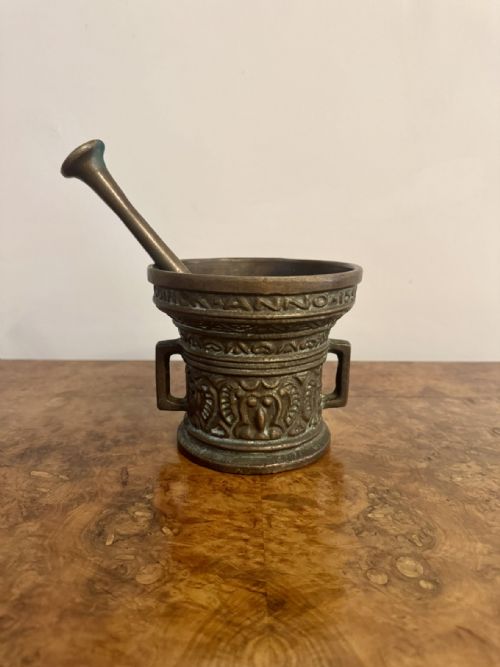
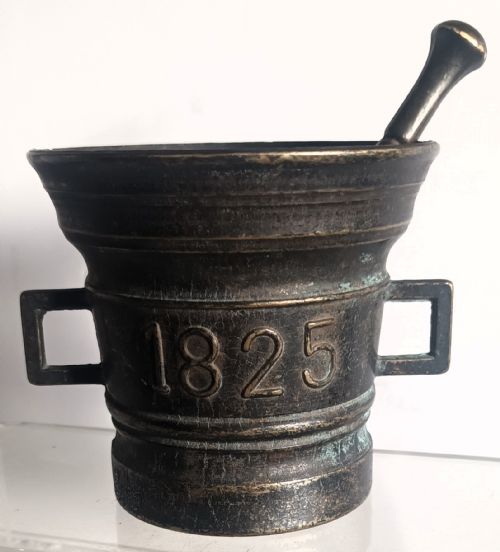
When you search for a vintage brass mortar bowl, you are looking at heavy metal vessels designed for grinding and pounding substances. These objects span several centuries, with examples appearing from the seventeenth, eighteenth, and nineteenth centuries.
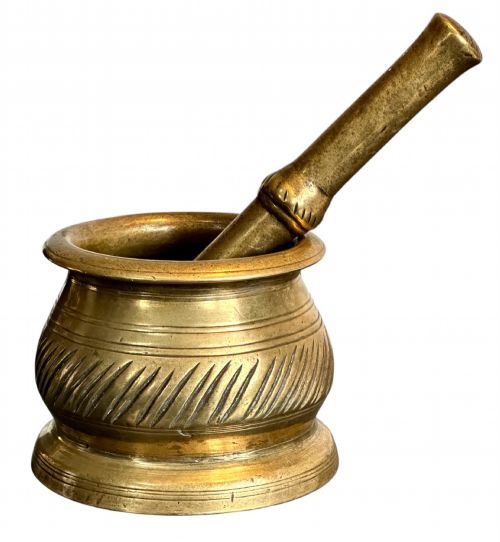
The pieces on this page include apothecary equipment, kitchen tools, and decorative metalware. You will encounter forms ranging from plain utilitarian shapes to heavily decorated Gothic Revival and Indo-Persian designs.
Many of these vessels arrive paired with their original pestles, while others survive as bowls alone. Their origins encompass English Georgian workshops alongside broader European and Eastern traditions.
Materials and construction
These objects are cast from durable metal alloys, predominantly brass, bronze, cast bronze, and bell metal. Founders poured molten metal into moulds to create thick, rigid walls capable of withstanding heavy impact.
Makers often added decorative ribs, mouldings, or figural details directly into the casting process. Finishing work involved turning the metal on a lathe and hand-polishing the exterior surfaces to a warm metallic sheen.
Judging quality and character
Quality rests in the thickness of the metal casting and the crispness of any decorative relief work. Superior examples display balanced proportions, deep resonance in bell metal, and comfortable heft in the hand.
Surface wear tells the story of actual use over centuries rather than factory perfection. Smooth patination and honest signs of grinding inside the bowl separate better pieces from modern reproductions.
The Vintage Brass Mortar Bowl Glossary
- Mortar and Pestle
- Mortar and pestle is a two-part tool used for crushing and grinding ingredients. The bowl is the mortar, and the handheld club is the pestle.
- Bell Metal
- Bell metal is a hard bronze alloy specifically used for casting bells and high-quality mortars. It contains a higher proportion of tin, giving the metal a resonant quality.
- Apothecary
- Apothecary relates to the historical preparation and sale of medicines. Mortars served as essential equipment in pharmacies for compounding remedies.
- Jardiniere
- Jardiniere is a decorative ceramic or metal pot for holding plants. Old mortar bowls occasionally find new life serving in this ornamental capacity.
- Patina
- Patina is the surface ageing and discoloration acquired by metal over time. This natural layer demonstrates the genuine age of an antique piece.
Vintage Brass Mortar Bowl: Frequently Asked Questions
What were mortar bowls used for?
These vessels served primarily in kitchens and apothecaries for crushing herbs, spices, and medical ingredients.
Users struck or ground the contents against the interior walls using a heavy pestle to reduce them to powder or paste.
How do I date an old mortar?
Dating relies on examining the metal composition, casting style, and overall form against known historical periods.
Earlier seventeenth-century examples often feature simpler, robust shapes with flared rims, whereas nineteenth-century pieces may show Gothic or Renaissance revival ornamentation.
Are brass and bronze mortars different?
Brass is an alloy of copper and zinc, while bronze primarily combines copper with tin.
Both materials appear frequently across these listings due to their strength and weight, though bronze and bell metal typically offer a more resonant tone when struck.
Can I use mine for cooking?
Many antique metal vessels remain structurally sound enough for grinding dry spices and culinary herbs.
Buyers should clean the interior thoroughly and consider whether the historic metal surface suits modern food preparation.
How should I clean my mortar?
Maintenance generally requires only a soft cloth and warm soapy water to remove dust and dirt.
Harsh chemical polishes can strip away the desirable historic patina that builds up on the metal over centuries of existence.