



Cast Bronze Apothecary Mortar
A cast bronze apothecary mortar is a heavy functional vessel designed for grinding medicinal ingredients, prized for its sculptural form and rich metallic patina.
Cast Bronze Apothecary Mortar
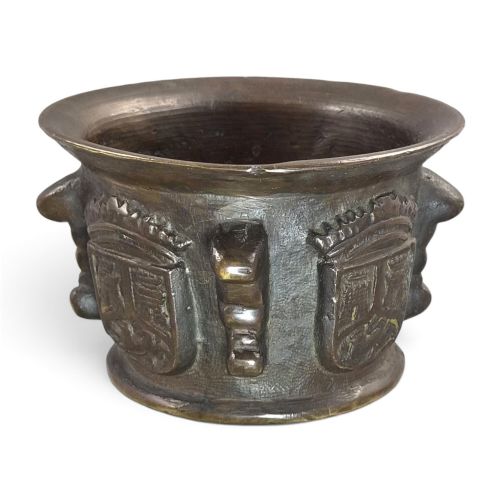
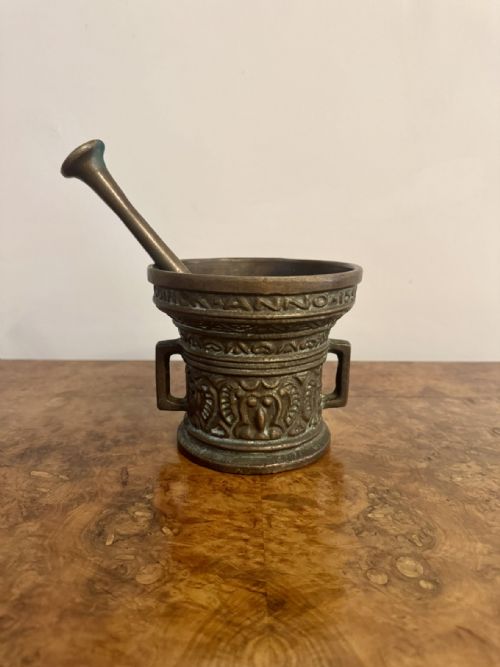
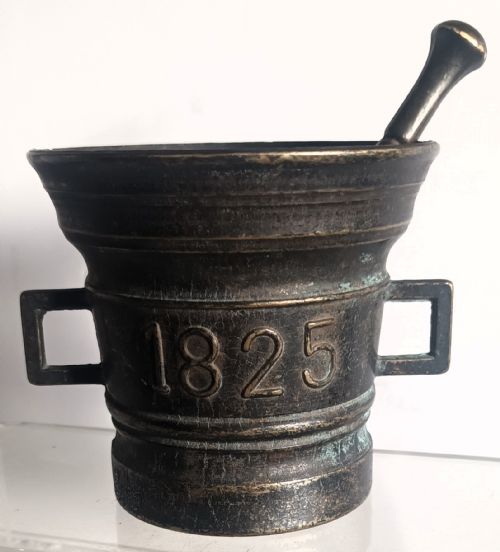
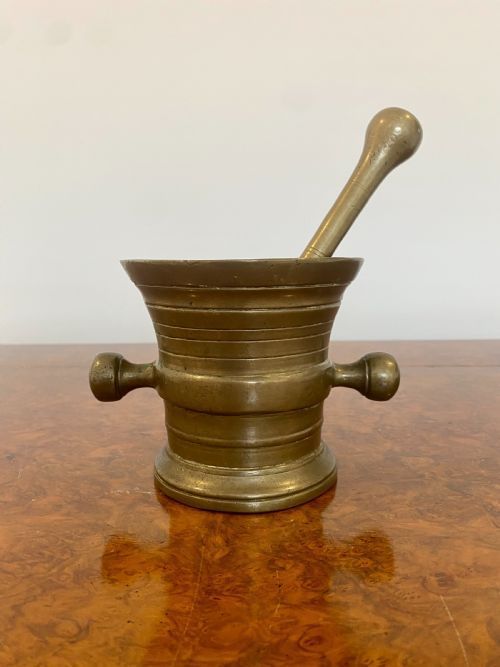
When you search for a cast bronze apothecary mortar, you encounter robust vessels produced for medicinal, kitchen, and apothecary use across several centuries. The selection ranges from early examples bearing armorial details to later utilitarian kitchen forms.
You are most likely to meet 17th century and Georgian pieces on this page, often accompanied by their matching pestles. These items reflect origins spanning English workshops, Dutch foundries, and Spanish provenance.
The primary forms include single mortars, paired groupings, and trios designed for crushing herbs, chemicals, and roots. Each piece demonstrates the heavy-walled casting methods required to withstand centuries of impact.
How they were made
Makers utilised sand casting or lost-wax techniques to shape the molten bronze, pouring the alloy into bespoke moulds. This method produced thick walls and sturdy bases capable of absorbing the force of a heavy pestle.
The composition typically combined copper with tin, occasionally incorporating bell metal variants to achieve a resonant tone and dense durability. Surface finishing involved turning on a lathe and hand-polishing to reveal the warm metallic body.
What varies in quality
Quality rests upon the crispness of the cast decoration, such as Tudor roses or armorial bearings, and the preservation of the original surface. Sharper relief work and defined mouldings indicate superior foundry output.
The presence of a matching period pestle elevates an example, particularly when the wear patterns on both components align. Furthermore, balanced proportions and uncompromised walls distinguish finer cabinet pieces from utilitarian wares.
The Cast Bronze Apothecary Mortar Glossary
- Mortar
- A heavy bowl-shaped vessel used for crushing and grinding substances with a pestle. These objects survive primarily in bronze and brass from domestic and apothecary contexts.
- Pestle
- A heavy club-shaped tool used for pounding materials inside a mortar. Period examples display matching metallic composition and appropriate wear to the striking end.
- Bell Metal
- An alloy of copper and tin utilised for its high density and resonant acoustic properties. It appears frequently in heavier mortar vessels of the seventeenth century.
- Armorial
- Relating to heraldic arms or devices displayed upon an object. Certain Spanish and English mortars feature cast coats of arms denoting specific ownership or foundry commissions.
Cast Bronze Apothecary Mortar: Frequently Asked Questions
How were cast bronze apothecary mortars used?
Apothecaries and households utilised these vessels to crush, grind, and mix dry ingredients, medicinal herbs, and chemical compounds. The heavy pestle provided the necessary friction against the rigid bronze walls.
Over decades of daily preparation, the interior bases developed smooth wear patterns from this constant mechanical action, reflecting their primary role in historic dispensaries and kitchens.
How do I date a bronze mortar?
Dating relies upon stylistic markers, decorative motifs like Tudor roses or armorial crests, and specific rim profiles. Seventeenth-century examples often exhibit flared rims and pronounced ribbing.
Later Georgian and nineteenth-century pieces tend toward cleaner, more restrained silhouettes with simpler mouldings. Comparing the form against documented foundry styles helps narrow the period of origin.
Did all mortars come with pestles?
While many mortars were originally issued alongside a matching pestle, the rigorous nature of grinding meant pestles were frequently separated, lost, or replaced over time. Finding a matched pair is a notable bonus.
When evaluating a set, examine the alloy and wear characteristics of both pieces to determine whether they share the same period of manufacture.
How should I care for a bronze mortar?
Maintenance requires minimal intervention, preserving the historical surface and natural oxidation rather than attempting a bright, modern polish. Dust gently with a dry cloth.
Avoid chemical cleaners or abrasive polishes that strip away the aged patina accumulated over centuries of handling and environmental exposure.