



Antique Metal Herb Grinder
These heavy cast vessels are the very antique metal herb grinder examples you need for crushing spices, resins, and botanicals by hand.
Antique Metal Herb Grinder
When you search for an antique metal herb grinder, you are looking at heavy domestic and apothecary vessels designed to reduce dry matter to powder through manual percussion and friction. The forms vary from small kitchen implements to substantial chemist and apothecary sets intended for heavy daily service.
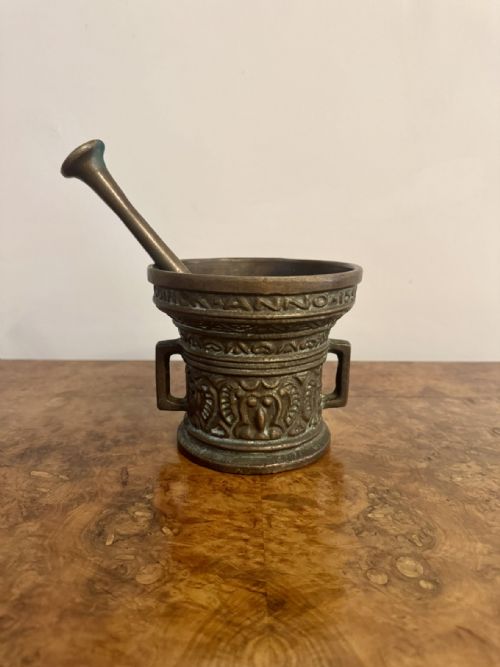
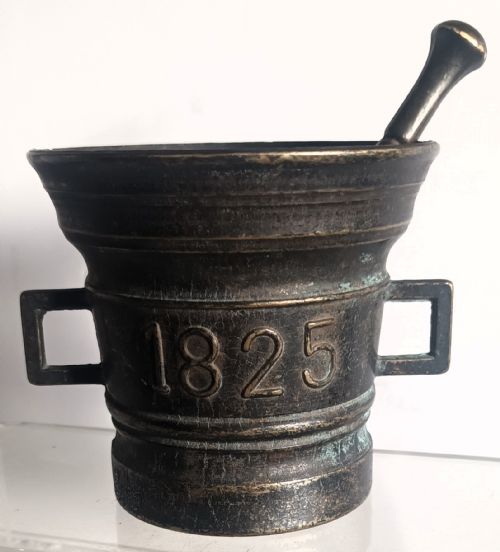
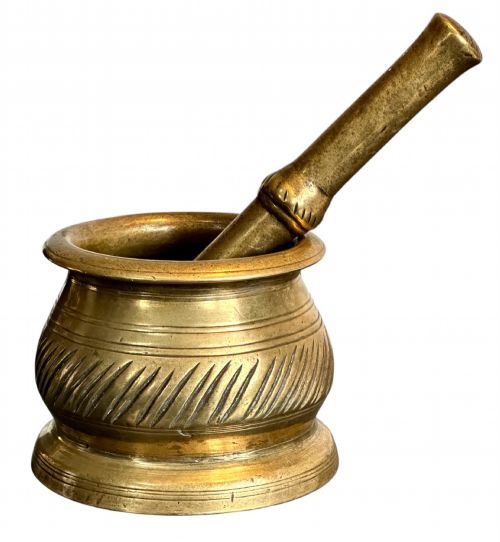
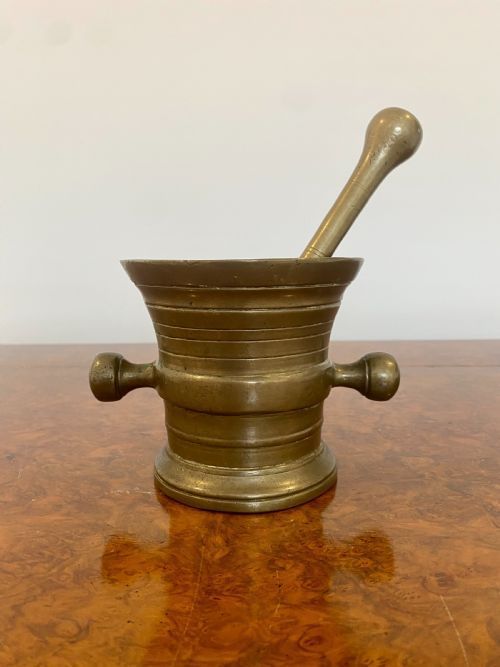
The examples most commonly encountered on this page date from the seventeenth, eighteenth, and nineteenth centuries. These include English Georgian and Victorian pieces alongside continental Dutch Baroque and Indo-Persian designs.
The primary forms on offer span simple domestic kitchen mortars to highly decorative Renaissance Revival and apothecary grinders. Each piece combines a heavy bowl with a matching heavy pestle designed to fit the internal curve.
How they were made
These pieces are produced primarily through the casting of bronze and brass. Molten metal is poured into moulds, yielding thick walls capable of withstanding the repeated impacts of the pestle.
Following the initial casting, many surfaces receive secondary hand-finishing, turning, and occasional decorative incising. The resulting heft ensures that the vessel remains stable during the vigorous grinding of hard seeds and dried herbs.
Listings span four centuries of metalworking, featuring cast bronze and brass pieces from the 17th century through the Victorian era.
What varies in quality
Quality rests in the crispness of the casting detail and the proportion between the mortar and its matching pestle. Better examples exhibit clean lines, even wall thickness, and well-balanced weight that feels correct in the hand.
The presence of decorative moulding, heraldic bands, or inscribed dates distinguishes standard kitchen hardware from superior workshop output. Wear patterns tell their own story, showing authentic friction marks inside the bowl from centuries of use.
The Antique Metal Herb Grinder Glossary
- Pestle
- The heavy handheld tool used to pound and grind materials against the interior walls of the mortar. Its rounded end matches the inner contour of the bowl.
- Apothecary
- A historical practitioner who prepared and sold medicines and herbal remedies. Apothecary mortars often display heavier construction for processing dense roots and minerals.
- Renaissance Revival
- A nineteenth century design movement that drew inspiration from the art and architecture of the fifteenth and sixteenth centuries. Pieces in this style often incorporate classical motifs and cast ornamentation.
Antique Metal Herb Grinder: Frequently Asked Questions
How do I use an old herb grinder?
Place your dried herbs or spices into the bottom of the bronze or brass bowl. Hold the pestle firmly and use a twisting or pounding motion against the inner walls until you reach the desired consistency.
Because these vessels are made of cast metal, they require simple hand washing and immediate drying after use to protect the surface from moisture and residue build-up.
Are these grinders made of brass or bronze?
The listings show both cast bronze and cast brass as the primary materials used in these pieces. Bronze typically offers a darker, warmer patina with a higher copper and tin content, while brass tends to have a brighter golden yellow appearance.
Both metals provide the substantial weight and durability needed for crushing tough botanical materials without cracking or flexing.
How can I tell the period of a mortar?
Dating relies on the style of the casting, rim profiles, and any decorative bands or maker marks present on the exterior. Seventeenth-century examples often feature simple flared rims and utilitarian shapes, whereas Georgian and Victorian pieces frequently incorporate more refined decorative turning.
Reference dates provided in the titles help anchor specific stylistic shifts across the seventeenth, eighteenth, and nineteenth centuries.
Did chemists use different grinders than kitchens?
Apothecary and chemist grinders generally display thicker walls and deeper bowls to handle dense medicinal roots, minerals, and resins. Kitchen mortars often present slightly smaller forms intended for culinary herbs and seasoning blends.
Both types share the same fundamental cast metal construction, though apothecary versions frequently carry more formal nineteenth-century registry or ownership markings.