



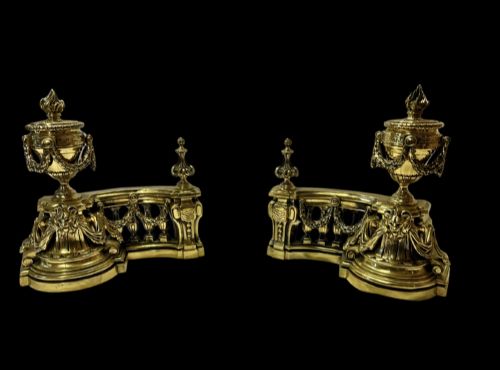
Vintage Brass Fireplace Dogs
These vintage brass fireplace dogs bring hearth and mantel to life with structural weight and polished metal.
Vintage Brass Fireplace Dogs
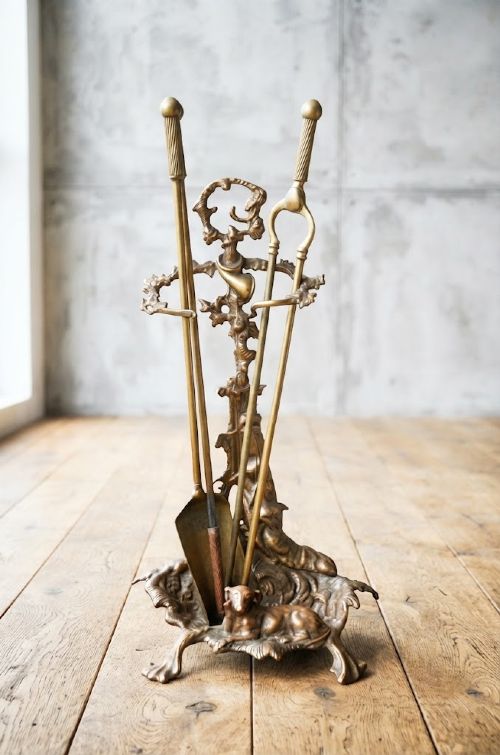
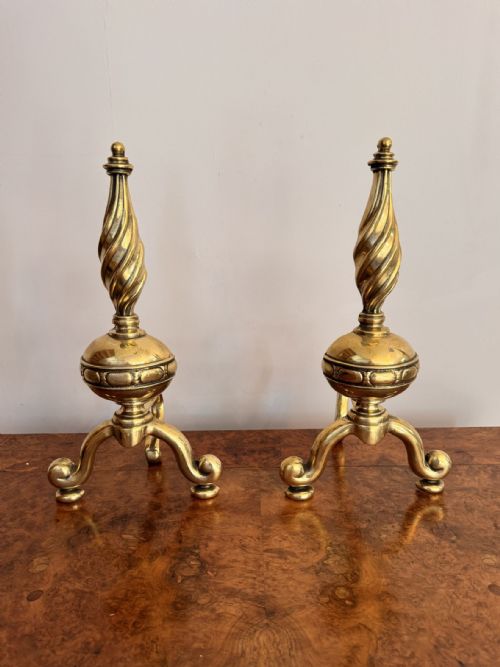
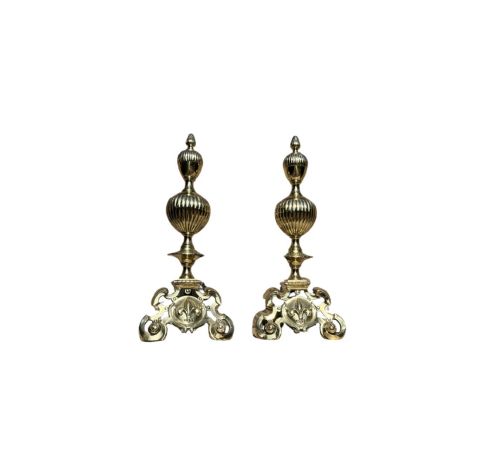
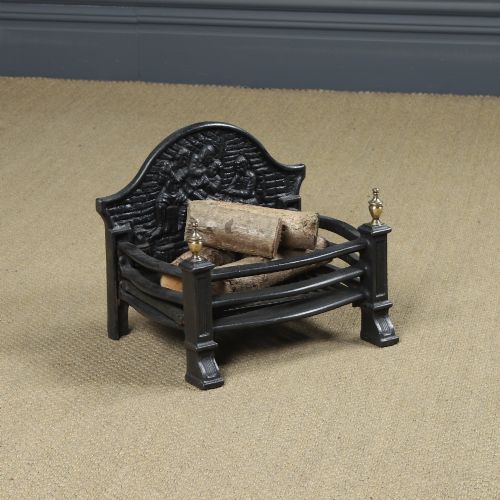
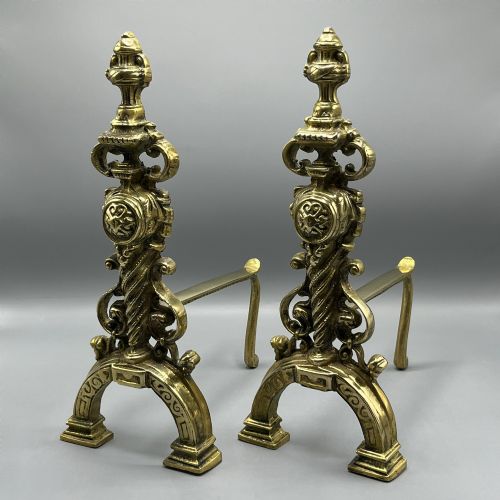
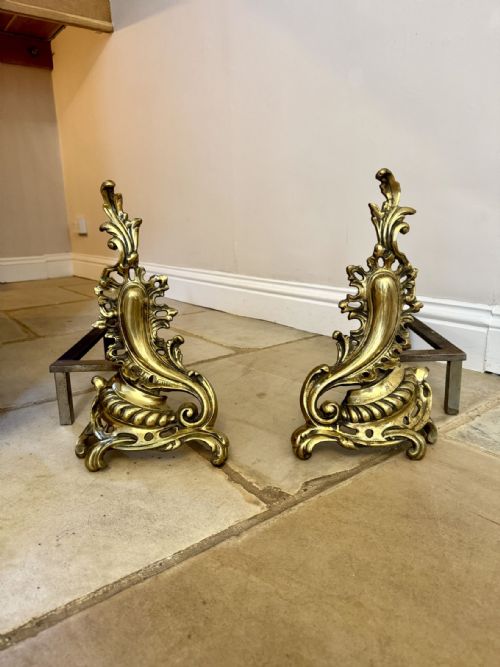
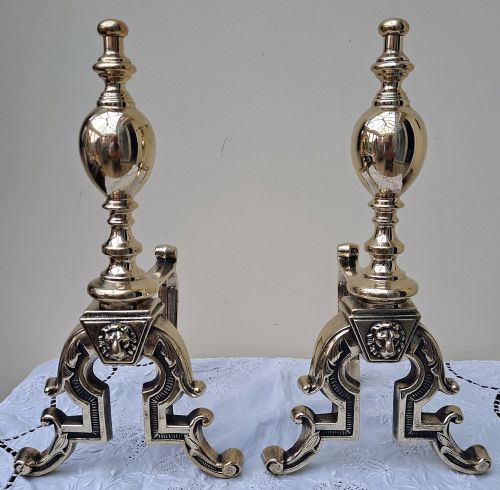
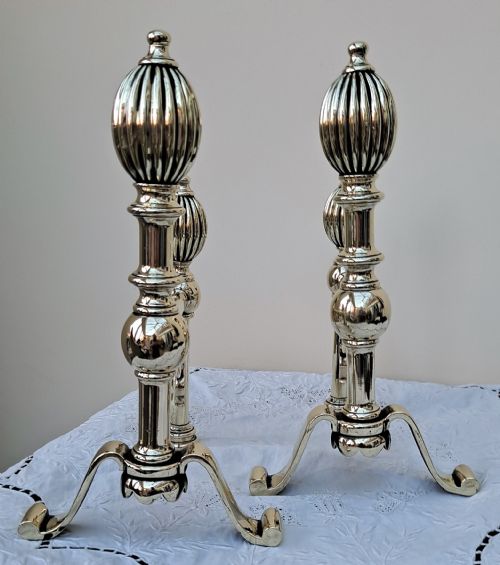
Vintage brass fireplace dogs, also known as andirons or chenets, serve as heavy metal supports to hold logs burning in an open hearth. When you search this phrase, you will find pairs designed to sit at the front of the fireplace, often accompanied by matching fire irons, grates, or companion stands.
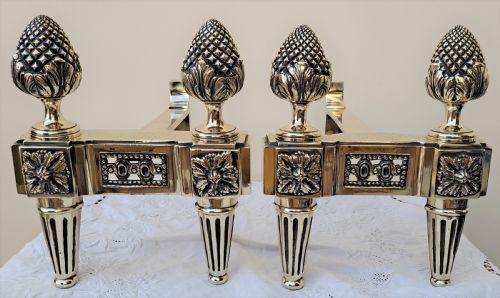
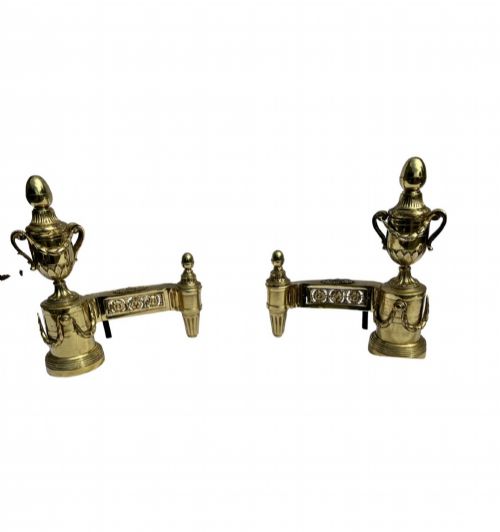
The selections span the nineteenth century into the early twentieth century, taking forms from simple geometric pillars to elaborate French rococo, Adam style, Gothic revival, and Aesthetic movement designs. Most examples originate from English and French makers, combining functional iron bars with decorative brass fronts.
Materials and construction methods
Makers utilised cast brass, solid brass, and ormolu mounted bronze for the decorative front elements, pairing them with heavy iron, cast iron, steel, and wrought iron for the horizontal billets that bear the heat of the fire. This dual construction ensured that the decorative visible portions maintained their polished or gilt appearance while the internal structure withstood high temperatures.
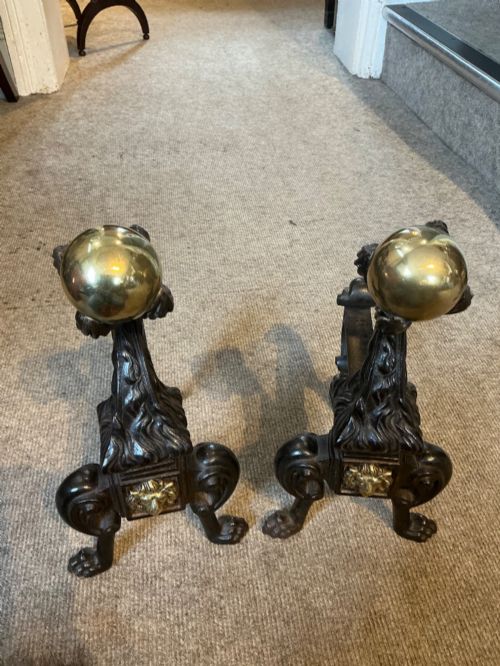
Casting techniques allowed workshops to produce ornate details such as claw and ball feet, scrolls, and hunting scenes. The metals were frequently combined with copper for companion sets and tool rests, creating a varied hearth suite.
Listings feature pieces spanning from the mid nineteenth century through the 1920s, incorporating brass, iron, copper, and bronze.
Distinctions in manufacture and finish
The distinction between standard pairs and the finest examples lies in the depth and crispness of the metal casting. Substantial weight, finely chased surface ornament, and heavy gauge iron billets separate exceptional pairs from lighter, more utilitarian alternatives.
Stylistic coherence within a suite also dictates quality, particularly when fire dogs are matched with tool rests, grates, or fender sets. The precision of the joinery between the brass facade and the iron support bar reflects the skill of the original foundry.
James Cartland & Son
The Vintage Brass Fireplace Dogs Glossary
- Andirons
- Supports for logs in a fireplace, consisting of a horizontal bar on legs with an upright decorative front. They keep logs elevated to allow air circulation beneath the fire.
- Chenet
- The French term for an andiron or fire dog. These often display elaborate rococo, baroque, or neoclassical scrollwork.
- Fire Grate
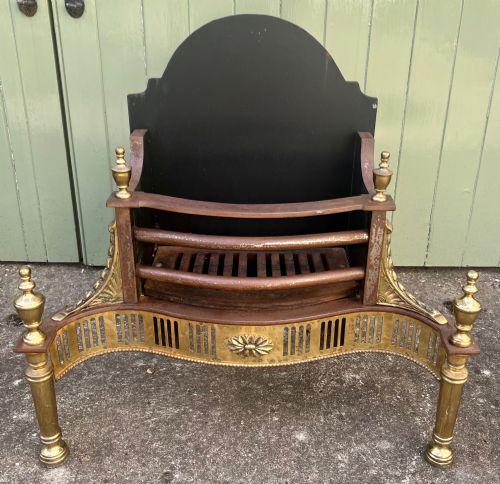
- A metal basket or framework that holds fuel in a fireplace. Some examples incorporate fire dogs directly into the front structure.
- Ormolu
- Finely ground high-carat gold applied to a bronze base. This technique was used on select hearth pieces for a rich, durable surface finish.
- Billet
- The horizontal iron bar extending backward from the fire dog to support the burning logs. It is built from heavy iron or steel to endure intense heat.
Vintage Brass Fireplace Dogs: Frequently Asked Questions
How do I use vintage fire dogs?
Vintage fire dogs are placed inside an open hearth to support logs above the floor of the fireplace. This elevation allows oxygen to circulate underneath the wood for a cleaner burn.
They also prevent logs from rolling forward into the room. The decorative fronts remain visible while the iron bars extend backward into the firebox.
What is the difference between andirons and fire dogs?
Andirons and fire dogs are terms for the same supportive hearth objects. Both describe metal frames used to hold logs in an open fireplace.
Regional preferences often dictate the term used, with French pieces frequently catalogued as chenets.
How do I identify Victorian styles?
Victorian fire dogs often display heavy casting with ornate detailing influenced by Gothic revival, rococo, or aesthetic movement designs. They frequently appear alongside matching companion sets and iron fire grates.
The materials combine solid brass fronts with sturdy wrought iron support bars.
Can these be used in a working fireplace?
Most vintage pieces feature robust iron and brass construction suitable for active hearth use. The heavy metal billets are designed to withstand high temperatures.
It is advisable to check the structural integrity of the iron support bars before burning wood.