




Vintage Brass Crest Mirror
These vintage brass crest mirror examples bring a distinct decorative weight to a room, combining cast metal frames with historic styles.
Vintage Brass Crest Mirror
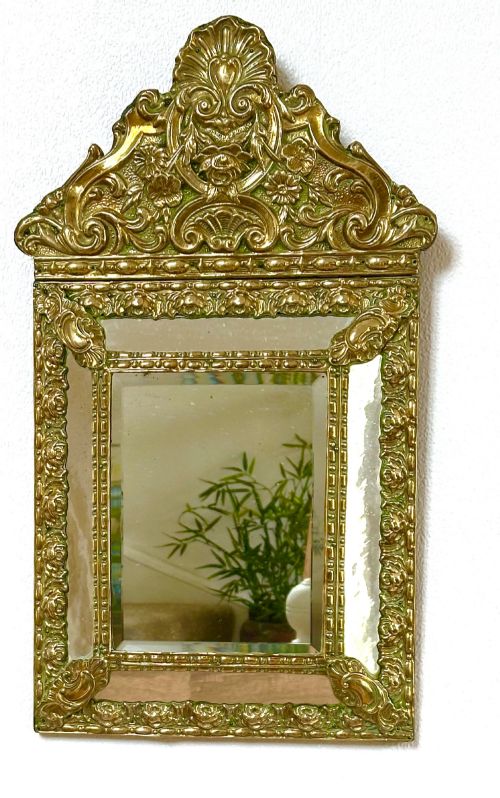
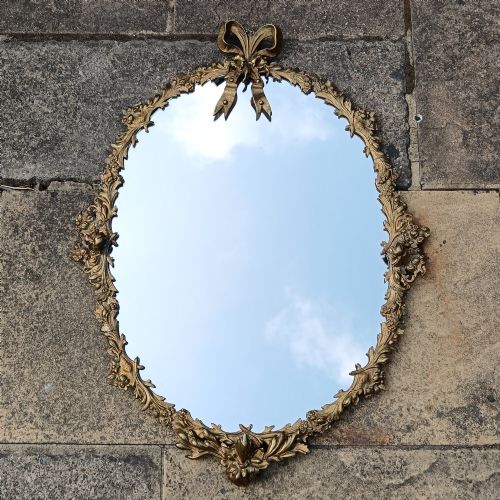
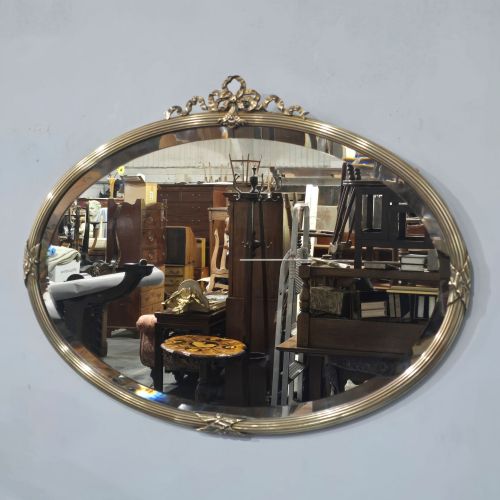
A vintage brass crest mirror combines reflective glass with a metal frame featuring an ornamental top piece, drawing on historic design vocabularies. When searching for a vintage brass crest mirror, buyers encounter wall mirrors and dressing table mirrors shaped by Victorian, Regency, Edwardian, and earlier revival aesthetics.
The evidence shows forms ranging from oval wall mirrors and cushion mirrors to marginal mirrors and girandoles. Many pieces originate from French and Dutch traditions, utilising pressed, cast, or gilded metal mounts.
Makers and manufacturers drew heavily on Louis XVI, Rococo, and Baroque revivals, producing frames that span the nineteenth and early twentieth centuries. These pieces function primarily as decorative wall hangings or tabletop accessories, often featuring specific motifs such as masks within the crest.
How they were made
Construction relies on brass, gilt bronze, gilt metal, and giltwood forming structural frames around mirror glass and bevelled glass. Wood often provides a secondary backing or structural support within the frame assembly.
Metalworking techniques recorded in the listings include fine casting and pressed brass work to create relief ornamentation along the crests and borders. Gilding or metal finishing is applied to achieve the characteristic metallic lustre seen across these pieces.
Vintage Brass Crest Mirror Retail Price Guide 2026
Typical asking prices for vintage brass crest mirror among the pieces listed under this phrase on Sellingantiques today, from the lower quarter to the upper quarter. They describe what is for sale here now, not the wider market.
Materials recorded across the inventory include brass, gilt bronze, giltwood, wood, and bevelled glass.
What varies in quality
The refinement of the casting or pressing defines the sharpness of detail in the crest and border ornamentation. Pieces show varying degrees of depth in the relief work, from simple pressed sheets to finely cast metal components.
The integration of the frame with the glass, particularly where bevelled glass or cushion mirror plates are utilised, reflects the overall standard of manufacture. The choice of underlying materials, such as the inclusion of gilt bronze versus simpler brass alloys, distinguishes different tiers of production.
The Vintage Brass Crest Mirror Glossary
- Crest mirror
- A wall or dressing table mirror featuring an ornamental top feature or crest as the focal point of the frame design.
- Cushion mirror
- A mirror frame constructed with a convex profile that slopes outward or inward toward the glass plate, often associated with seventeenth and nineteenth-century Dutch and French styles.
- Girandole
- A branched wall mirror designed to hold candles alongside the reflective glass plate.
- Marginal mirror
- A mirror style where smaller peripheral panes of glass surround a central mirror plate, held within a shared frame.
- Bevelled glass
- Glass with an angled edge ground down to a thinner profile near the perimeter, catching light and adding depth to the reflection.
Vintage Brass Crest Mirror: Frequently Asked Questions
Where should I hang a brass crest mirror?
These mirrors suit principal reception rooms, hallways, or above a mantelpiece where the decorative crest can act as a focal point. Their scale and metal frames allow them to catch and reflect light effectively in smaller spaces.
Ensure the wall fixings match the weight of the metal frame and glass plate. Secure mounting is essential for heavier cast brass or gilt bronze pieces.
How do I identify a Victorian mirror?
Victorian examples often display heavier cast brass frames, sometimes incorporating specific decorative elements like mask crests. The construction methods and stylistic revivals align with nineteenth-century manufacturing practices.
Cross-referencing the backboards, fixings, and glass bevelling style helps establish the period alongside the primary brass frame design.
Are these mirrors heavy?
The weight varies depending on whether the frame uses solid cast brass, gilt bronze, or thinner pressed brass over a wooden core. Heavier pieces require dedicated wall anchors rather than standard picture hooks.
Checking the reverse of the mirror reveals the construction materials and indicates the appropriate hanging method needed for safe display.