

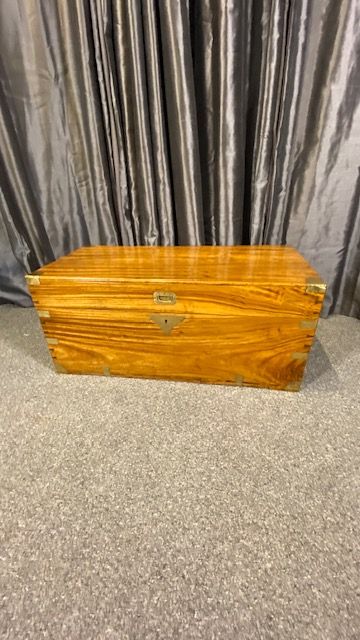
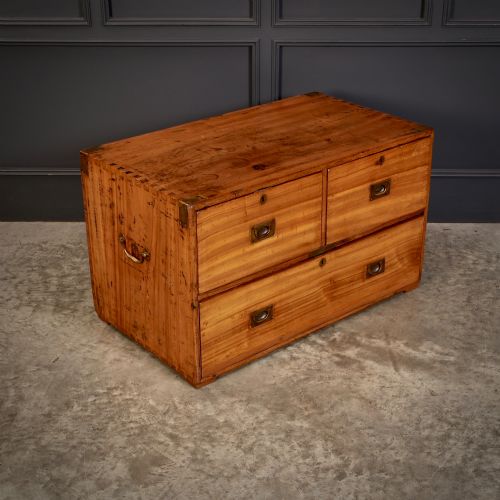
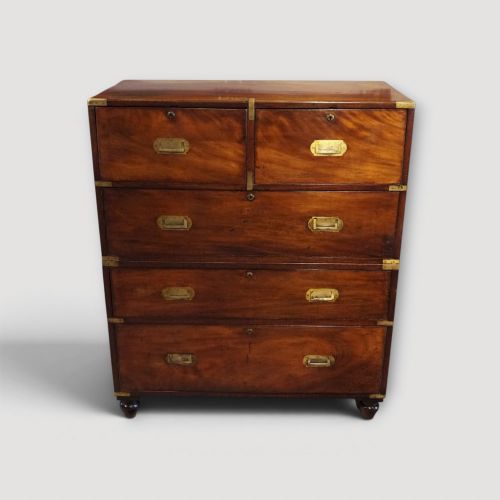
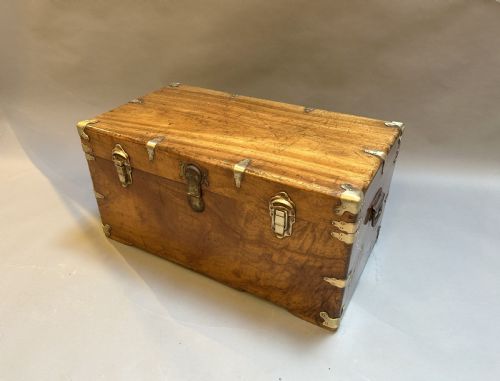

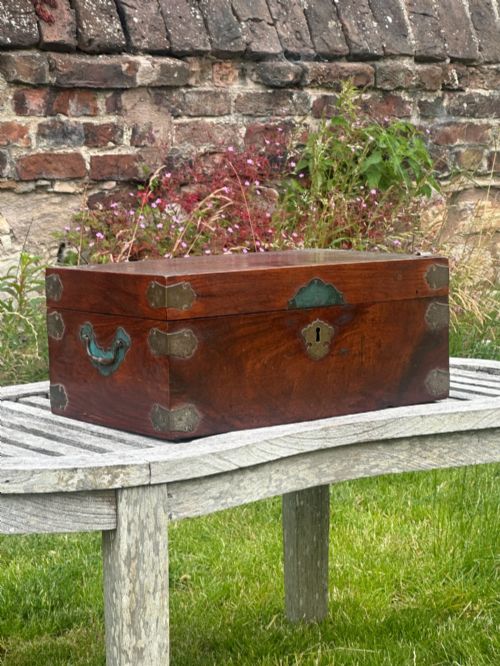


Vintage Brass Corner Trunk
A vintage brass corner trunk offers robust storage and travel history, bringing distinct character and metal-bound durability to a modern interior.
Vintage Brass Corner Trunk
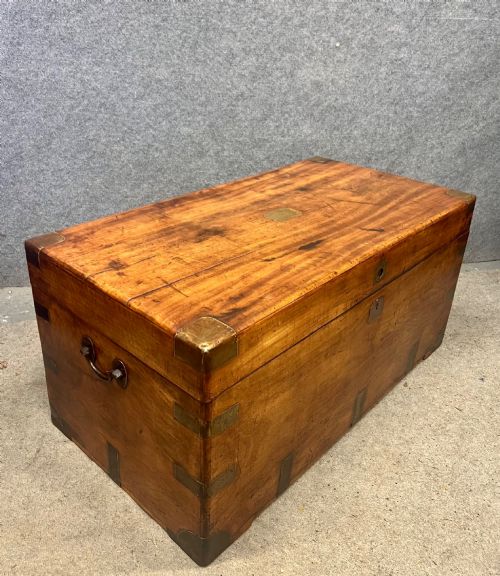
When you search for a vintage brass corner trunk, you are looking at utilitarian luggage built for travel during the nineteenth and early twentieth centuries. These pieces were designed to withstand long journeys by sea and land, featuring protective metal hardware on vulnerable edges.
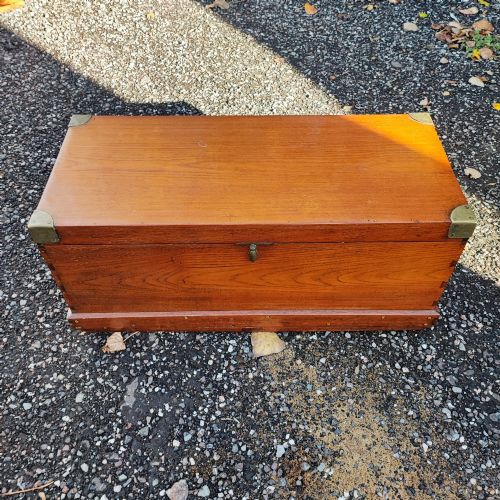
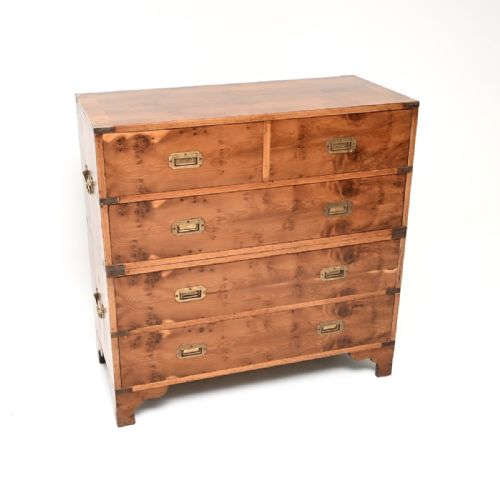
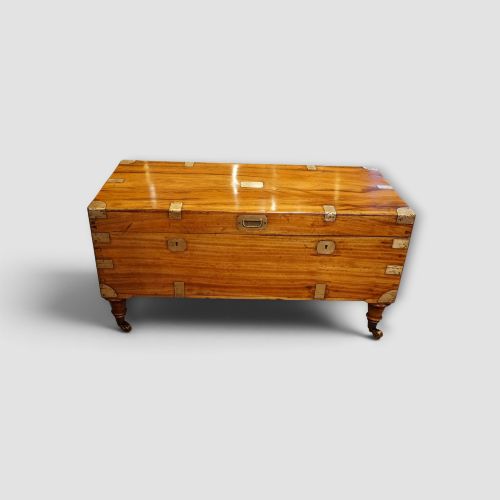
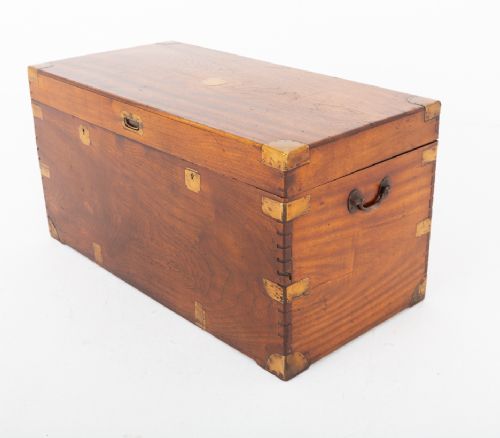
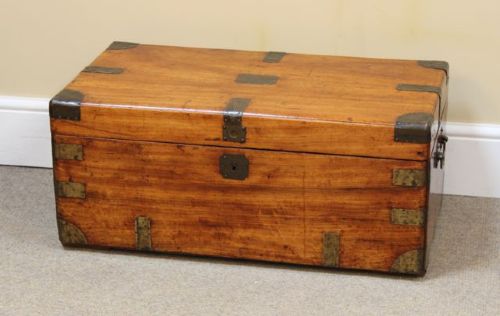
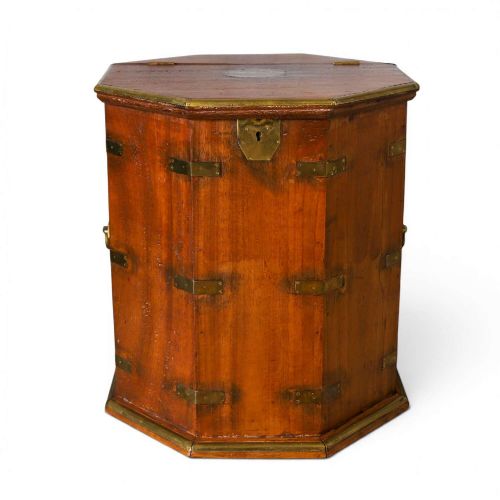
The version you are most likely to meet on this page is a nineteenth-century campaign trunk constructed from fragrant timbers and secured with brass corners. They appear in forms such as lift-top storage chests, fitted interiors, and compartmented trunks designed for officers and merchants on the move.
How they were made
Carpenters built these trunks using durable tropical hardwoods like camphor wood, teak, padouk, and mahogany to resist humidity and insects during colonial service. These timbers were selected for their stability and grain, then assembled with dovetailed or finger joints for maximum strength.
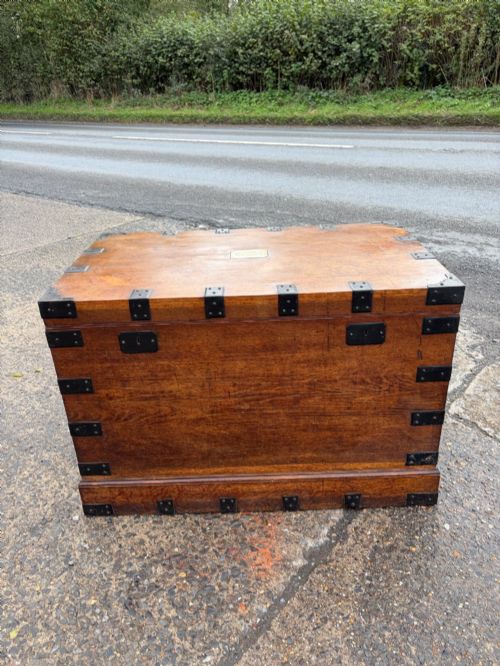
Corner brackets, strap hinges, and flush-fitting inset handles made from heavy brass were screwed or riveted to the wooden body to protect the edges from impacts. Iron and metal reinforcements also appear on specific utility boxes, while leather accents and brass capping complete the exterior finish.
Vintage Brass Corner Trunk Retail Price Guide 2026
Typical asking prices for vintage brass corner trunk among the pieces listed under this phrase on Sellingantiques today, from the lower quarter to the upper quarter. They describe what is for sale here now, not the wider market.
Many camphor wood trunks still retain a faint, unmistakable fragrance from nineteenth-century voyages across distant seas.
What varies in quality
The standard of a trunk depends heavily on the integrity of the timber selection and the weight of the brass hardware employed. Heavier, thicker gauge brass corners and straps indicate a piece intended for serious expeditionary use rather than lighter domestic travel.
Internal organisation and survival of original fittings elevate certain examples above basic utilitarian boxes. Trunks retaining untouched interior compartments, original locks, and working brass drop handles show superior initial commissioning.
The Vintage Brass Corner Trunk Glossary
- Campaign trunk
- A portable chest built in sections or with reinforced edges for military officers and travellers on active service abroad.
- Camphor wood
- An aromatic timber frequently utilised in nineteenth-century campaign chests to naturally deter insects from stored clothing.
- Brass bound
- A method of reinforcing wooden furniture and luggage edges with metal strips and corner pieces to prevent impact damage.
- Padouk
- A dense, heavy reddish-brown hardwood occasionally selected by makers for high-end colonial and Anglo-Indian travelling pieces.
- Fitted interior
- A set of internal compartments, small drawers, or lift-out trays designed within a chest to organise personal possessions during transit.
Vintage Brass Corner Trunk: Frequently Asked Questions
What is a campaign trunk?
A campaign trunk is a portable storage chest constructed for military officers, diplomats, and merchants who travelled extensively during the nineteenth century. These pieces were designed to dismantle or withstand rough transit while protecting contents.
They often feature recessed brass handles and reinforced corners to prevent snagging during loading and unloading on ships or carriages.
Why use camphor wood?
Camphor wood was chosen by makers because its natural aroma repels moths and insects, protecting garments during long sea voyages. The timber is also resilient against humidity.
Its distinct scent often lingers inside the trunk decades after manufacture.
How do I date these trunks?
Dating relies on examining the construction methods, timber types, and style of the brass hardware. Nineteenth-century pieces typically exhibit hand-cut dovetails and heavy cast brass corners.
Later pieces from the twentieth century often utilise machine-made screws and simpler internal arrangements.
How do I live with one?
These trunks function well as coffee tables, blanket boxes, or end-of-bed storage units in contemporary living spaces. Their flat tops provide surface area while the interiors conceal clutter.
Keep them away from direct heat sources to prevent the timber from splitting.