



Vintage Brass Church Holders
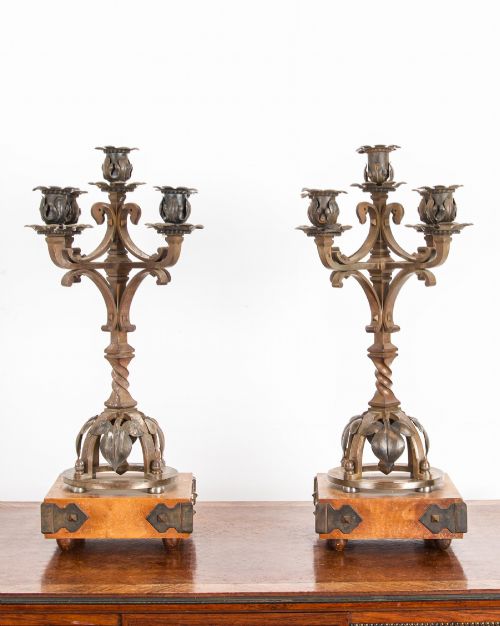
These vintage brass church holders bring monumental ecclesiastical presence to a room, spanning Gothic Revival forms and heavy Victorian engineering.
Vintage Brass Church Holders
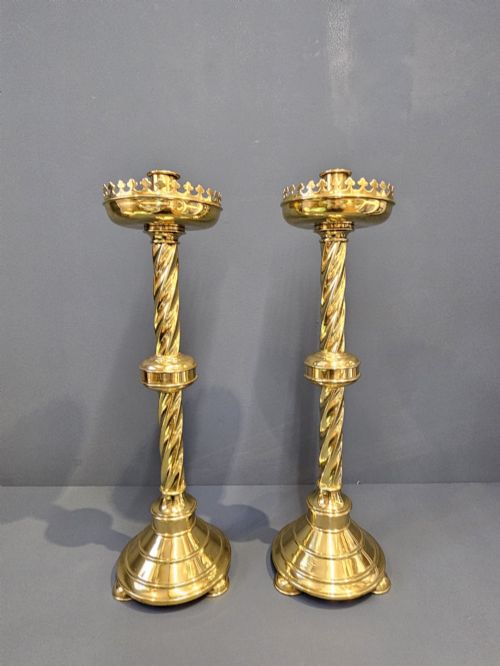
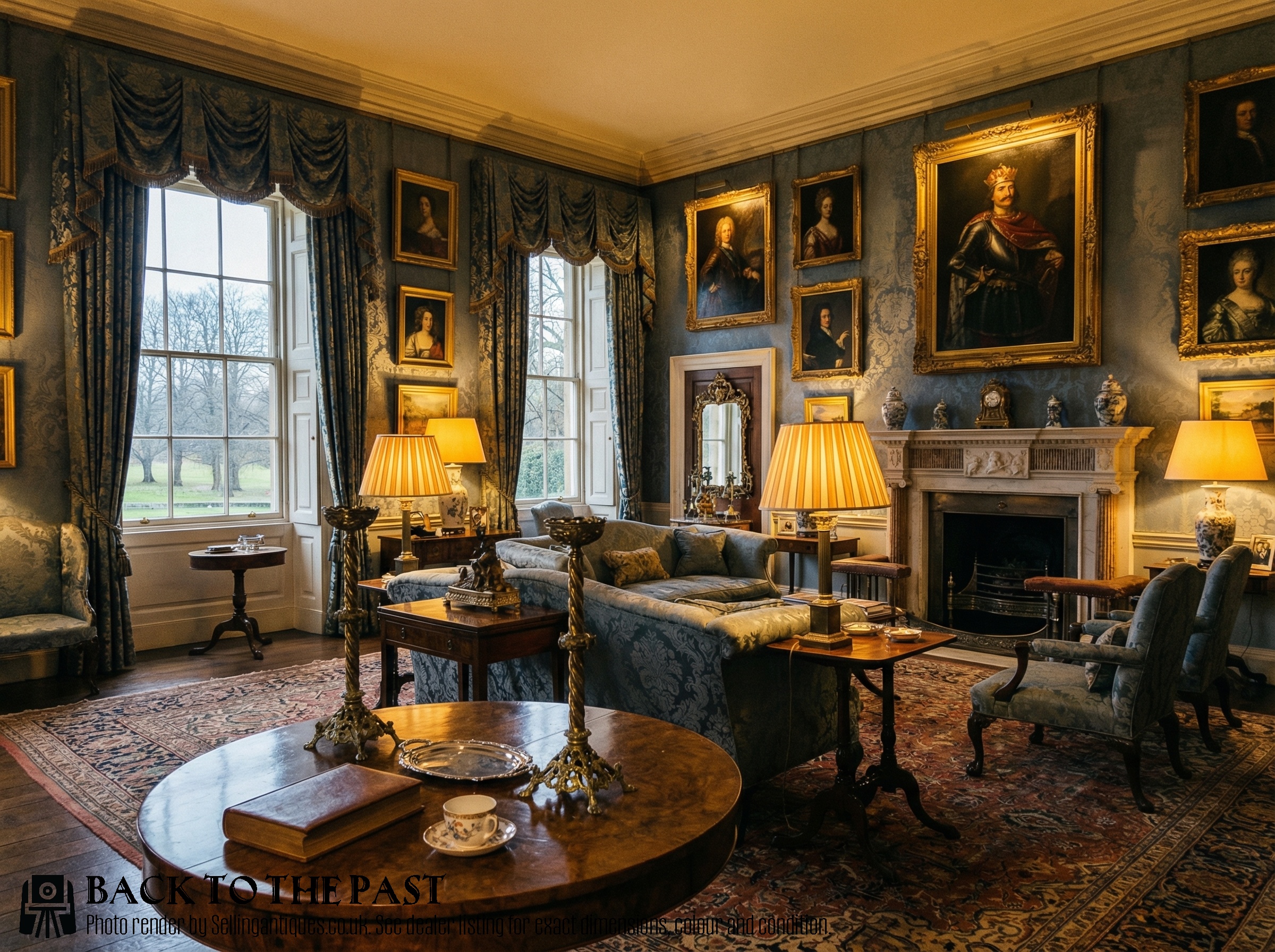
Vintage brass church holders encompass tall candlesticks, multi-branch candelabra, and floor-standing models created for ecclesiastical settings during the nineteenth and early twentieth centuries. When searching for vintage brass church holders, buyers most frequently encounter pairs of substantial altar candlesticks and pricket sticks designed to elevate altar lighting.
The selection ranges from compact nineteenth-century examples to imposing floor candlesticks, incorporating materials such as cast brass, bronze, wrought iron, and occasional wooden or enamel elements. Stylistic influences lean heavily toward Victorian Gothic Revival, alongside seventeenth-century style revivals, Amsterdam School designs, and Art Deco interpretations.
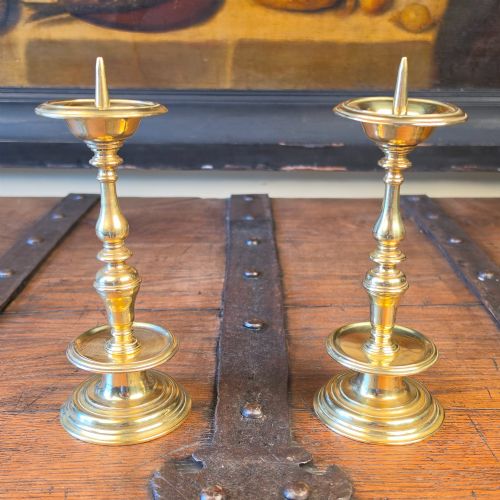
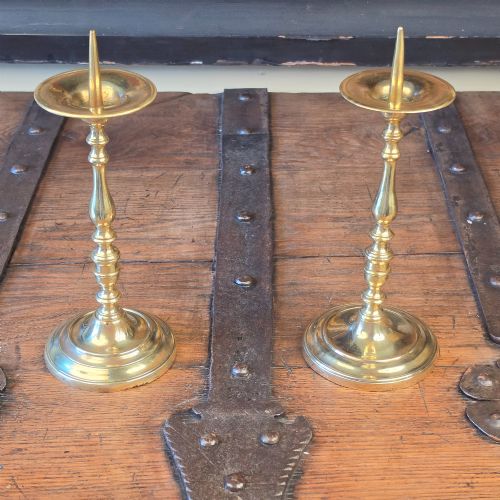
Forms include standard socket candlesticks as well as pricket sticks featuring a central spike to secure large wax candles. Objects originate from English, French, and broader European workshops, reflecting the formal requirements of period church sanctuaries.
How they were made
Manufacturers utilised heavy cast brass, bronze, and wrought iron to construct these durable ecclesiastical furnishings, often combining metals to achieve structural stability in tall floor and altar pieces. Components were cast in sections, utilising threaded rods or heavy mounting pins to join heavy bases, stems, and drip pans securely.
Surface treatments included polished or patinated brass finishes, complemented by painted metal details, applied enamel work, and occasional gilded bronze applications on French altar pieces. Structural frames frequently integrated turned wooden elements or iron supports to bear the weight of monumental candelabra and multi-branch fixtures.
Listings feature brass, bronze, wrought iron, and wood across periods from the 1860s through the 1940s, including Victorian Gothic Revival and Amsterdam School styles.
What varies in quality
Distinctions in quality arise from the weight of the metal casting and the crispness of chased or moulded decorative details such as Corinthian capitals and gothic tracery. Heavier gauges of brass and bronze indicate superior foundational substance, particularly in tall floor standards and multi-branch candelabra.
The integrity of assembly determines structural success, distinguishing solid multi-part construction joined by robust threaded connections from lesser utilitarian adaptations. The sophistication of stylistic execution, from strict Victorian Gothic Revival proportions to distinct Amsterdam School iron and brass integration, separates standard production from exceptional ecclesiastical work.
T Thomason & Co
The Vintage Brass Church Holders Glossary
- Pricket
- A sharp metal spike atop a candlestick designed to impale and hold a large candle firmly in place. This form predominates on traditional altar pieces.
- Candelabra
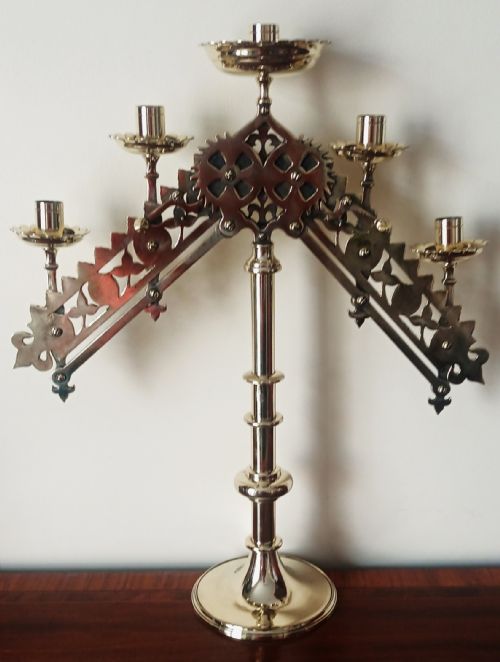
- A branched lighting fixture holding multiple candles upon a single central stem. These often feature adjustable arms or elaborate five-branch configurations.
- Gothic Revival
- An architectural and decorative style drawing inspiration from medieval forms, featuring pointed arches, tracery, and vertical emphasis. This aesthetic dominates nineteenth-century ecclesiastical metalwork.
- Amsterdam School
- An early twentieth-century architectural and design movement characterised by expressive brickwork, heavy massing, and integrated metal elements. Pieces from this tradition combine brass and iron into robust sculptural forms.
Vintage Brass Church Holders: Frequently Asked Questions
How do I clean vintage brass church holders?
Maintain the aged patina by dusting gently with a soft dry cloth rather than applying aggressive chemical polishes. Preserving the natural oxidation protects the historical surface of nineteenth-century brass and bronze.
Avoid abrasive metal cleaners that strip away decades of atmospheric ageing. Gentle care ensures the original character remains undisturbed.
How do I date a vintage church candle holder?
Examine the casting method, base construction, and stylistic markers such as Gothic Revival proportions or Amsterdam School massing. Nineteenth-century examples often feature heavy multi-part brass assemblies.
Comparing decorative motifs against documented Victorian and early twentieth-century ecclesiastical designs helps narrow the manufacturing period. Maker marks, where present, provide definitive chronological evidence.
Can these holders be used with modern candles?
Socket candlesticks accommodate standard modern taper candles if the base diameter matches the cup. Pricket holders require candles with a soft base capable of accepting the central mounting spike.
Care should be taken to secure tall or heavy candles safely on pricket spikes. Using appropriate adapters prevents wobble in oversized nineteenth-century sockets.
Where were these pieces originally used?
These ecclesiastical objects originated in church sanctuaries, chapels, and cathedrals for ceremonial altar illumination. Taller floor standards and heavy candelabra stood directly on the chancel floor.
Smaller pairs served on side altars or commemorative spaces within Victorian and continental churches. Their robust construction was engineered for demanding ecclesiastical environments.