





Vintage Brass Chenets
Vintage brass chenets are hearth furniture that hold logs off the floor, bringing French style and polished metal warmth to a fireplace.
Vintage Brass Chenets
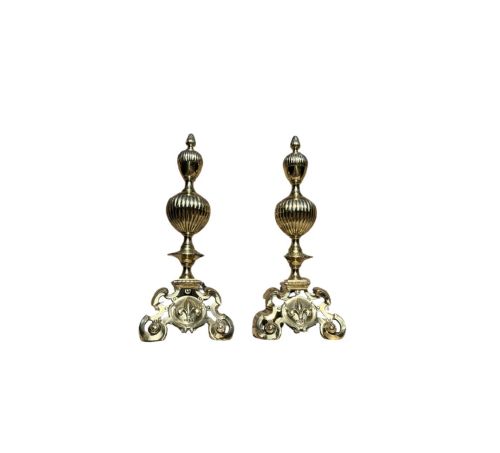
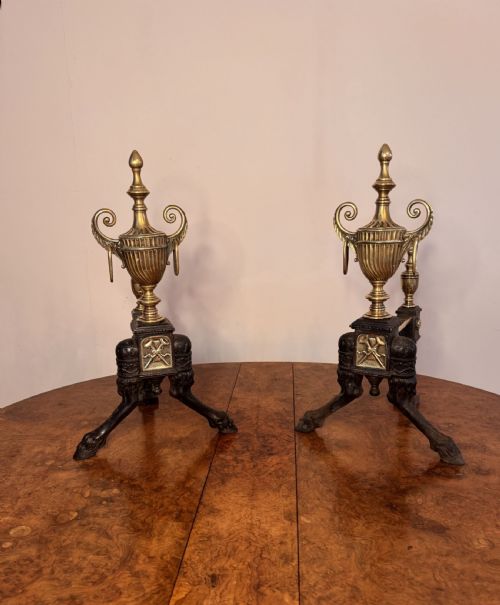
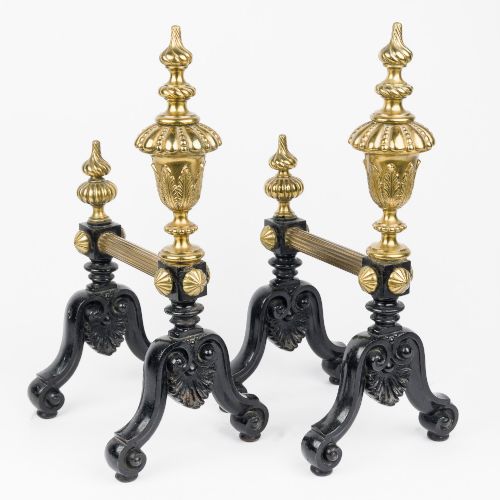
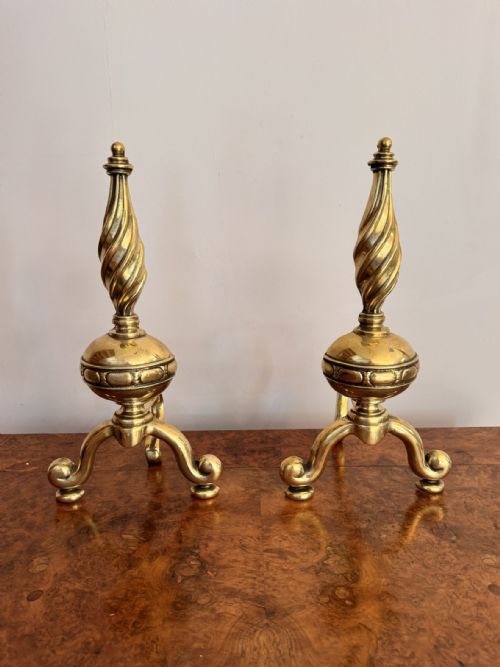
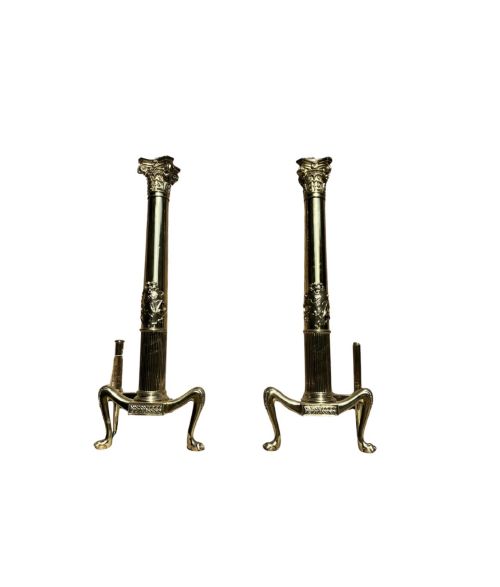
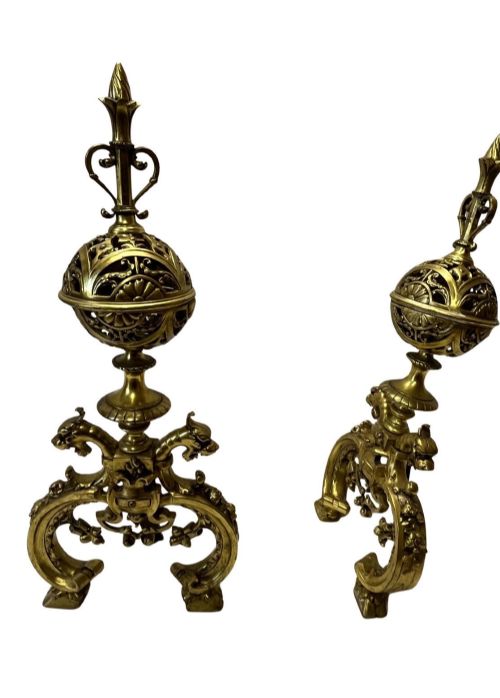
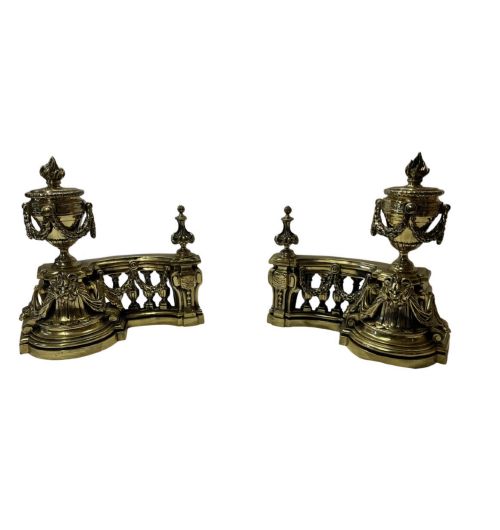
Vintage brass chenets, also known as fire dogs or andirons, are decorative and functional fireplace accessories designed to support logs above the hearth for better airflow. When you search for vintage brass chenets, you encounter pairs originating from the nineteenth century into the early twentieth century, spanning periods from the Regency era through to the 1920s.
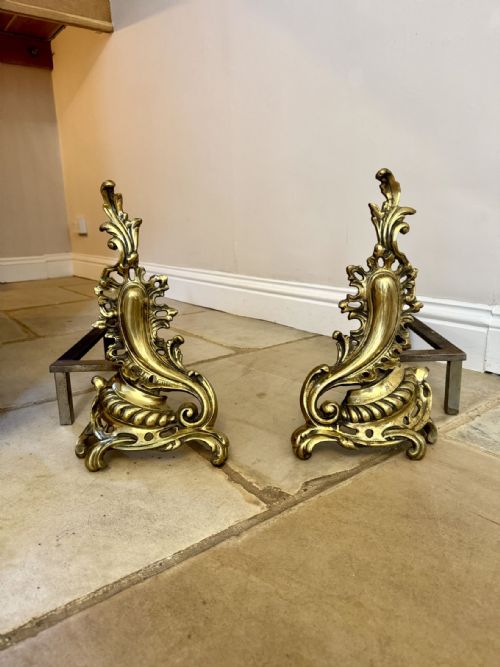
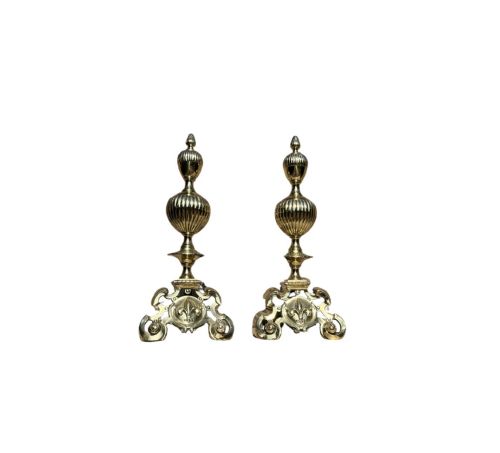
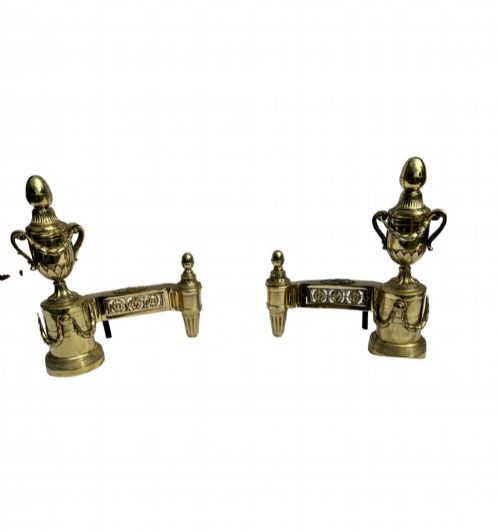
The pieces listed here frequently showcase French Rococo, Baroque, and Neoclassical designs, alongside Victorian interpretations and copies of Louis XVI styles. They typically function as the decorative visible frontguards of a hearth setup, often paired with iron log-bearing backs or stands.
Originating largely from French and British workshops, these metalwork items reflect the formal tastes of nineteenth-century drawing rooms and grand reception spaces. They appear in forms ranging from simple cast brass to ornate scrollwork and figural mountings.
How they were made
These items rely heavily on the metalworking techniques of casting and forging, combining solid brass, cast brass, and iron elements. Foundry workers poured molten brass into detailed moulds to achieve the ornate curves and botanical motifs characteristic of Rococo and Baroque revivals.
Many examples incorporate secondary metals, pairing cast iron fire bars with bright brass or gilt bronze fronts. Finer pieces add ormolu or fire gilding to highlight specific decorative details against the polished or cast surfaces.
Vintage Brass Chenets Retail Price Guide 2026
Typical asking prices for vintage brass chenets among the pieces listed under this phrase on Sellingantiques today, from the lower quarter to the upper quarter. They describe what is for sale here now, not the wider market.
The listings on this page span the Victorian era, the Regency period, and the early twentieth century, utilising brass, iron, bronze, and ormolu.
What varies in quality
The standard of a pair rests upon the crispness of the casting and the weight of the metal used in production. Heavier, more substantial pairs display sharper chasing and deeper relief in their ornamentation, avoiding the softer edges found in secondary copies.
Attention to detail in the assembly, such as secure joints between the decorative front and the iron dog bars, separates utilitarian hearth furniture from high-status decorative metalwork.
James Cartland And Son
The Vintage Brass Chenets Glossary
- Chenet
- A French term for an andiron or fire dog used to support logs in an open fireplace. They sit in pairs facing into the room.
- Andiron
- A horizontal iron bar supported by legs with an upright decorative front, used in pairs to hold burning wood. They protect the hearth base and aid combustion.
- Ormolu
- Finely ground high-carat gold mercury-gilded to a bronze or brass base object. It gives a rich yellow metallic lustre seen on high-status decorative metalwork.
- Rococo
- An ornate design style characterised by asymmetrical scrollwork, C-scrolls, and naturalistic plant motifs. It dominates many nineteenth-century French hearth accessories.
- Baroque
- A heavy, dramatic architectural and decorative style favouring grand scale and rich ornamentation. Pieces from this tradition display robust symmetry and dense detail.
Vintage Brass Chenets: Frequently Asked Questions
What is the difference between chenets and andirons?
Chenets is the French term for the decorative fire dogs known in English as andirons. Both terms refer to the paired metal supports that hold logs inside an open fireplace.
In practice, items marketed specifically as chenets often display more ornate French stylistic influences like Rococo scrollwork, whilst andirons can range from simple utilitarian iron supports to heavily decorated brass show-pieces.
How were brass chenets used in a fireplace?
They were placed on the hearth floor in matching pairs with their decorative fronts facing outward into the room. The horizontal bars or integrated dogs behind the decorative fronts held the logs off the brickwork.
This elevation allowed air to circulate underneath the wood for a better burn, while the heavy metal fronts reflected heat back into the living space and protected the fireplace opening.
Are these suitable for a working fireplace?
Most antique pairs combine cast brass decorative fronts with sturdy iron dog bars designed to withstand high temperatures. They remain entirely practical for supporting logs in an active hearth.
Buyers should inspect the structural iron components behind the decorative brass fronts to ensure they remain solid and capable of bearing the weight of firewood.
How do I identify the period of a pair?
Dating relies on the stylistic vocabulary, casting quality, and the specific metal alloys visible on the pieces. Nineteenth-century examples often copy earlier Regency, Louis XVI, or Baroque designs closely.
Examining the casting seams, fastener types, and wear patterns on the iron undersides helps distinguish nineteenth-century production from later twentieth-century reproductions.
How do I care for antique brass hearth pieces?
Regular dusting with a dry cloth prevents soot and ash build-up from settling into the intricate cast crevices. Avoid harsh chemical cleaners that strip the aged patina accumulated over decades.
If polishing is desired, apply a mild, non-abrasive brass cleaner sparingly with a soft cloth, taking care not to get polish trapped in the recessed ornamental details of the casting.