

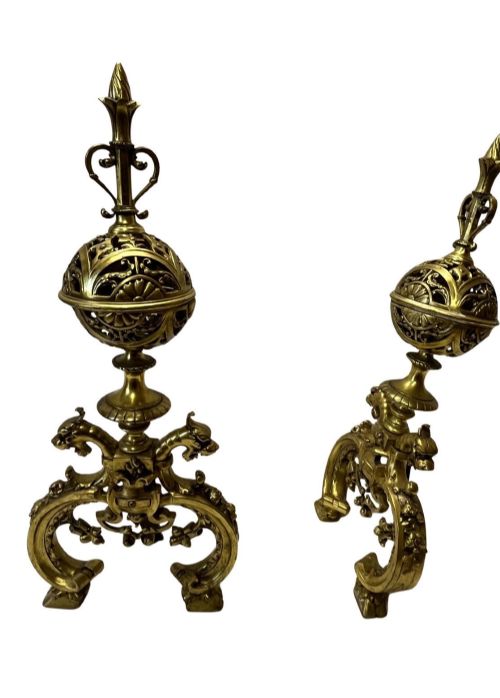


Decorative Brass Fire Dogs
Decorative brass fire dogs bring weight and brightness to an active hearth, offering functional support for logs alongside ornate sculptural form.
Decorative Brass Fire Dogs
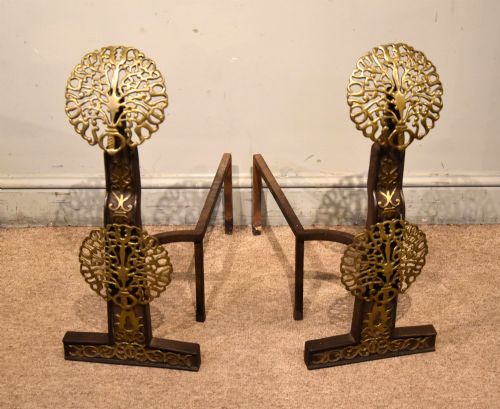
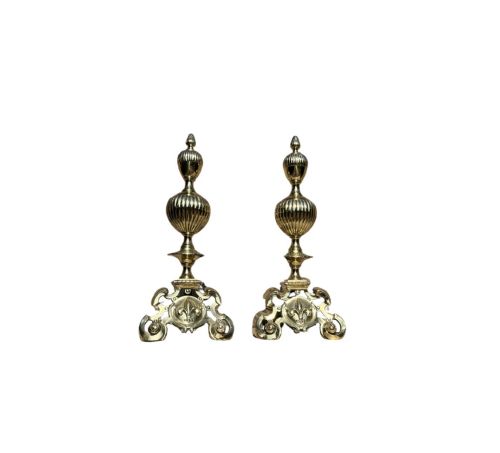
Decorative brass fire dogs are heavy fireplace accessories designed to support logs above the hearth floor, allowing air to circulate beneath the fire. When you search for decorative brass fire dogs, you encounter pairs of sturdy andirons, chenets, and fire baskets that served central domestic roles in period rooms.
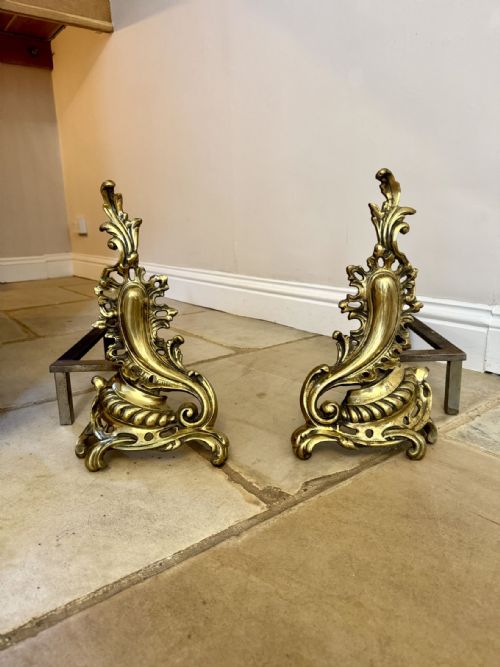
The examples seen on this page span the nineteenth century, including specific dates such as eighteen-hundred, eighteen-fifty, eighteen-eighty, nineteen-hundred, and nineteen-thirty. These pieces frequently draw upon earlier French rococo, French baroque, and seventeenth-century revival aesthetics.
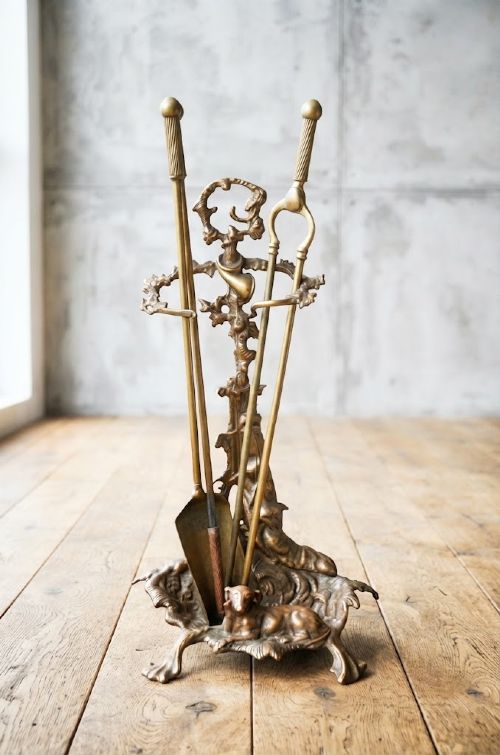
Most entries are matching pairs intended to flank the opening of a fireplace, though related items such as companion stands and umbrella stands also appear. Makers and artisans constructed these pieces using a mix of brass, cast brass, bronze, ormolu, gilt bronze, wrought iron, and cast iron.
Materials and construction methods
Foundry workers used casting techniques to shape molten brass and iron into intricate decorative forms, combining solid metal bodies with detailed surface relief. Many pieces integrate cast brass or ormolu mounts with structural iron shafts designed to withstand intense hearth heat.
Gilt bronze and ormolu elements provided polished golden highlights against darker iron components, a contrast visible across multiple nineteenth-century French and English designs. Artisans finished these surfaces through careful chasing and mounting to secure ornamental details to the main fire dog structure.
Decorative Brass Fire Dogs Retail Price Guide 2026
Typical asking prices for decorative brass fire dogs among the pieces listed under this phrase on Sellingantiques today, from the lower quarter to the upper quarter. They describe what is for sale here now, not the wider market.
Materials recorded across the current inventory include brass, bronze, ormolu, wrought iron, and cast iron in various combinations.
Assessing quality in period fire dogs
Quality rests in the crispness of the cast ornamentation and the weight of the metal used in the construction of the shaft and feet. Finer pairs display sharply defined rococo or baroque scrollwork and secure joints between the brass decorative fronts and iron support bars.
The articulation of sculptural details, such as figurative motifs or hunting scenes on companion stands, distinguishes standard production from more ambitious foundry work. Integrated use of fire-gilt ormolu alongside cast brass indicates a higher grade of material choice and workshop execution.
The Decorative Brass Fire Dogs Glossary
- Andirons
- Supports for firewood in a fireplace, consisting of a horizontal bar on legs with an upright decorative front. They are synonymous with fire dogs.
- Chenets
- French term for fire dogs or andirons, frequently used to describe decorative metal supports featuring rococo or baroque styling.
- Ormolu
- Finely ground high-carat gold applied to a bronze base using a mercury amalgamation technique, creating a rich golden surface finish.
- Fire Basket
- A metal grate designed to hold coal or wood within a hearth, sometimes combined with brass and iron andiron structures.
- Rococo Revival
- A nineteenth-century design style emulating the asymmetric scrolls, shell motifs, and curving lines of the mid-eighteenth century.
Decorative Brass Fire Dogs: Frequently Asked Questions
What is the difference between fire dogs and andirons?
Fire dogs and andirons are two terms for the exact same hearth furniture piece. Both names describe the heavy metal supports used to hold logs off the floor of a fireplace.
Regional preferences often determine which term appears in a description, with andirons being common in formal listings and fire dogs used colloquially.
How do you use antique fire dogs today?
These pieces can function inside an open fireplace to support logs for burning, provided the iron bars are structurally sound. Many people also place them in non-working fireplaces as decorative architectural focal points.
When positioned in an empty hearth, they fill the empty space with period character and polished metal detail.
Are these pieces made entirely of solid brass?
Most period fire dogs combine multiple metals to balance decorative appearance with structural strength. The decorative front is typically cast brass, bronze, or ormolu, while the log-supporting bar behind is usually wrought iron or cast iron.
This mixed-material construction ensures the piece can endure high temperatures without warping the decorative elements.