
Traditional Fireplace Andirons
Traditional fireplace andirons support logs within a hearth, combining heavy metal construction with decorative casting to anchor a room's focal point.
Traditional Fireplace Andirons
Traditional fireplace andirons, also known as fire dogs, hold wood fuel aloft in a hearth to improve air circulation and burn efficiency. These pieces arrive in pairs, designed to sit directly on the hearth floor or integrate with fire baskets and grates.
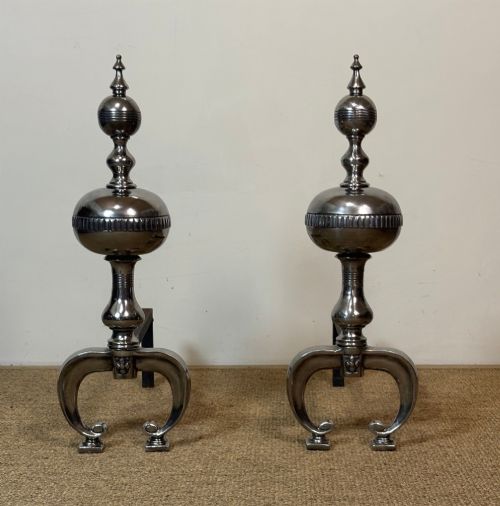
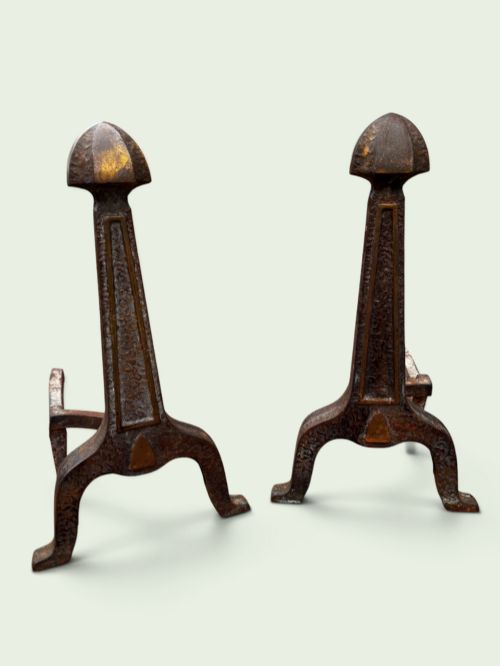
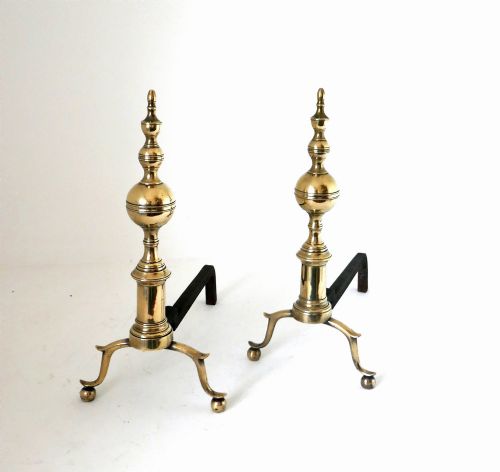
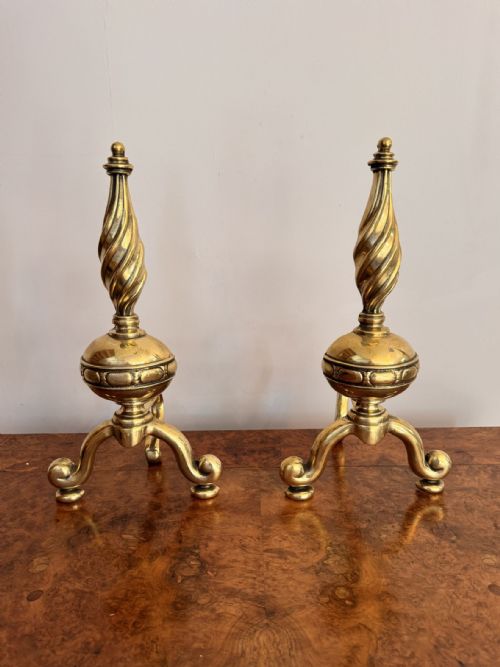
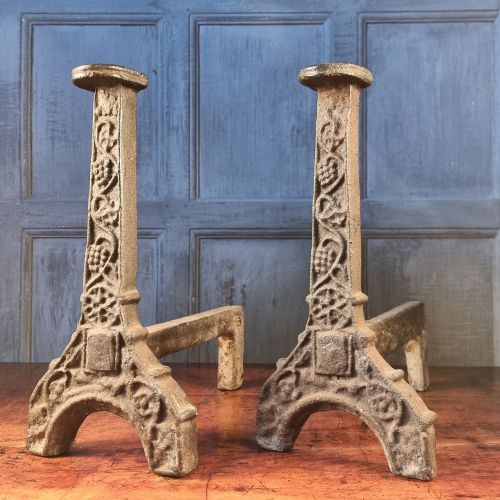
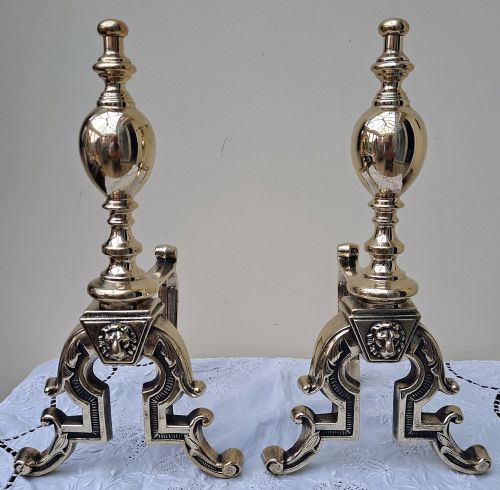
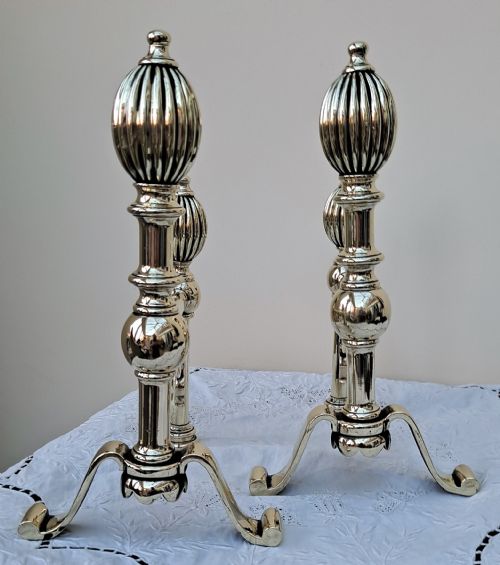
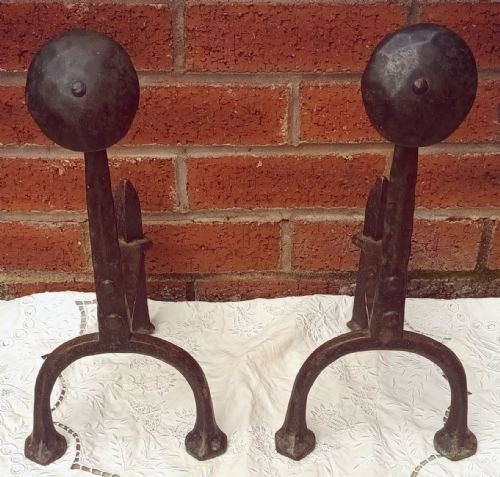
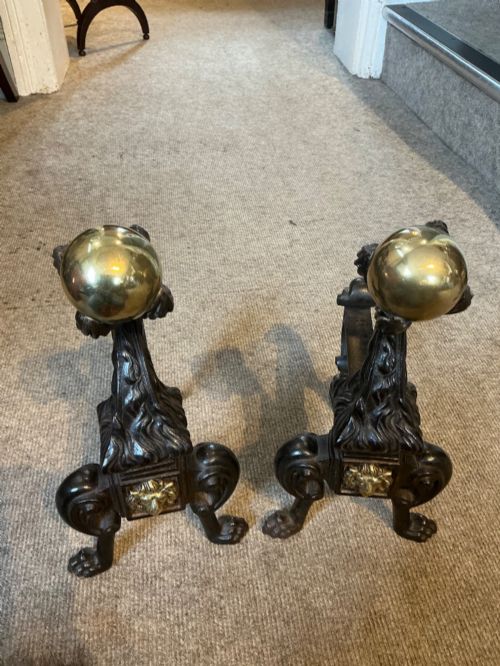
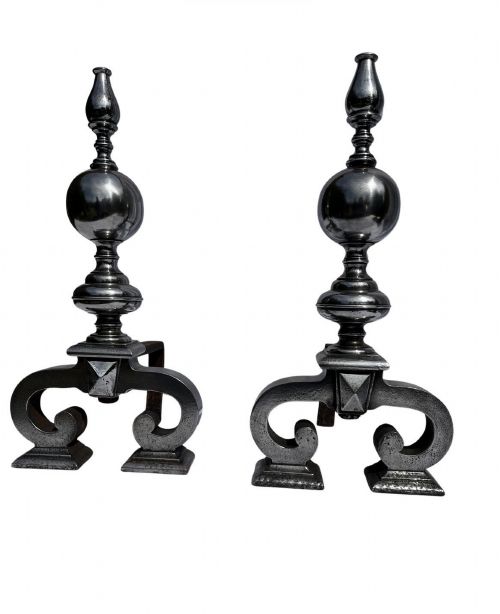
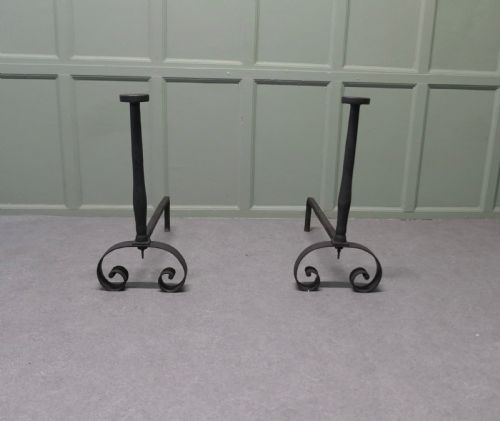
The selections available here lean heavily toward nineteenth-century Victorian and Edwardian examples, alongside occasional eighteenth-century and sixteenth-century specimens. Buyers frequently encounter solid brass and wrought iron forms, shaped in styles ranging from Gothic Revival to Arts and Crafts.
How they were made
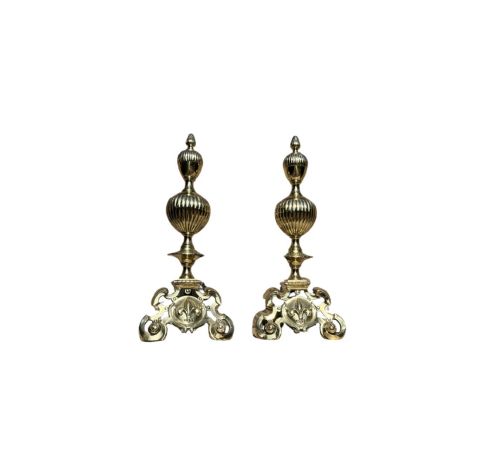
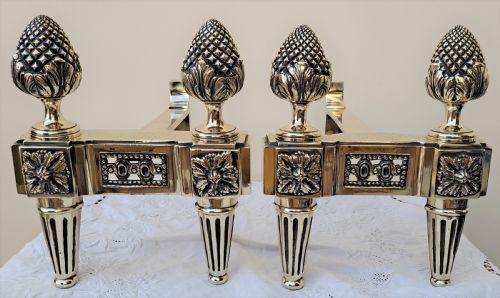
Makers utilised cast iron, wrought iron, steel, and solid or cast brass to build these supports. Iron and steel components typically show hand-forging or heavy casting, while brass elements rely on detailed foundry work to achieve decorative motifs.
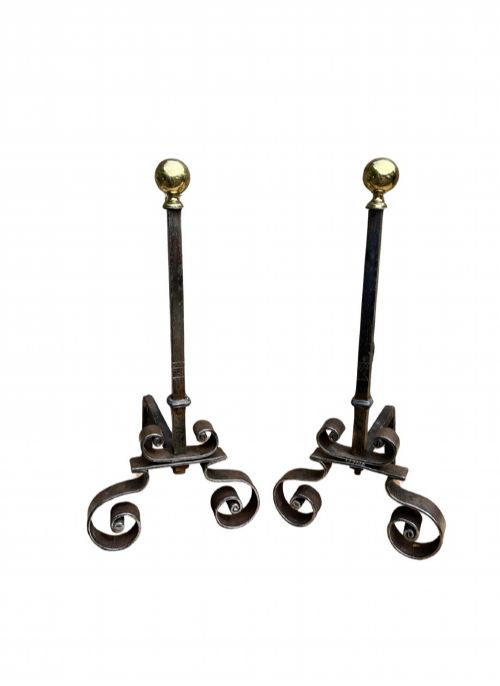
Many pairs combine materials, pairing iron shafts with brass fronts or incorporating copper details. Construction methods range from hand-forged wrought iron bars to finely cast brass uprights designed for hearth stability.
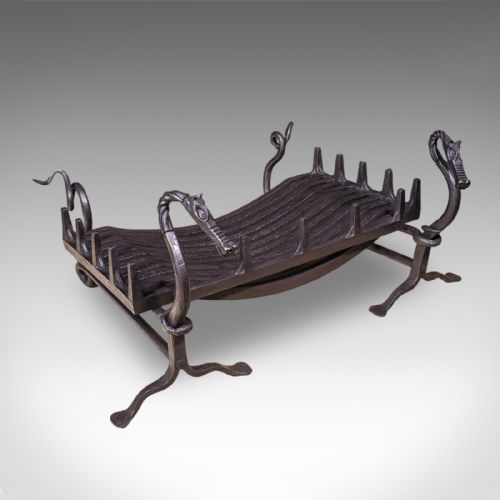
Dragon motifs occasionally peer out from nineteenth-century hearth guards, watching over the flames with unblinking metal eyes.
What varies in quality
Quality rests in the weight of the metal and the crispness of the casting. Substantial, heavy pairs maintain structural integrity under burning logs, whereas lighter versions prioritize decorative surface work over hearth utility.
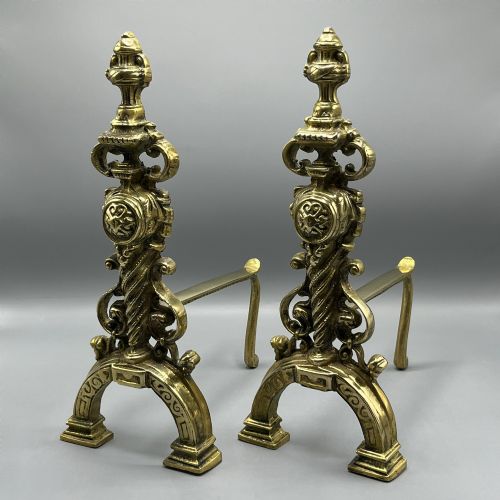
The refinement of surface detail distinguishes standard production from finer output. Ornate mouldings, clean dragon motifs, and balanced proportions reveal the skill of the original metalworker.
The Traditional Fireplace Andirons Glossary
- Andiron
- A metal support used in pairs to hold logs in a fireplace. They allow air to circulate beneath the wood for a better fire.
- Fire Dog
- An alternative term for an andiron, referencing the horizontal bar or dog leg that supports the fuel. These often feature decorative front standards.
- Fire Basket
- A metal grate that holds coal or wood, frequently used in conjunction with andirons or companion sets.
- Wrought Iron
- Iron that is heated and hammered into shape by hand, resulting in durable metalwork with visible texture.
- Cast Iron
- Iron poured into a mould to create solid, heavy components with detailed surface patterns.
Traditional Fireplace Andirons: Frequently Asked Questions
How do andirons work in a fireplace?
Andirons hold logs above the hearth floor on horizontal bars. This elevation allows air to circulate underneath the wood, which improves combustion and smoke draw.
The vertical fronts stand outward to keep rolling logs contained within the hearth area while providing a decorative anchor for the fireplace.
Are andirons used with a fire basket?
Certain setups pair andirons directly with fire baskets or grates to support coal or mixed fuel. Other configurations use them independently simply for holding logs.
Matching sets often include companion fire irons or tool rests designed to sit alongside the main andirons on the hearth.
What metals were used for antique andirons?
Antique andirons appear primarily in cast iron, wrought iron, steel, and solid or cast brass. Iron provided strength for the load-bearing billets, while brass supplied decorative brilliance.
Some examples also incorporate copper or feature gilt brass surfaces for formal nineteenth-century drawing-room settings.
How do I identify Victorian andirons?
Victorian andirons frequently display heavy brass construction, ornate casting, or stylistic revivals such as Gothic and French Baroque. Makers during this era also produced wrought iron Arts and Crafts pieces with hand-forged details.
Examining the weight, casting clarity, and fastener types helps distinguish nineteenth-century production from earlier or later work.