




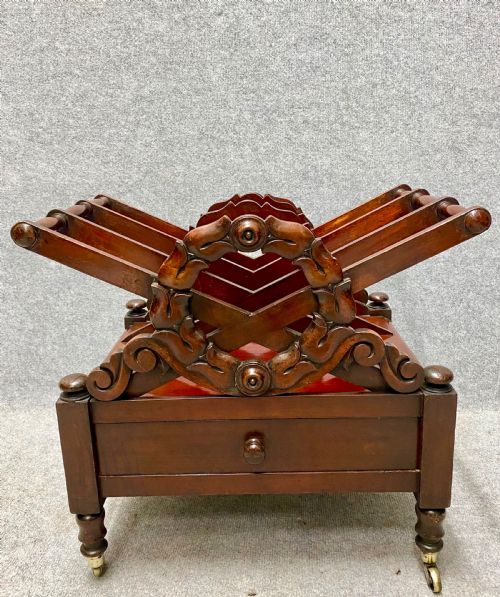
Vintage Brass Castor Stand
These vintage brass castor stand examples are sturdy little pieces of furniture on wheels, ideal for holding papers, books or displays with ease.
Vintage Brass Castor Stand
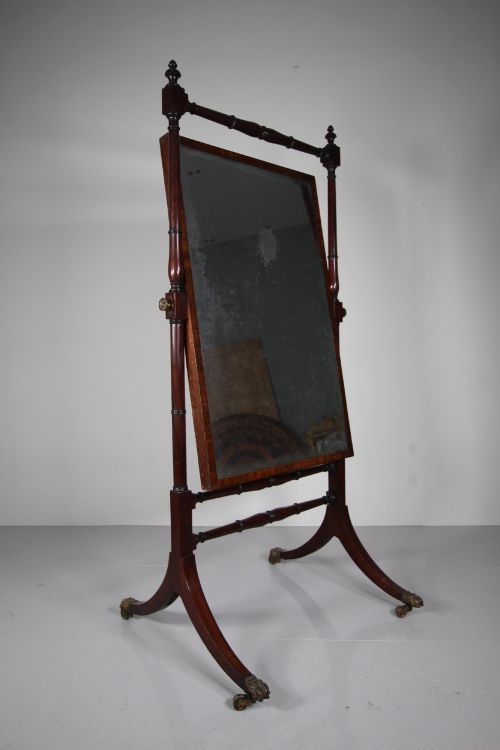
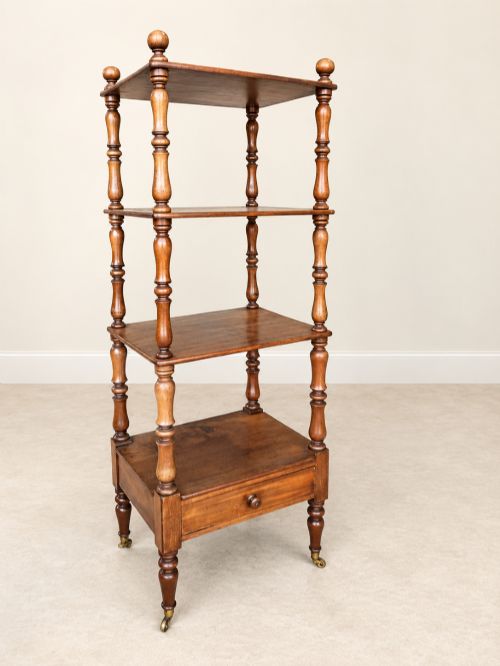
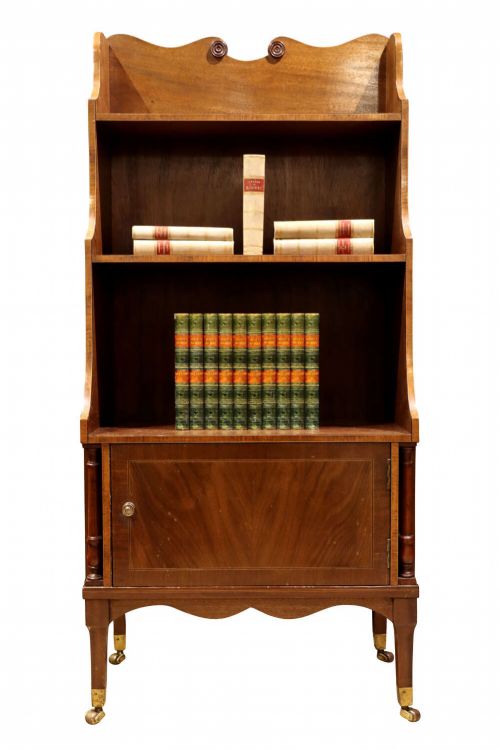
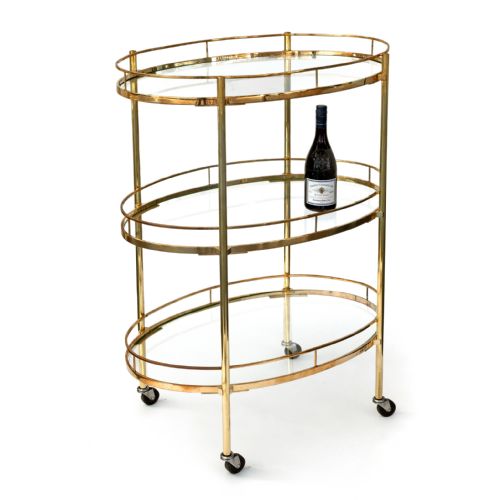
When you search for a vintage brass castor stand, you are looking at practical wheeled furniture designed for papers, books and display. The pieces on this page are dominated by canterburys, alongside magazine racks, music racks, waterfall bookcases, cheval mirrors, drinks trolleys and folio stands.
You will most commonly meet mahogany and rosewood canterburys spanning the Georgian, Regency, William IV and Victorian periods, often featuring divisions for newspapers and magazines. These items combine timber frames with brass castors to allow smooth movement across a room.
The selection also includes French galleried display stands and large folio stands of country house proportions. Every piece uses brass fittings to support mobility, whether mounted on legs, sabots or direct castor bases.
Materials and construction
The makers built these pieces using solid timbers like mahogany and rosewood, sometimes adding inlaid details for decoration. Glass appears in specific items such as display pieces, while brass forms the essential castors, sabots and galleried rails.
Joinery methods follow traditional cabinet-making standards of the nineteenth century, creating sturdy divisions for canterburys and stable frames for mirrors or bookcases. The brass components are firmly fixed to the base of each leg to ensure smooth rolling.
Listings feature mahogany and rosewood across the Georgian, Regency, William IV and Victorian periods.
Quality variations
Quality rests in the choice of timber grain and the crispness of any inlay or turned woodwork. Better examples display balanced proportions, particularly in oversized country house pieces and multi-division canterburys.
The finish of the brass castors and the tightness of the joinery also indicate higher craftsmanship. Superior items retain their original wheels and mounts, moving freely without wobble in the frame.
J.C.Loudon
The Vintage Brass Castor Stand Glossary
- Canterbury
- A low stand with divisions, originally made for sheet music and later used for newspapers and magazines. It typically sits on small wheels.
- Castor
- A small wheel mounted on a swivel at the foot of a piece of furniture for easy rolling. They are usually cast from brass on these pieces.
- Sabot
- A metal sleeve fitted over the foot of a furniture leg to protect the wood and add decoration. They appear frequently in brass alongside sabots.
- Folio stand
- A large rack designed to hold loose prints, drawings or oversized books. They share similar wheeled bases with large canterburys.
- Galleried
- Having a raised ornamental rail around the edge of a shelf or top. This appears on tiered display stands to keep items secure.
Vintage Brass Castor Stand: Frequently Asked Questions
What is a canterbury used for?
A canterbury is designed to hold sheet music, newspapers and magazines within upright wooden divisions. Many include a low drawer at the base for smaller items.
They sit on small wheels so you can move the stand easily beside a chair or desk in a living room.
How do I identify a Regency period stand?
Regency pieces often feature dark mahogany, clean architectural lines and classical proportions dating from the early nineteenth century. They rely on simple elegance rather than heavy carving.
Look for turned legs fitted with brass castors and well-defined partition slats for holding papers.
Are brass castors original to these stands?
Most pieces retain their period brass castors, which were standard for moving heavy timber furniture across carpets. Original castors show matching metal patination and wear consistent with the frame.
Replacements do occur, so check how the brass mounts meet the base of the wooden legs.
Where should I place a folio stand?
Folio stands work best in an open space where their oversized proportions and wheeled base can be appreciated. They suit studies or sitting rooms for holding large books and prints.
The brass castors allow you to adjust the position of the stand easily depending on your room layout.