
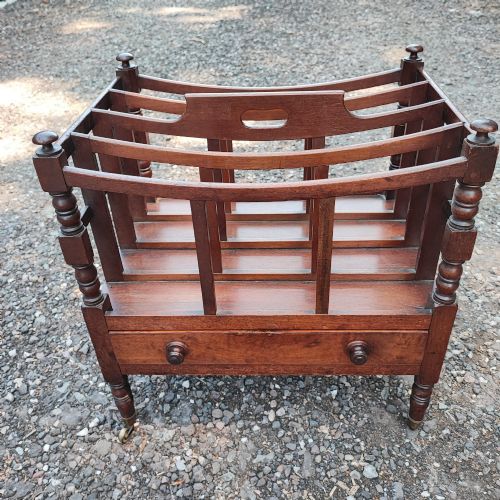


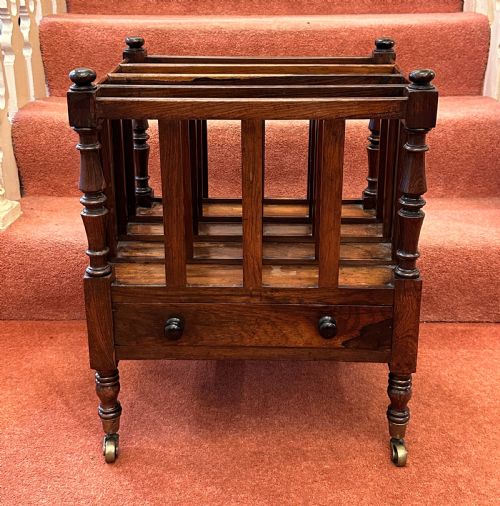


Turned Leg Magazine Holder
A turned leg magazine holder is a freestanding timber rack designed to hold periodicals, typically taking the form of a classical Canterbury.
Turned Leg Magazine Holder
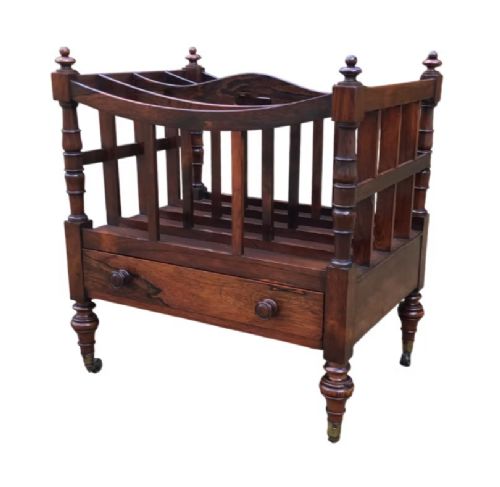
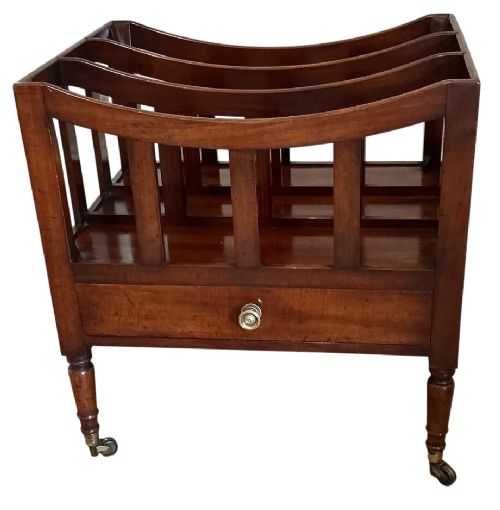
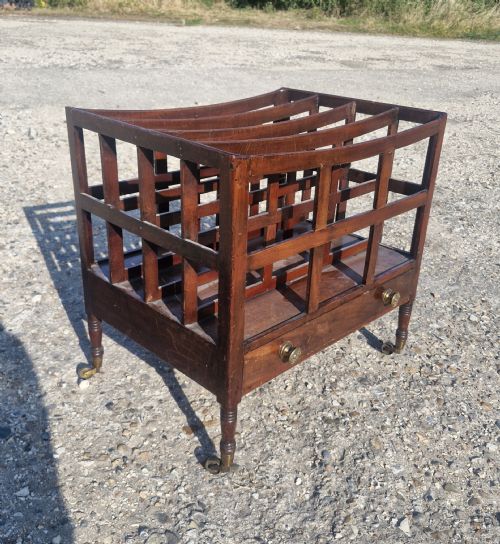
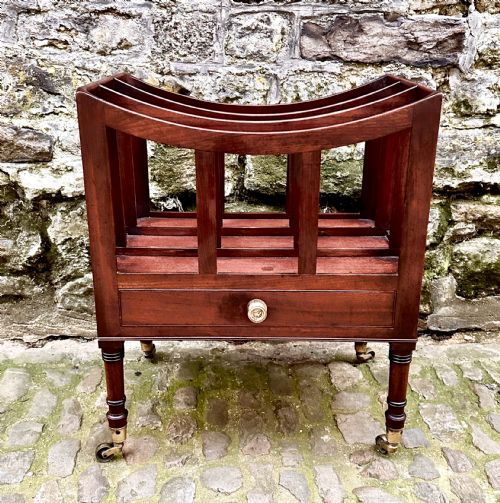
When buyers search for a turned leg magazine holder, they are looking at classic canterburys and newspaper stands designed to organise periodicals in a sitting room. These pieces span the Regency, Georgian, and Victorian periods, offering divided wooden compartments atop low castor wheels.
The versions most commonly met on this page are mahogany canterburys from the early nineteenth century featuring distinct turned legs. Pieces range from standard four-division layouts to double-size rosewood formats and boat-shaped designs.
How they were made
Cabinet makers constructed these stands predominantly from solid mahogany and rosewood, occasionally incorporating oak and brass fittings. Timber was selected for rich grain and durability, ensuring the divided upper sections could support the weight of stacked papers.
Legs were shaped on a lathe to create the characteristic turned profiles seen on Regency and Georgian examples. These supports were then fitted with small metal castors to allow the stand to be moved easily across a carpet.
The listings show these stands primarily in mahogany and rosewood, spanning the Georgian, Regency, and Victorian periods.
What varies in quality
The division between standard workshop production and superior cabinet making rests in the crispness of the timber turnings and the selection of figured veneers. Finer examples display meticulous attention to the joinery of the four divisions and the integration of brass castors.
Material choice also elevates a piece, with dense rosewood and rich mahogany sitting above plain oak alternatives. The overall proportion and balance of the turned supports dictate the visual elegance of the finished stand.
The Turned Leg Magazine Holder Glossary
- Canterbury
- A low, freestanding stand with partitioned sections for holding sheet music, newspapers, or magazines. This form originated in the eighteenth century and frequently includes turned legs.
- Regency
- An English design style spanning the late eighteenth and early nineteenth centuries. Pieces from this era often incorporate classical architectural motifs and elegant turned supports.
- George III
- A stylistic period associated with the reign of the third king of that name. Furniture from this era is characterised by refined proportions and quality timber selection.
- Castor
- A small wheel mounted in a swivel frame attached to the foot of a piece of furniture. These allow heavy stands to be repositioned without lifting.
Turned Leg Magazine Holder: Frequently Asked Questions
What is a Canterbury?
A Canterbury is a traditional piece of freestanding furniture designed with vertical partitions for holding newspapers, magazines, and sheet music. They usually feature low legs and integrated carrying handles.
Most examples sit on castors so they can be moved beside a chair or sofa. The format evolved during the Georgian period and remained popular through the Victorian era.
How do I date a turned leg magazine holder?
Dating relies on observing the timber species, construction methods, and stylistic details of the turned legs. Mahogany and rosewood point strongly toward the Regency and early nineteenth-century periods.
Later Victorian pieces often utilise oak alongside traditional forms. Comparing the joinery of the divisions provides further clues to the age of the stand.
Were these stands used for magazines?
Originally created for holding sheet music and daily newspapers, these stands naturally adapted to magazine storage as periodicals grew in popularity. The divided sections kept unbound publications upright and ordered.
Today they serve the exact same domestic function beside a modern armchair or desk. Their open wooden partitions prevent paper clutter in a living space.
What woods were used for these stands?
Cabinet makers relied heavily on rich tropical hardwoods like mahogany and rosewood for formal pieces. These timbers offered stability and a deep natural lustre that appealed to Regency and Georgian buyers.
Some examples feature oak construction, particularly in Victorian interpretations of the form. Brass was also utilised for small fittings and the wheels attached to the base.