

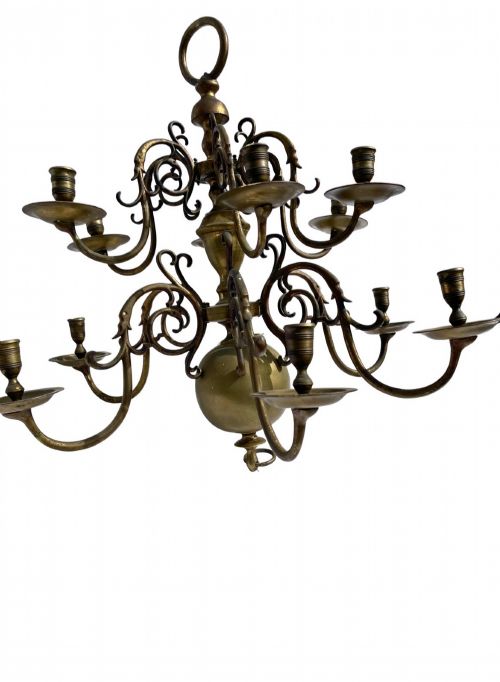


Vintage Brass Candelabra
These vintage brass candelabra bring weight and warm reflection to a room, spanning nineteenth-century revival designs and twentieth-century French lighting.
Vintage Brass Candelabra
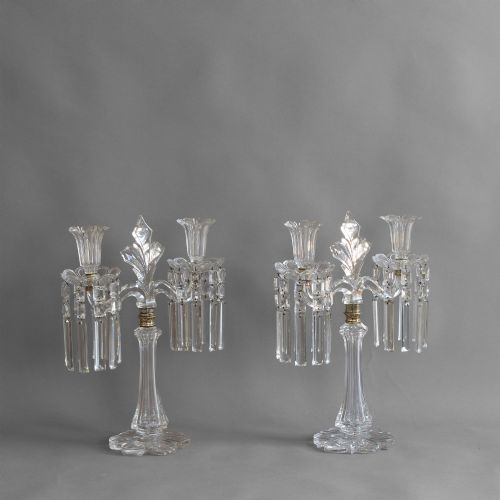
When you search for vintage brass candelabra, you find multi-branched lighting fixtures designed to hold several candles simultaneously. The pieces gathered here range from nineteenth-century Victorian and Gothic Revival examples to early twentieth-century French and Arts and Crafts productions.
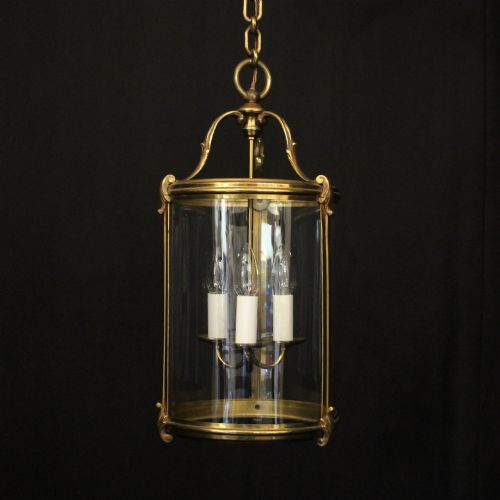
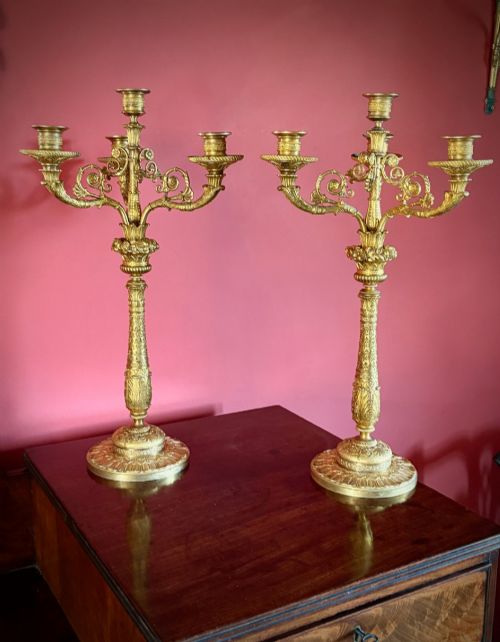
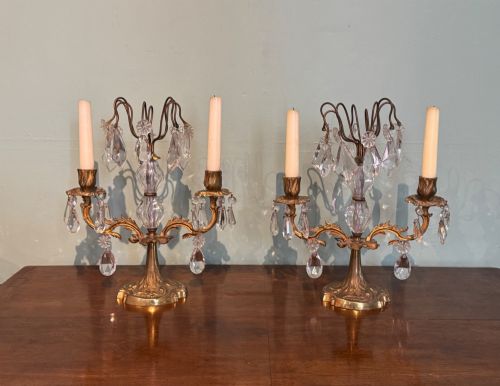
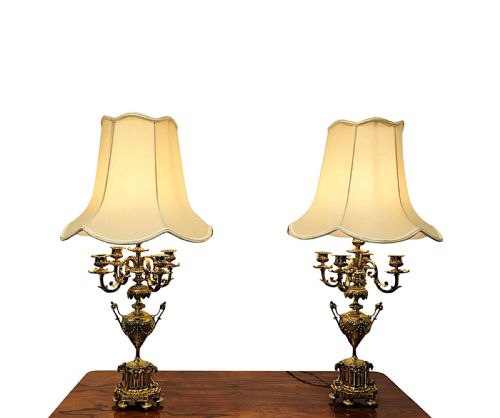
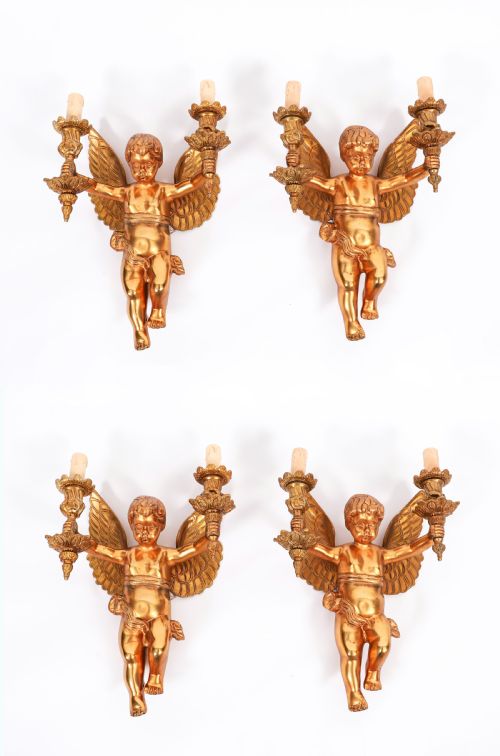
Most entries take the form of matched pairs intended for mantelpieces, sideboards, or console tables. Alongside standard table candelabra, the selection includes variants adapted into lamps, wall sconces, and multi-armed hanging fixtures.
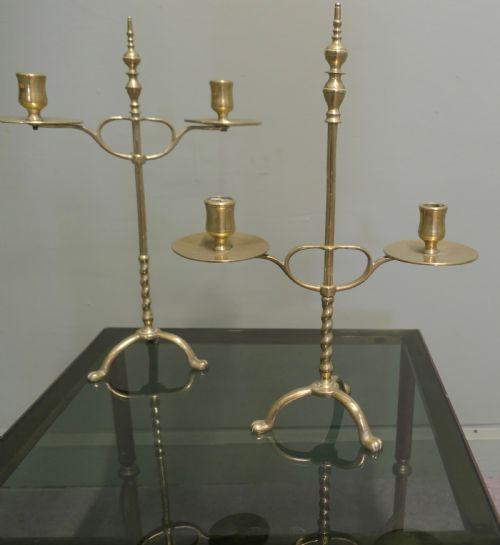
Origins stretch across English workshops and continental European centres, with French rococo, empire, and baroque influences appearing frequently. Buyers encounter simple adjustable student lights alongside heavily ornamented ormolu and gilt bronze creations set with marble or crystal.
How they were made
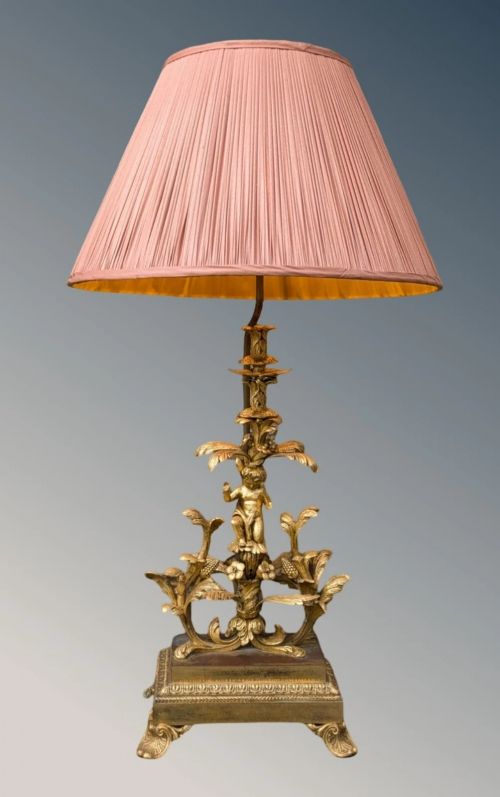
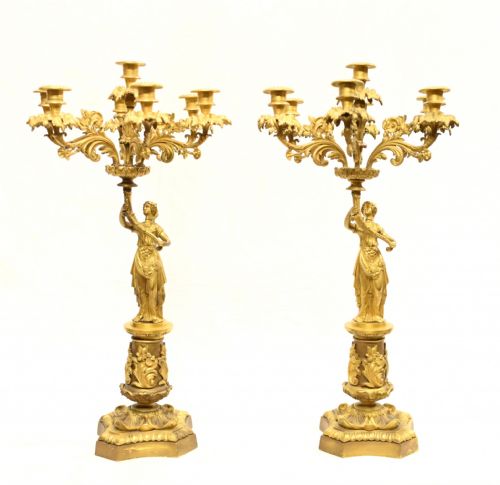
Foundry casting forms the structural core of these pieces, utilising brass, bronze, and gilt metal shaped into intricate arms, scrolling foliage, and figural supports. Many components are cast in separate sections before being assembled with threaded fittings and pins.
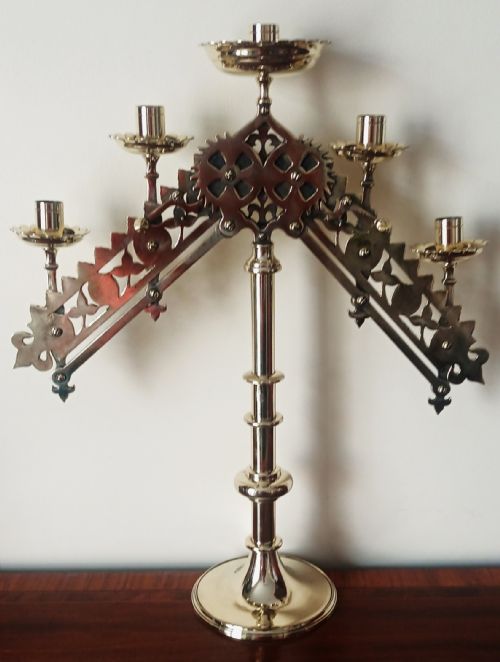
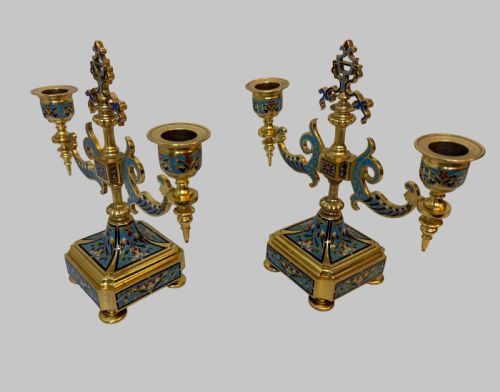
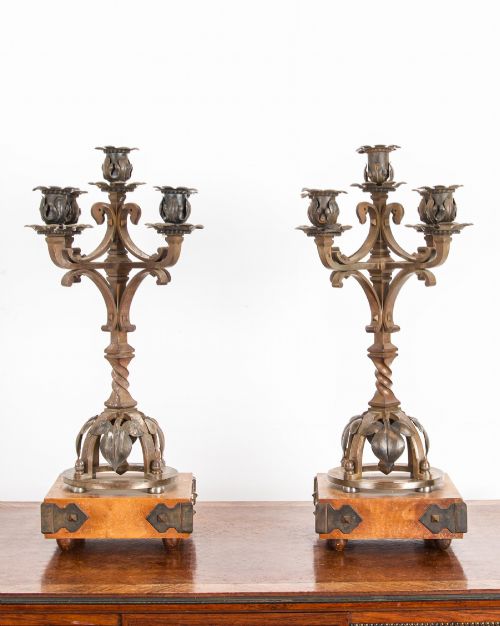
Surface decoration relies heavily on fire-gilding, creating the deep ormolu finishes seen on French salon pieces, while other items display hand-hammered surfaces typical of the Arts and Crafts movement. Details such as champlevé enamel, cut glass drops, and inset marble plinths add contrasting textures to the metallic frameworks.
Several pieces sacrificed their candle cups decades ago to live new lives as electric table lamps.
What varies in quality
Weight and structural stability distinguish the upper tiers of manufacturing from ordinary output. A heavy, substantial gauge of brass or bronze prevents the arms from sagging under the weight of multiple branches and ensures the piece stands firm.
Wm. Tonks & Sons
The Vintage Brass Candelabra Glossary
- Ormolu
- Gilded bronze, usually produced by applying a mercury-gold amalgam to a bronze base and firing it to drive off the mercury. This technique creates a rich, lasting golden surface common on nineteenth-century French pieces.
- Champlevé
- An enamelling technique where troughs or cells are hollowed out of the metal surface and filled with vitreous enamel powder before being fired. It appears on nineteenth-century decorative candlesticks and garnitures.
- Candelabra
- A branched candlestick holding multiple candles on separate arms. The term distinguishes multi-light fixtures from single candle holders.
- Garniture
- A set of matching decorative objects, typically comprising a mantel clock flanked by two matching candelabra or urns. These sets dominated Victorian and continental interior displays.
- Bouillotte
- A type of table lamp featuring a central shaft, adjustable shade, and a basin base surrounded by candle arms. They originated in France for use during card games.
Vintage Brass Candelabra: Frequently Asked Questions
Can these candelabra be wired for electricity?
Many surviving pieces arrive with historical conversions to table lamps, while others retain their original candle-holding function. Professional conversion is possible for unadapted examples by running discreet internal wiring through the central column.
When converting a piece, a qualified electrician should ensure the vintage structure remains unaltered. Using flame-bulb LED alternatives provides the warm glow of real candles without risking heat damage to the metal.
How do I date a brass candelabra?
Examine the construction methods, joint fittings, and casting seams to determine the manufacturing era. Nineteenth-century examples often feature hand-filed components and heavy cast bronze or brass, whereas later twentieth-century items may show more standardised machine-threaded parts.
Stylistic cues also help narrow down the period, such as the heavy geometric forms of the Arts and Crafts movement or the ornate gilt revival styles of the Victorian era. Look for maker stamps or registration marks hidden on the underside or base plates.
Are pairs always sold together?
The majority of pieces listed from this era originate as matched pairs intended for symmetrical placement on mantelpieces or side tables. Surviving pairs command stronger interest from collectors seeking balanced interior displays.
Occasionally, single pieces or larger sets of four appear in the listings. Checking the description confirms whether you are viewing an individual item or a matched set.