

Vintage Brass Applique Lighting
Vintage brass applique lighting brings architectural warmth to walls through cast metal and gilt finishes.
Vintage Brass Applique Lighting
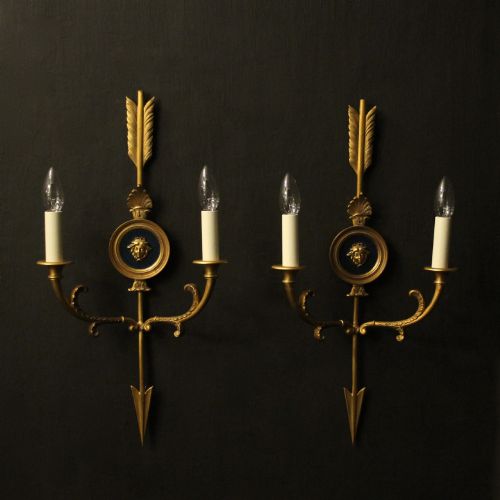
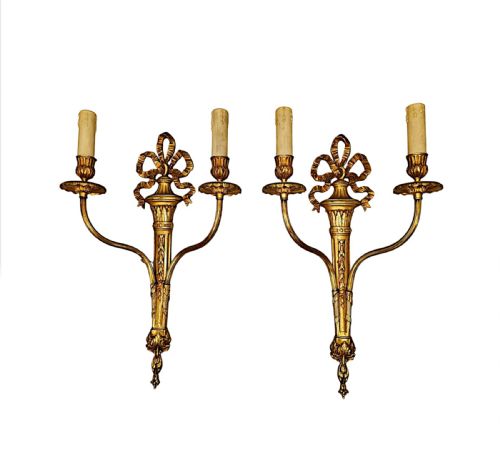
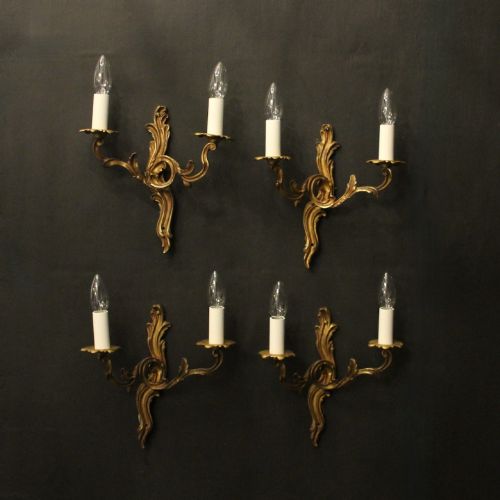
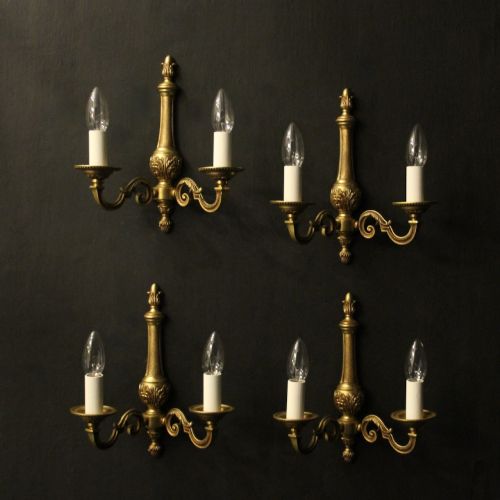
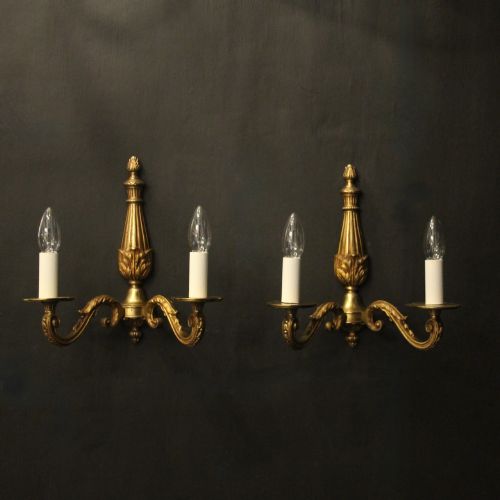
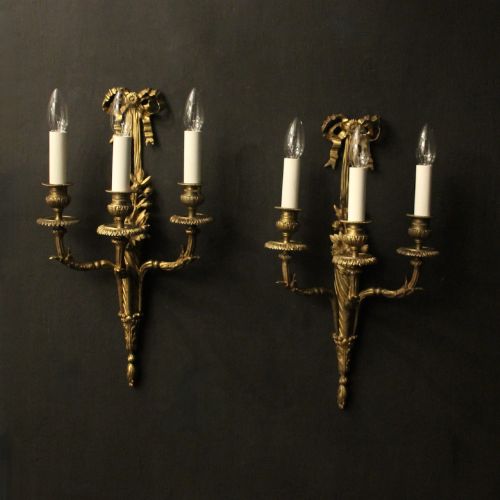
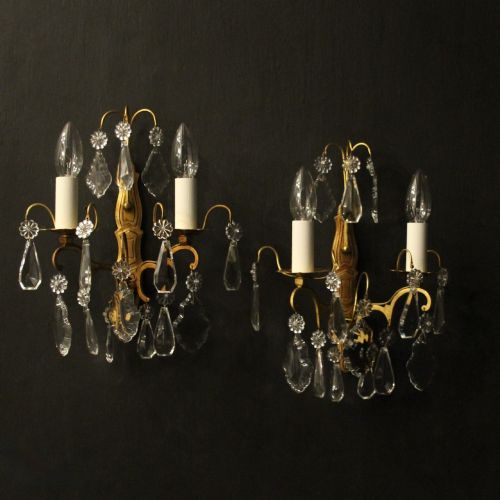
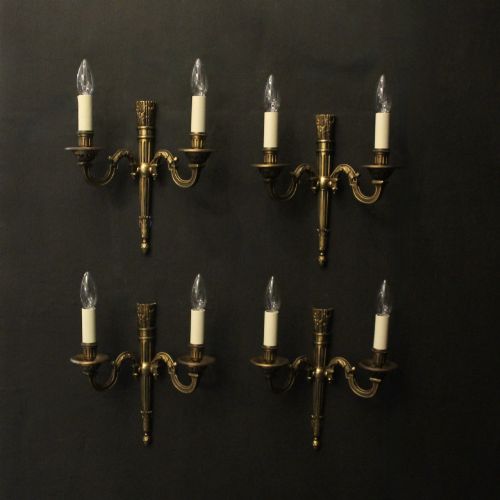
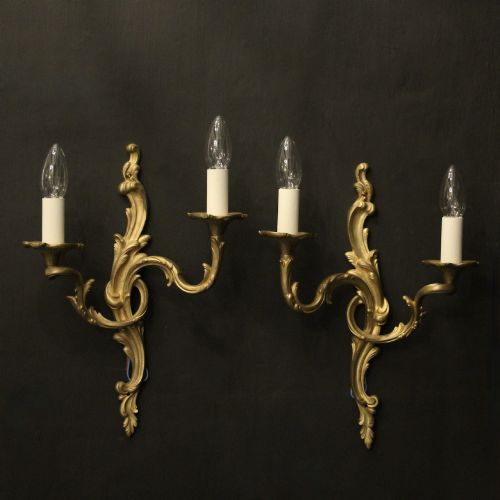
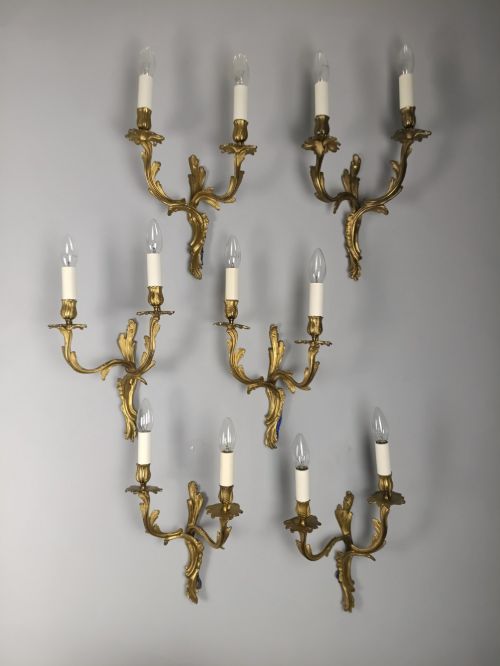
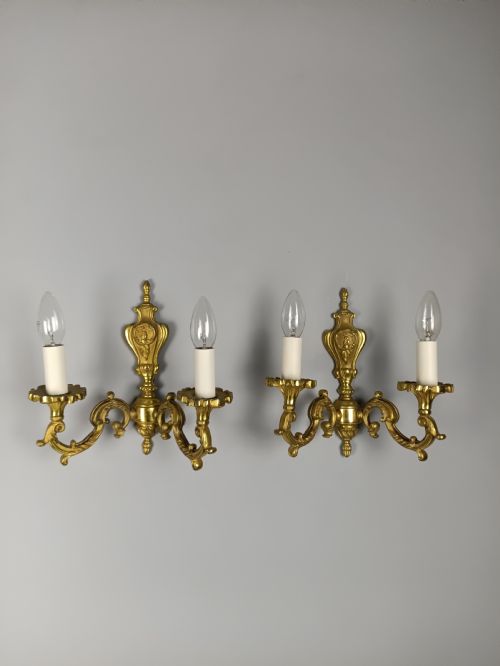
Vintage brass applique lighting comprises wall-mounted fixtures designed to illuminate interiors while adding decorative presence to a room. When exploring vintage brass applique lighting, buyers encounter pieces configured as single-arm sconces, twin-arm fixtures, and larger three-branch or four-branch arrangements. Most examples originate from French workshops spanning the Victorian era through the 1930s, often drawing on Rococo, Louis XVI, and Empire design vocabularies.
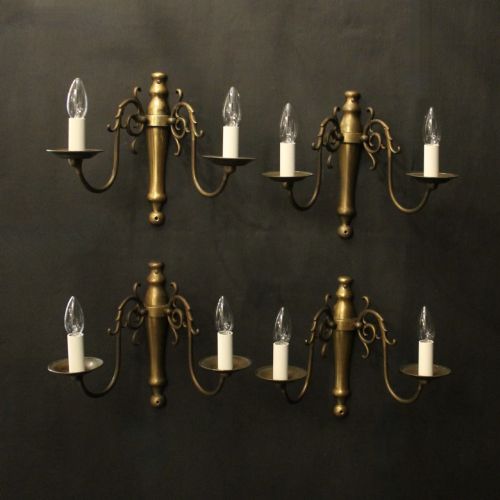
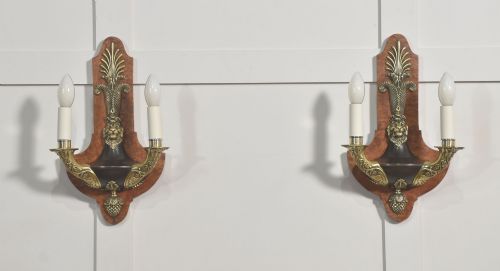
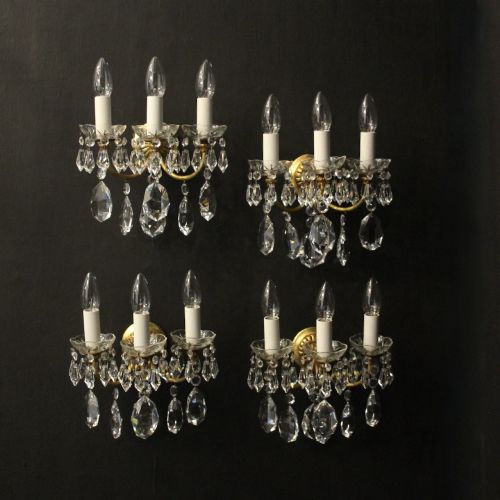
The selection on this page relies heavily on French production from the 1920s and 1930s, alongside 19th-century English, Italian, and Swedish pieces. These wall lights frequently incorporate cut crystal drops, porcelain flowers, or burr walnut elements alongside the primary metal body. Pairs and matched sets dominate the inventory, offering symmetrical solutions for hallway, salon, or dining room placement.
Materials and construction methods
The primary structure of these fixtures relies on cast brass, bronze, and ormolu, shaped into intricate scrolls, ribbons, and neoclassical motifs. Makers applied surface treatments including gilding, which ranges from bright gold leaf to softer burnished bronze tones, providing both protection and decorative sheen.
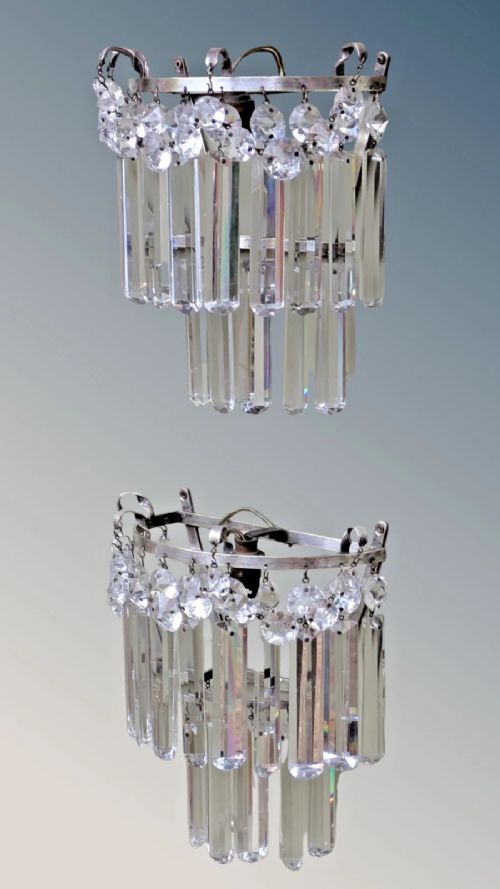
Glass and crystal components appear frequently as pendants, bobeches, or complete lantern bodies, secured to the metal frames by wire or pin fittings. Secondary materials such as porcelain flowers and burr walnut backplates integrate into specific stylistic subsets like Rococo revival and Empire designs.
Listings span periods from the Georgian era through the 1930s, featuring brass, gilt bronze, ormolu, and glass materials.
Distinguishing quality in metal wall lights
The sophistication of the casting work dictates much of the distinction between standard and superior pieces. Finer appliques exhibit crisp relief in foliage, cherubs, and scrollwork, whereas lesser examples show softer edges and blurred surface details from worn moulds.
The richness and application of the gilding or ormolu finish create another clear division in standard. Heavy, even fire-gilding or well-preserved gilt bronze retains depth and warmth, while flat or degraded finishes reduce the visual impact of the metalwork on the wall.
The Vintage Brass Applique Lighting Glossary
- Applique
- A wall-mounted light fixture designed to direct illumination outward into a room. These pieces fasten directly to vertical surfaces.
- Ormolu
- Finely chopped high-zinc brass applied to objects through mercury amalgamation or modern electroplating. This technique gives bronze mounts a rich gold appearance.
- Bobeche
- A small collar or drip pan positioned beneath a candle holder or bulb socket to catch melting wax. They often hold dangling crystal prisms.
- Twin arm
- A wall light configuration featuring two distinct branching arms extending from a single backplate. These often hold multiple candles or electric bulbs.
- Louis XVI style
- A neoclassical design language characterised by straight lines, symmetry, and classical motifs like ribbons and urns. It emerged during the 18th century and saw revivals through the Victorian period.
Vintage Brass Applique Lighting: Frequently Asked Questions
How do I install vintage wall lights?
These fixtures require secure attachment to wall studs or appropriate wall anchors due to the weight of cast metal and crystal. Professional installation by an electrician ensures safe integration with modern household wiring.
Many period pieces require rewiring to meet contemporary safety standards before mounting. Consultation with an experienced electrician helps preserve the original backplate structure during installation.
Are these lights electrified?
Many listed fixtures have undergone rewiring for modern electrical use while retaining their historic metalwork and crystal components. Some retain conversion elements from earlier candle or gas configurations.
Buyers should inspect individual listing details to confirm the current wiring status and bulb fittings. Adaptations can be made to suit standard domestic electrical circuits.
How do I clean gilt bronze?
Dusting with a soft, dry cloth prevents the accumulation of grime on intricate cast surfaces. Avoid abrasive cleaners or harsh chemical polishes that can strip delicate gilding.
Gentle care preserves the original patina built up over decades or centuries. Specialist metal conservators can advise on deeper cleaning for tarnished or neglected gilt bronze.
Can I find matching sets?
The inventory includes pairs, sets of three, sets of four, and larger groupings suited for balanced room designs. Symmetrical placement in dining rooms or hallways often relies on these multi-piece sets.
Matching sets typically originate from the same period and workshop batch, ensuring uniform casting style and finish. Single pieces also appear for accent lighting in smaller spaces.