
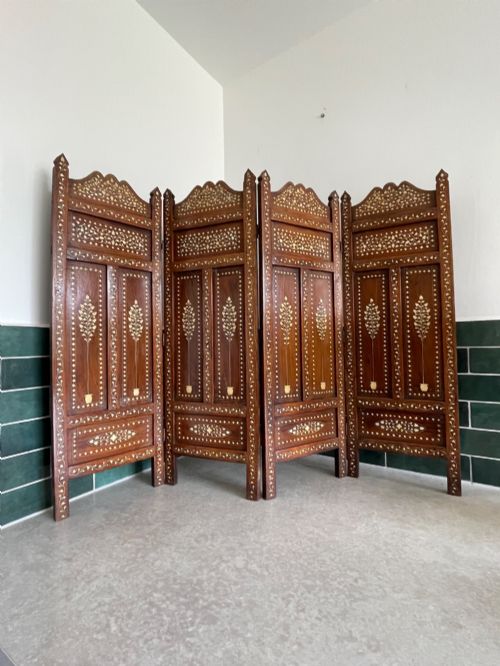
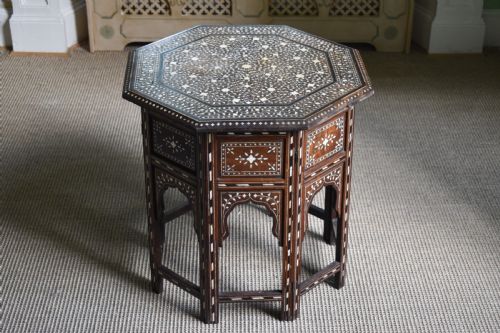


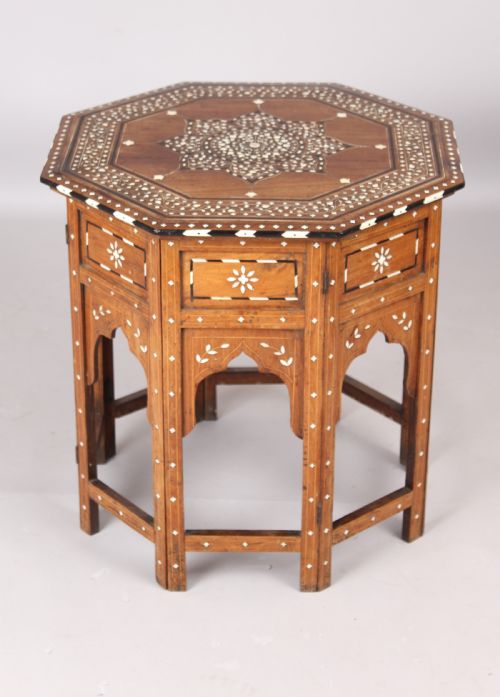
Vintage Bone Inlaid Table
A vintage bone inlaid table brings intricate geometric patterns and warm timber tones into a room.
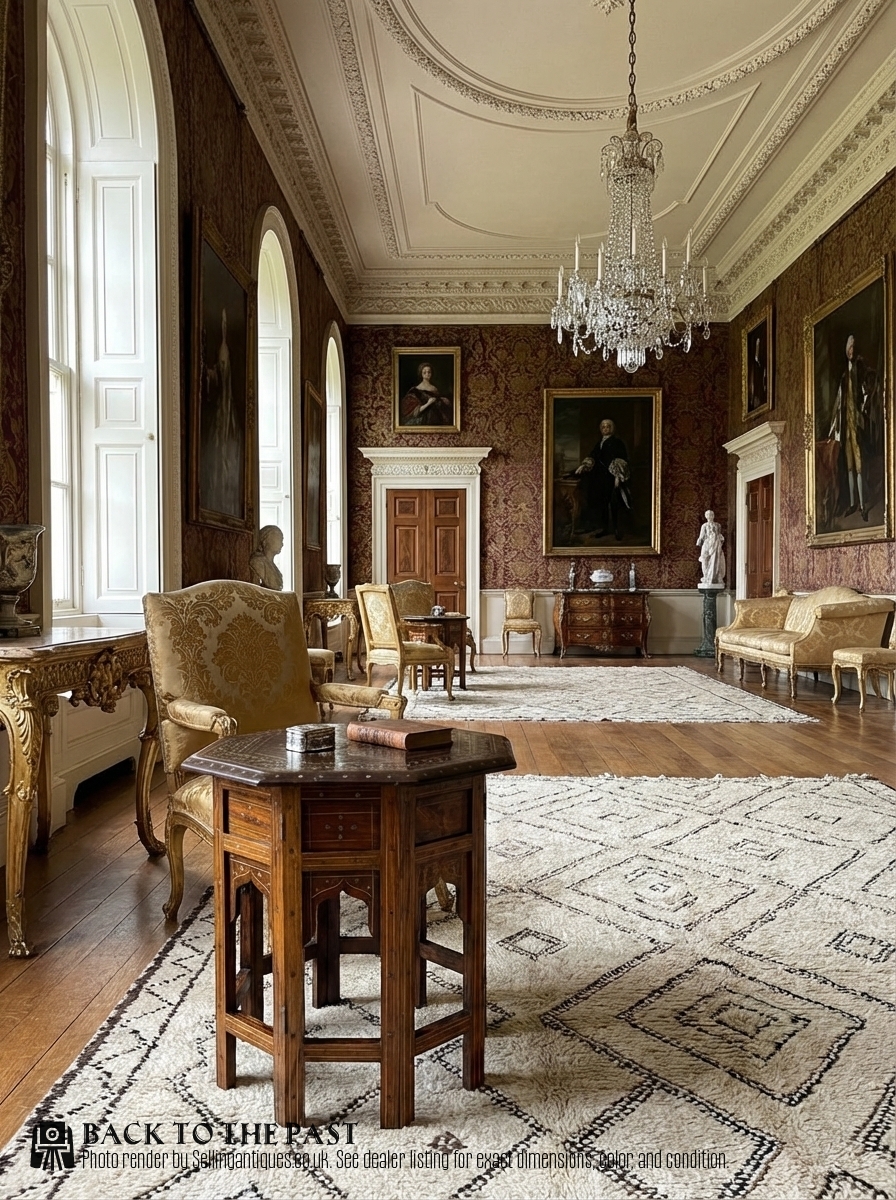
Vintage Bone Inlaid Table
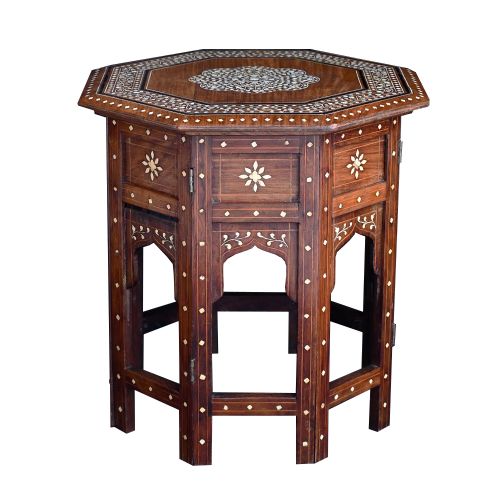
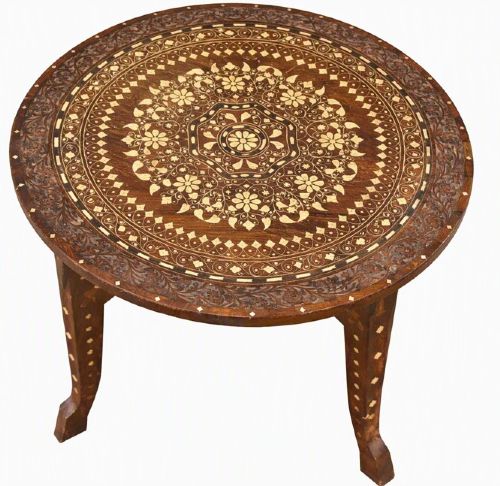
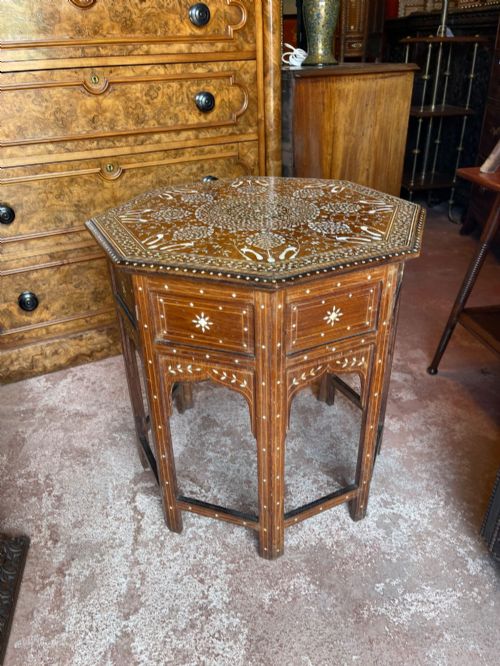
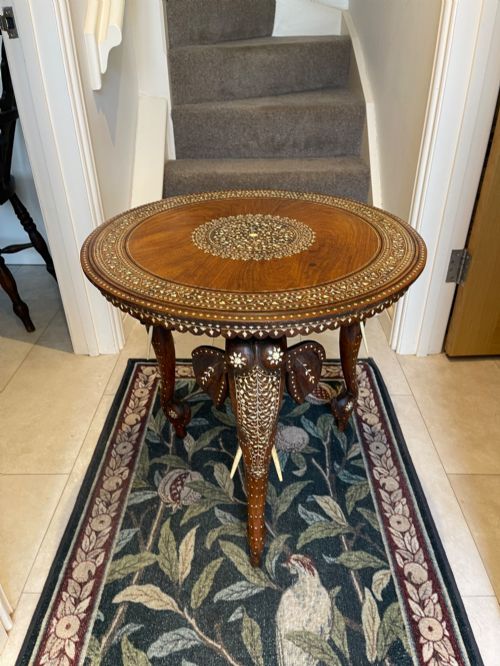
A vintage bone inlaid table combines traditional craftsmanship with striking visual detail, drawing on Anglo-Indian, Moorish Revival, and Ottoman styles. These pieces range from small occasional side tables and octagonal forms to elephant tables and coffee tables produced across the late nineteenth and early twentieth centuries.
Most examples found here originate from the distinguished woodworking traditions of Hoshiarpur alongside Syrian and Ottoman workshops. Buyers will frequently encounter round, oval, and multi-sided shapes constructed from hardwoods such as teak, rosewood, and walnut, embellished with delicate floral or geometric motifs.
Materials and construction
Artisans carved dense hardwoods like teak and walnut before recessing small pieces of animal bone and occasionally mother-of-pearl into the timber surface. The negative spaces were often filled with dark resin or ebonised wood dust to create a sharp contrast against the pale bone inlay.
Many items feature extensive hand-carving across the entire structure, including pierced foliage patterns and folding or tripod bases. Brass wire and pins occasionally secure individual bone fragments within intricate geometric lattices.
Several tables take the form of standing elephants, proving that nineteenth-century artisans understood the universal appeal of pachyderms holding up your afternoon tea.
Assessing quality and finish
The precision of the geometric tessellation and the density of the carved foliage separate standard production from exceptional works. Superior examples maintain tight joints in the bone mosaic without excessive filler material around the individual pieces.
The choice of primary timber also influences the standing of a piece, with dense rosewood and well-figured teak representing higher standards of construction than simpler secondary hardwoods.
Liberty and Co
The Vintage Bone Inlaid Table Glossary
- Hoshiarpur
- A town in Punjab renowned for its specialised woodcarving and intricate bone inlay traditions during the nineteenth and twentieth centuries. Pieces from this centre often feature dense floral and geometric motifs across teak and shisham wood.
- Bone inlay
- A decorative technique where small carved sections of bone are pressed into recesses cut into a wooden base. This method creates contrasting patterns of pale organic material against dark timber.
- Moorish Revival
- An architectural and decorative style popular in the nineteenth century that incorporated Islamic design elements such as horseshoe arches and geometric strapwork. This aesthetic heavily influenced tables produced during the Victorian and Edwardian periods.
- Octagonal table
- A multi-sided table form frequently utilised in Anglo-Indian and Middle Eastern furniture design. The eight-sided top typically sits upon a folding or rigid base decorated with all-over carving.
- Mother-of-pearl
- The iridescent internal layer of certain mollusc shells used alongside bone to add shimmering highlights to inlaid wooden surfaces. It appears in small geometric accents on specific regional tables.
Vintage Bone Inlaid Table: Frequently Asked Questions
Where were these tables made?
These pieces originate primarily from workshops in Hoshiarpur, alongside Ottoman and Syrian centres of production active during the late nineteenth and early twentieth centuries.
Craftsmen in these regions utilised local hardwoods and traditional carving methods to supply both domestic markets and European retailers.
How do I clean a bone inlaid table?
Maintain the surface by dusting gently with a soft, dry cloth to prevent debris from settling into the intricate recesses of the bone and wood.
Avoid using liquid cleaners, polishes, or excess water, as moisture can dislodge the bone fragments or damage the dark resin fills.
Are these tables sturdy enough for daily use?
Most occasional and side tables function well for holding lightweight items like books or lamps during everyday living.
Care should be taken with folding bases or heavily carved tripod structures to ensure they remain stable on uneven flooring.
How can I tell the age of the piece?
Dating relies on examining the timber species, construction methods, and stylistic influences such as Edwardian or Ottoman Revival motifs.
Natural ageing of the bone, which develops a warm creamy patina over decades, also helps indicate a nineteenth or early twentieth-century origin.