


Inlaid Teak Table
An inlaid teak table brings intricate craftsmanship and rich timber grain into a room, offering both decorative presence and practical surface space.
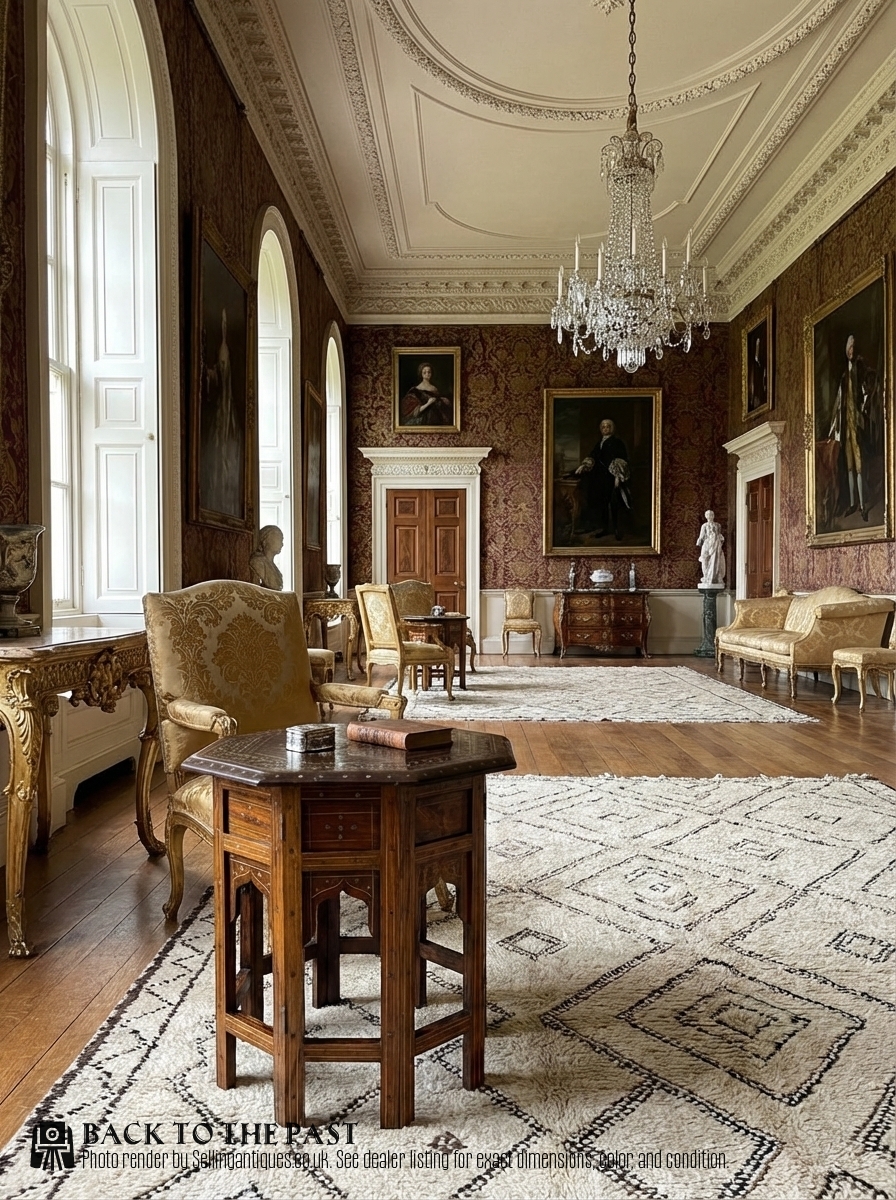
Inlaid Teak Table
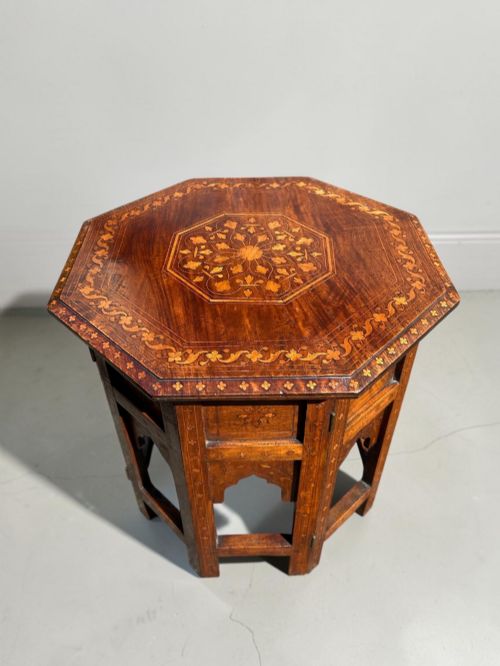
An inlaid teak table represents a distinctive category of Anglo-Indian and Indian occasional furniture that combines dense tropical hardwood with contrasting decorative details. The selection spans the nineteenth century and the early decades of the twentieth century, capturing periods of intricate regional woodworking traditions. Buyers encounter various geometric and figurative forms designed for domestic utility.
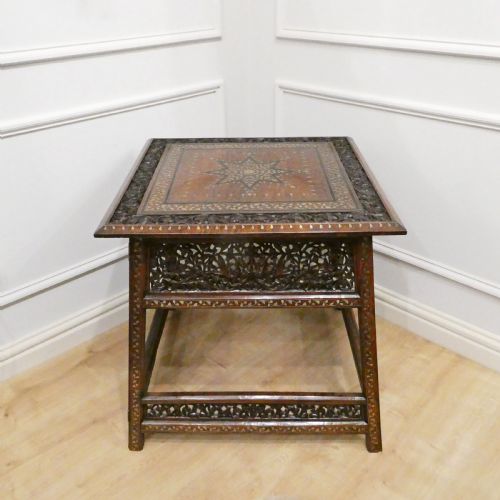
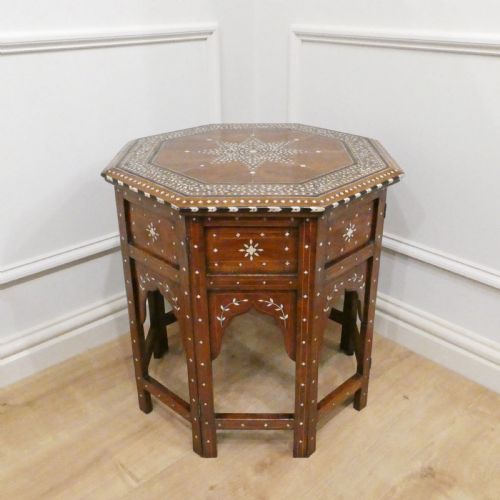
Octagonal and square side tables dominate the pieces seen, frequently accompanied by circular, oval, and shield-shaped occasional tables. Folding bases and tripod structures appear alongside rigid frames, demonstrating the versatility of these furnishings. The style connects directly to traditional workshops producing highly carved and inlaid items for both domestic use and export.
How they were made
Makers utilised solid teak as the primary structural timber, selecting it for its durability and stable grain. Artisans then recessed contrasting materials into the wood surface to create elaborate surface patterns.
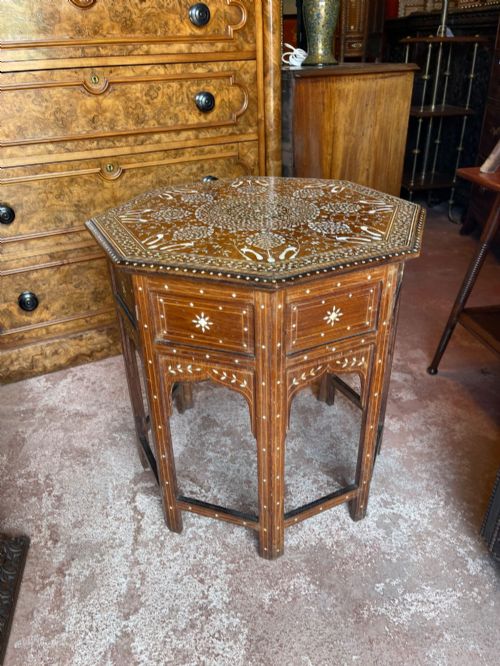
Brass wire and sheet metal, bone, ebony, rosewood, and mother-of-pearl form the intricate inlays seen across the pieces. Carved and pierced elements often complement the flush metal and organic inlays, particularly on folding bases and aprons.
Several tables cleverly fold completely flat, proving that nineteenth-century artisans anticipated the modern demand for clever space-saving furniture.
What varies in quality
The sophistication of the inlaid patterns and the density of the surrounding carved detail distinguish individual pieces. Elaborate pictorial elements, such as figurative or architectural motifs, demonstrate a higher degree of artisan labour than simpler geometric borders.
The precision with which materials like brass, bone, and mother-of-pearl fit into the teak channels dictates the overall refinement of the surface. Surviving elements on folding mechanisms and the crispness of the pierced fretwork further separate standard production from exceptional examples.
Bombay Furniture Company
The Inlaid Teak Table Glossary
- Anglo-Indian
- A style describing furniture made in India during the British period, often combining traditional local craftsmanship with European furniture forms. These pieces frequently feature dense carving and complex inlaid ornamentation.
- Hoshiarpur
- A region in Punjab renowned for its specialised woodwork, particularly tables featuring intricate brass and bone inlay set into teak. Workshops here produced much of the carved and inlaid furniture exported during the late nineteenth and early twentieth centuries.
- Bone Inlay
- A technique where small pieces of shaped animal bone are pressed and glued into hand-cut recesses within the timber. It provides a bright, contrasting detail against dark or medium hardwoods.
- Occasional Table
- A small, movable table designed for specific, intermittent use within a room rather than primary dining. These items function well beside seating or in hallways.
- Octagonal Table
- A piece featuring an eight-sided top, a prevalent geometric form in traditional Indian occasional furniture. This shape accommodates complex radiating inlay patterns.
Inlaid Teak Table: Frequently Asked Questions
Where should I place an inlaid teak table?
These tables function effectively as occasional surfaces beside chairs or sofas, or as standalone display pieces in a hallway. Their detailed surfaces allow them to act as focal points within a room.
Because many examples feature folding bases, they also offer flexibility for spaces that require adaptable furniture arrangements without sacrificing decorative character.
How do I care for the inlaid surface?
Maintenance requires gentle dusting with a soft, dry cloth to prevent debris from settling into the recessed channels of the inlay. Avoiding excessive moisture and direct sunlight protects both the teak and the delicate bone or brass elements.
Occasional light conditioning of the timber helps maintain the natural grain without disturbing the embedded decorative materials.
How do I date an inlaid teak table?
Dating relies on examining the construction methods, the style of the carving, and the specific combination of inlay materials used. Pieces from the late nineteenth century often display denser Hoshiarpur carving, while later examples from the early twentieth century show subtle shifts in form.
Archive records and comparative examples help narrow the production period between the eighteen-nineties and nineteen-thirties.
What is the difference between Hoshiarpur and other Indian tables?
Hoshiarpur tables specifically originate from the Punjab region and are defined by dense surface carving combined with intricate brass, copper, or bone inlay. Other regional pieces, such as those from Manipuri or Bombay, may utilise different timber combinations or distinct inlay arrangements like satinwood or mother-of-pearl.
Examining the specific motifs and secondary woods helps identify the likely regional workshop of origin.