
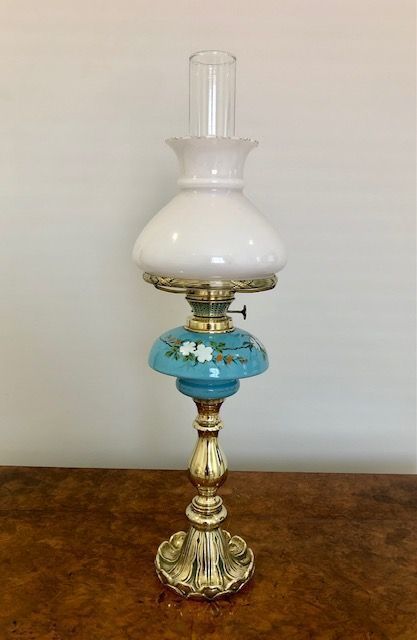


Vintage Blue White Lamp
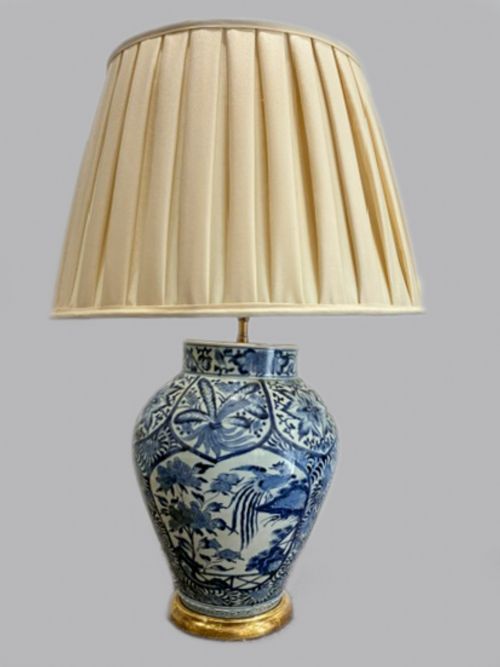
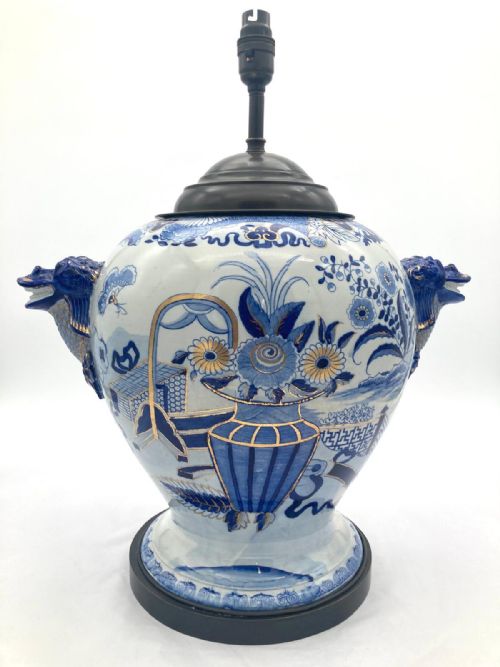
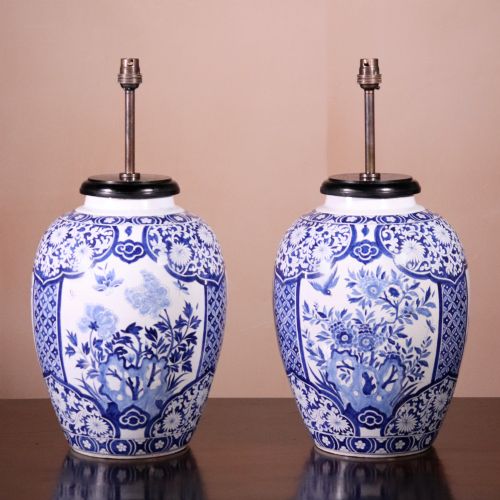
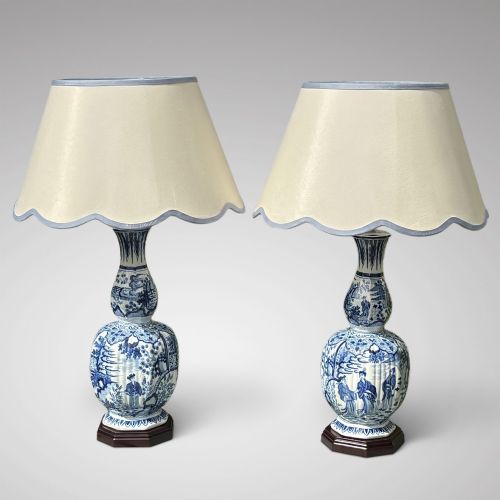
These vintage blue white lamp pieces are transformed vases and oil burners bringing painted cobalt tones and domestic light into a room.
Vintage Blue White Lamp
A vintage blue white lamp brings together centuries-old ceramic vessels and later lighting conversions, predominantly spanning the seventeenth to the twentieth centuries. You will frequently encounter converted vases featuring traditional cobalt decoration alongside converted oil lamps of brass, glass, and ceramic construction.
The aesthetic draws heavily from Asian and European traditions, particularly Chinese, Japanese, and Dutch Delftware styles. These pieces range from early provincial earthenwares to late Victorian and Art Deco table lamps.
The forms encompass ginger jars, baluster vases, and columnar oil lamps fitted for electricity. Most examples represent the adaptation of decorative vessels into functional domestic lighting.
Materials and construction
The bodies utilise porcelain, earthenware, and pottery decorated with cobalt blue pigments under a clear glaze. Many examples combine these ceramic bases with brass fittings, glass oil reservoirs, and fabric or silk shades.
Older vessels were originally formed as hand-thrown vases or jars before undergoing later conversion into lamps by adding wiring and metal mounts. Oil lamps of the Victorian and Edwardian eras integrate cast brass components with ceramic bodies and terrestrial glass globes.
Several vases started life holding ginger before spending a century holding up lampshades.
Evaluating the standard
Quality rests in the crispness of the cobalt painting upon the ceramic body and the integrity of the glaze. Early pieces demonstrate finer brushwork and distinct crackleware textures or prunus blossom motifs.
The standard also depends on the integration of the conversion work, where period-appropriate brass fittings and well-balanced mounts complement the original proportions of the vessel.
The Vintage Blue White Lamp Glossary
- Delftware
- Tin-glazed earthenware produced in the Netherlands, notable for its distinct blue and white maritime and floral scenes. It forms a staple of eighteenth-century lamp conversions.
- Ginger jar
- A wide-shouldered ceramic storage vessel originally used for spices, frequently adapted into table lamps. These pieces often feature prunus blossom motifs or geometric panels.
- Arita Imari
- Japanese porcelain decorated in underglaze blue and iron red, originating from the Hizen province. Surviving examples often display dense floral compositions.
- Ironstone
- A type of durable heavy pottery developed in the nineteenth century, capable of sustaining complex moulded designs. It provides a robust body for large table lamps.
- Crackleware
- A ceramic glaze patterned with a network of fine cracks intentionally induced during firing. This finish appears frequently on nineteenth-century Japanese examples.
Vintage Blue White Lamp: Frequently Asked Questions
How do I date a lamp?
Dating relies on examining the ceramic body, glaze characteristics, and the style of the metal mounts. Earlier pieces often display hand-thrown potting irregularities.
Later Victorian and Edwardian examples incorporate standardised brass hardware and mechanical fittings associated with nineteenth-century oil lighting.
Are these lamps safely rewired?
Many older lamps have been adapted from oil burners or ancient vases over time. Rewiring status varies across the selection.
Buyers should inspect the internal wiring upon acquisition to ensure compliance with modern electrical standards before daily use.
Can I replace the lampshade?
Shades on these pieces range from modern fabric designs to period silk fittings. Replacement is straightforward depending on the harp or shade carrier.
Choosing a neutral fabric shade allows the cobalt pattern of the base ceramic to remain the visual focus of the room.
What caused the conversion from vases?
Vessels from periods like the seventeenth and eighteenth centuries were frequently repurposed as interior lighting during the electrification of homes. This practice preserved fragile antique ceramics by giving them a practical domestic purpose.
Such conversions bridge antique craftsmanship with modern interior utility.