






Vintage Bird Portrait
A vintage bird portrait brings ornithological character to a room, captured through historic oil paint, watercolour and wood framing.
Vintage Bird Portrait
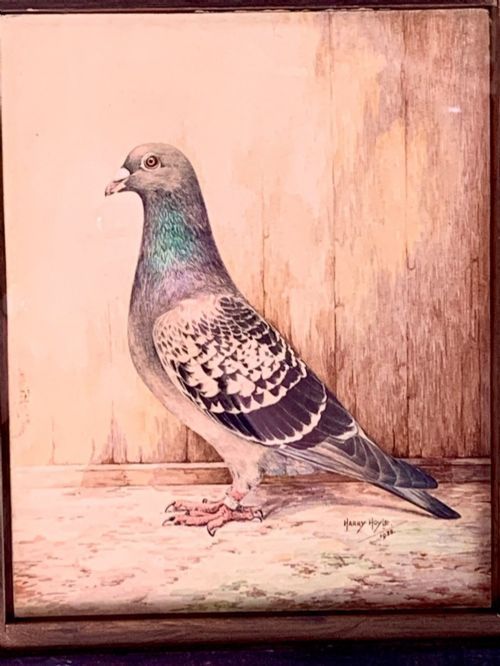
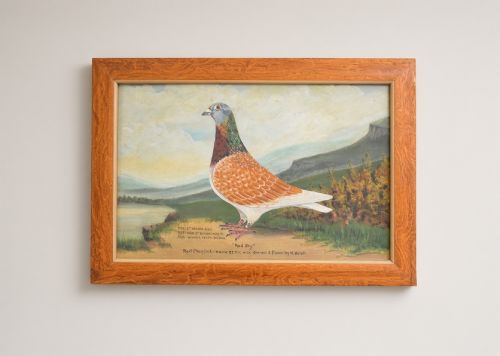
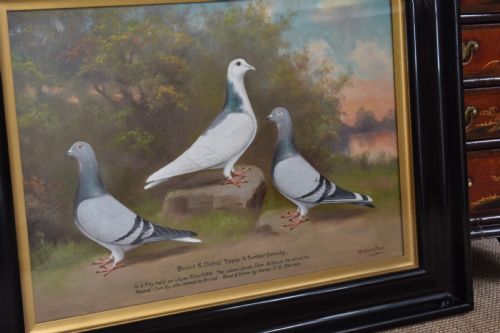
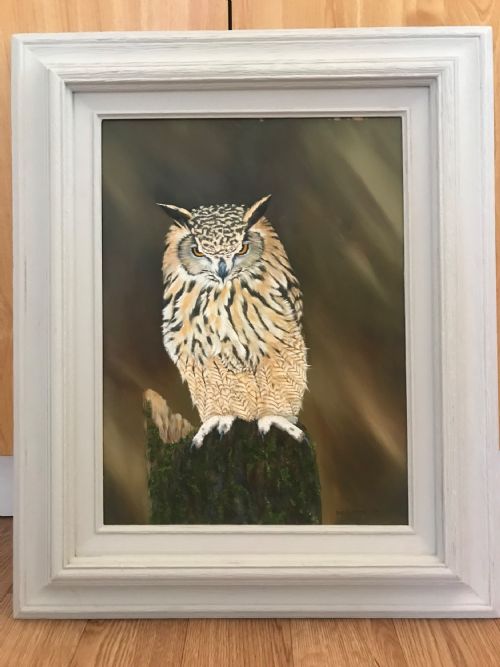
A vintage bird portrait represents feathered subjects across various historical periods, frequently appearing as oil paintings or watercolours on paper and board. These artworks record specific subjects like racing pigeons, owls, game birds, and parrots rendered with distinct artistic intent.
The pieces on this page span the nineteenth century, the Edwardian era, and the interwar period, offering depictions ranging from naturalistic studies to folk art. Buyers encounter works framed in wood, gilt, and birds-eye maple, reflecting the interior tastes of their original eras.
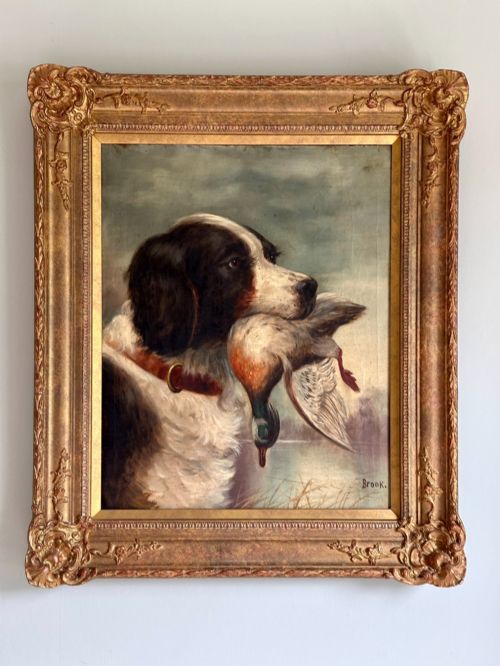
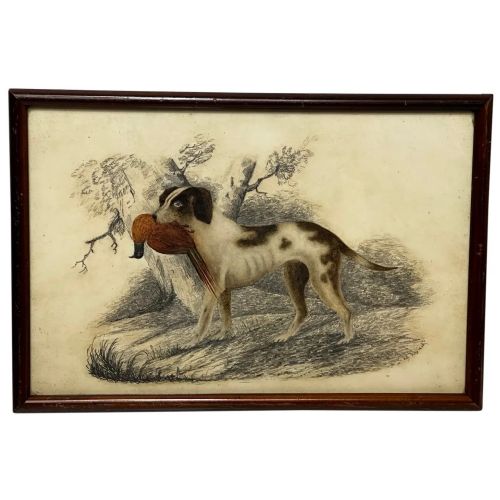
Subjects include sporting depictions of gun dogs with game birds alongside intimate studies of pigeons and parrots. Works emerge from British traditions, encompassing naive school paintings and interwar realism.
How they were made
Makers applied oil paint and watercolour onto grounds of canvas, paper, board, panel, and tin. Painters utilised traditional brushwork to build feather textures and anatomical details.
Frames employ wood, gilt finishing, and birds-eye maple to house the artwork securely. These enclosures often date alongside the painting to protect the fragile paper or canvas surfaces.
Vintage Bird Portrait Retail Price Guide 2026
Typical asking prices for vintage bird portrait among the pieces listed under this phrase on Sellingantiques today, from the lower quarter to the upper quarter. They describe what is for sale here now, not the wider market.
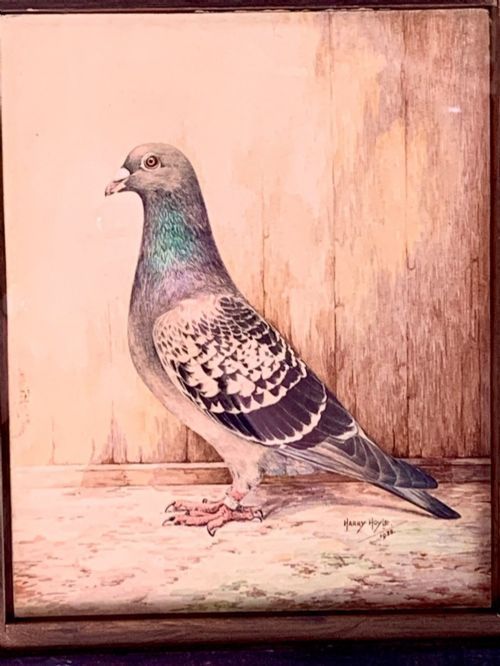
Racing pigeons take flight across multiple canvases, celebrating avian athletes that won royal silver jubilee prizes.
What varies in quality
The standard of execution in brushwork and anatomical observation determines the quality of a vintage bird portrait. Skilled hands render feather patterns and avian posture with convincing realism, whereas simpler works adopt naive stylistic approaches.
Materials and framing contribute significantly to the overall piece, with original maple or gilt frames elevating the presentation. The integrity of the paper, canvas, or panel dictates the physical preservation of the artwork.
Andrew Beer·George F. Bird·Harry Bright·Holley Bros·J Brown
The Vintage Bird Portrait Glossary
- Watercolour painting
- An artwork executed with water-soluble pigments on paper. This medium allows for translucent washes that capture soft plumage details.
- Oil painting
- A work created using pigments bound in a drying oil, applied to canvas, board, panel, or tin. It provides rich colour depth and durable surfaces.
- Birds-eye maple
- A figured timber showing distinctive small circular patterns resembling bird eyes. Cabinetmakers utilised this wood for decorative picture frames.
- Naive school
- An aesthetic characterised by a childlike perspective and lack of formal academic training. These pieces possess charming directness in their composition.
- Gilt
- A thin layer of gold leaf applied to frame surfaces for decorative enhancement. This finish adds reflective warmth to the presentation of the artwork.
Vintage Bird Portrait: Frequently Asked Questions
What is a vintage bird portrait?
A vintage bird portrait is a historical painted or watercolour depiction of avian subjects, created during periods such as the Victorian era or the early twentieth century.
These artworks capture specific birds like racing pigeons, owls, and parrots, serving as both decorative wall art and natural history records.
How should I hang these paintings?
Display these artworks away from direct sunlight to protect sensitive watercolours and oil pigments from fading over time. Maintaining stable room humidity also preserves the wooden frames and the underlying canvas or paper.
Grouping smaller pieces together creates a striking display inspired by historic salon arrangements.
How can I tell the period?
Examining the framing materials, backing boards, and paper types often reveals clues regarding the age of a piece. Stylistic elements, such as interwar realism or Victorian naturalism, provide further indication of when the work was produced.
Signatures, dates, and inscriptions recorded on the reverse or front help confirm the exact era.
Were these works framed originally?
Many pieces retain their period frames, such as original maple or gilt moulding selected by the maker or early owner. Surviving frames complete the historical context of the artwork.
Some works require modern conservation framing to ensure physical stability while respecting the aesthetic of the period.