


Vintage Bedside Nightstand
These vintage bedside nightstands are practical bedroom storage pieces spanning Victorian, Edwardian and Art Deco periods, crafted in mahogany, walnut and oak.
Vintage Bedside Nightstand
A vintage bedside nightstand serves as a compact surface and storage unit beside a bed, appearing in forms such as bedside cabinets, bedside tables, side tables, bedside chests, side cabinets, lamp tables, bookcases and table lamps.
Buyers seeking a vintage bedside nightstand will encounter pieces dating from the 1800s, Victorian and Edwardian eras, through to the 1920s and 1930s Art Deco period.
Origins span English cabinetmaking and French workshops, utilising woods like mahogany, walnut, satinwood, oak and ash alongside marble and brass.
How they were made
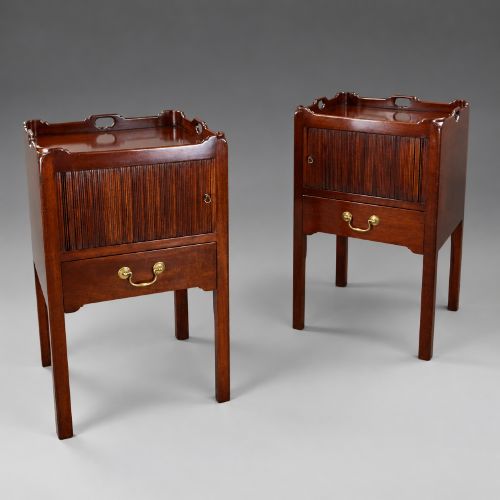
Cabinetmakers utilised dense hardwoods including mahogany, walnut, oak and satinwood, often shaping them into small cupboards, chests with drawers, and multi-tiered side tables.
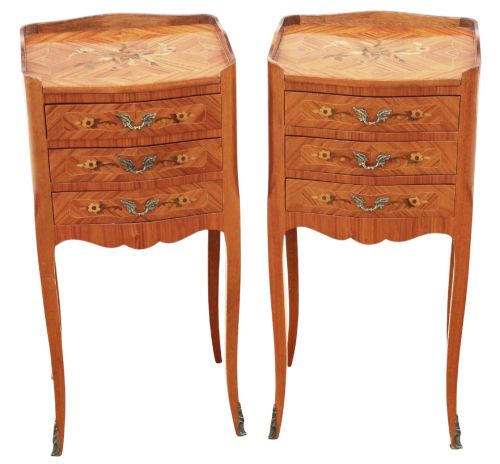
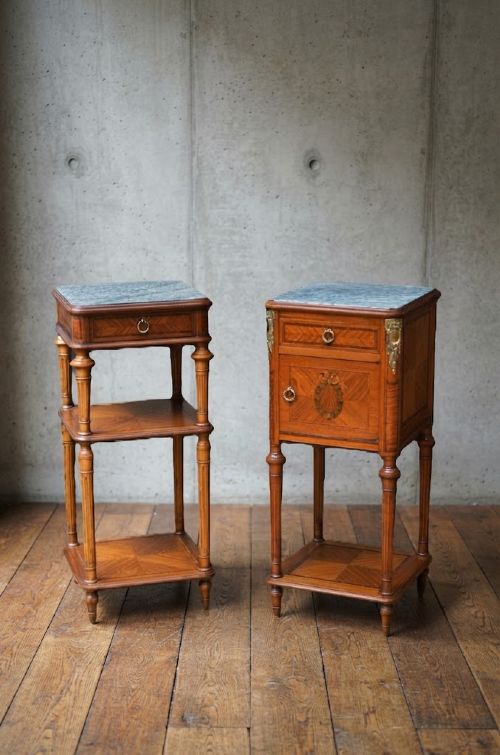
Surface decoration incorporated marquetry, parquetry, and intricate inlays, alongside polished finishes and carved details.
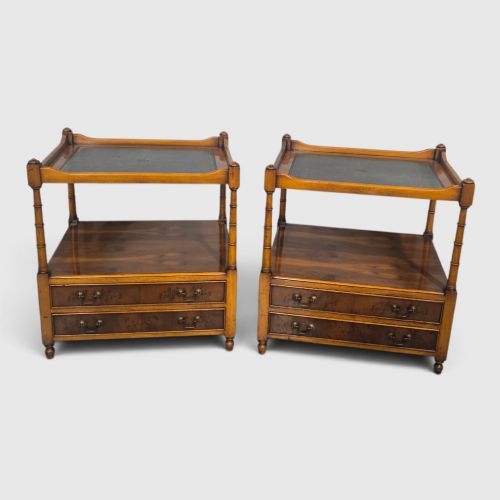
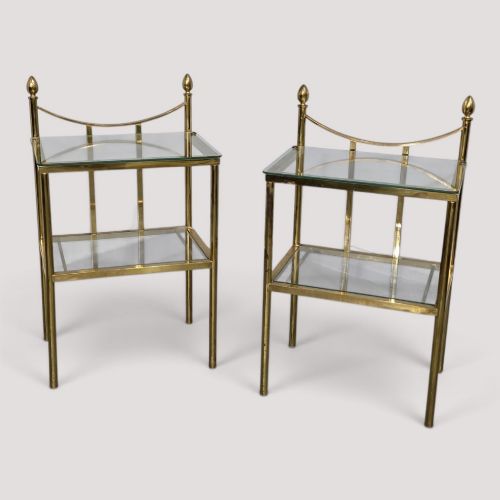
Many French and English pieces paired timber carcasses with contrasting materials, integrating marble tops, brass mounts, or glass surfaces.
Materials recorded across these small tables include brass, mahogany, walnut, marble, satinwood, oak, glass and metal.
What varies in quality
Quality rests in the selection of timber figures, such as figured walnut or closely grained mahogany, and the precision of marquetry or inlay work.
Construction methods dictate durability, distinguishing finely dovetailed drawers and neatly fitted cupboard doors from simpler joints.
The integration of secondary materials like imported marble tops or ormolu mounts elevates certain cabinets above standard utility pieces.
François Linke
The Vintage Bedside Nightstand Glossary
- Marquetry
- Decorative veneer patterns formed by fitting together small pieces of wood or other materials. This technique creates pictorial designs across table tops and cabinet doors.
- Parquetry
- Geometric mosaic woodwork used for surfaces such as table tops. It employs regular shapes like squares or triangles to form repeating patterns.
- Ormolu
- Gilded bronze used for decorative mounts on furniture. It adds metallic highlights to the corners and handles of French cabinets.
- Satinwood
- A durable hardwood with a natural golden sheen and smooth grain. Cabinetmakers favoured it for light-coloured Edwardian pieces.
- Bedside Cabinet
- A small enclosed storage unit with a door or drawers designed to sit next to a bed. These often include internal shelving.
Vintage Bedside Nightstand: Frequently Asked Questions
What is a vintage bedside nightstand?
A vintage bedside nightstand is a small piece of bedroom furniture designed to hold lamps, books and personal items close to the bed. They appear as miniature cupboards, open tables or small chests of drawers.
These pieces date from the nineteenth and early twentieth centuries, reflecting styles from Victorian robustness to Art Deco geometry.
How do I tell an Edwardian nightstand from an Art Deco one?
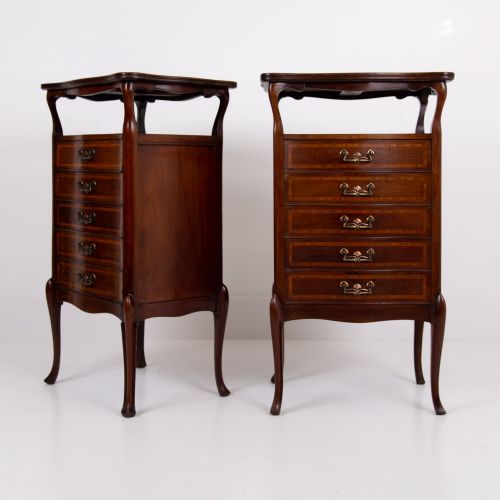
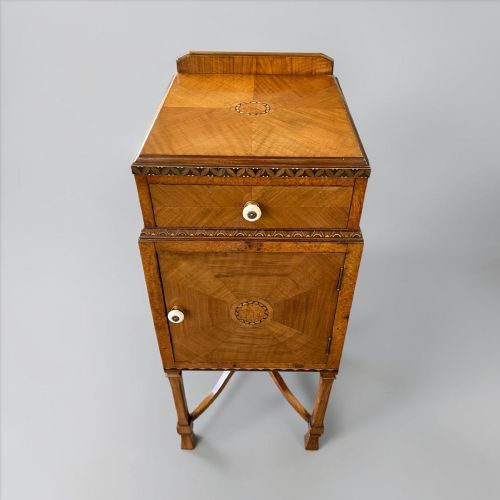
Edwardian nightstands often feature satinwood, mahogany or inlaid details, leaning towards classical Sheraton Revival or simple Edwardian forms. They frequently utilise softer, traditional lines.
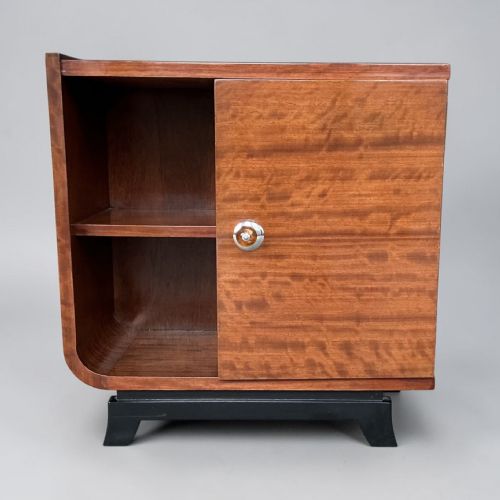
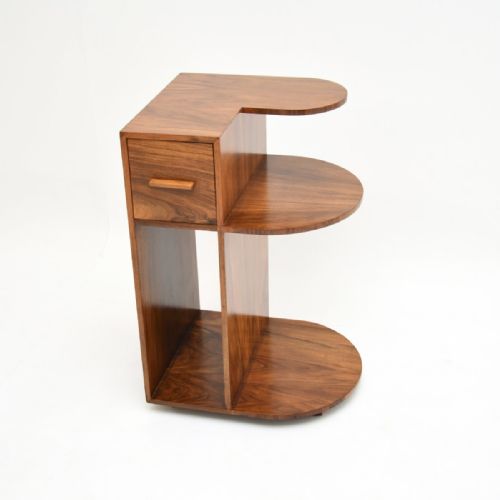
Art Deco nightstands, dating from around the 1930s, showcase figured walnut, geometric shapes, and occasionally marble or glass surfaces with minimal ornamentation.
Were these tables used only in bedrooms?
While primarily designed as bedside cabinets and tables to hold night-time essentials, many of these small forms doubled as lamp tables or side tables in sitting rooms.
Their compact proportions allowed them to fit into narrow spaces or corners across the home, serving various utilitarian purposes.
What materials should I expect to find?
The listings show a strong preference for traditional hardwoods such as mahogany, walnut, oak, satinwood and ash. Some pieces incorporate fruitwood or exotic veneers.
Top surfaces frequently feature contrasting materials, including white marble slabs, glass inserts, or brass fittings alongside polished timber.
How do French styles differ from English ones?
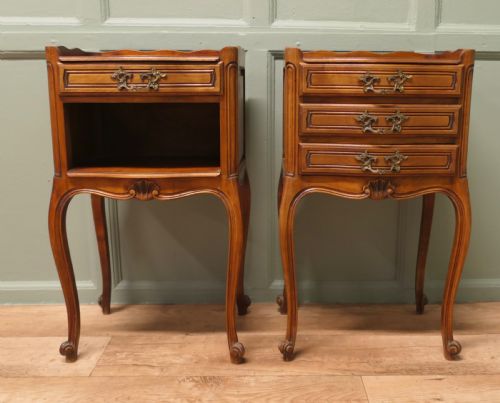
French nightstands from these periods often feature marquetry, parquetry, ormolu mounts, and marble tops, showing influences like Louis XVI Revival or French Provincial design.
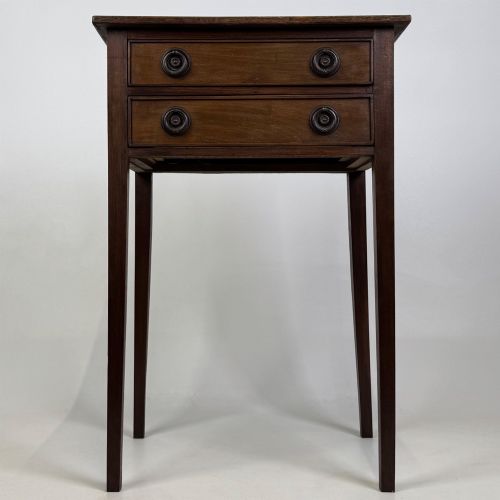
English equivalents typically rely on the natural grain of mahogany, oak, or satinwood, often adhering to Georgian, Victorian, or Edwardian proportions.