

Vintage Bedroom Floor Mirror
A vintage bedroom floor mirror gives a room presence and utility, offering full-length reflection through centuries of craftsmanship.
Vintage Bedroom Floor Mirror
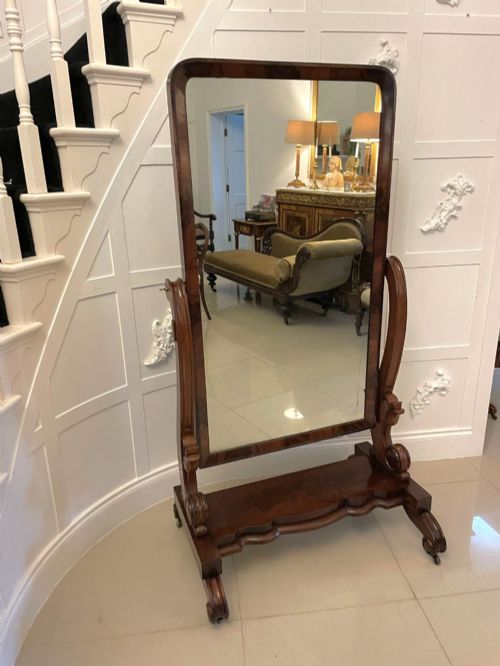
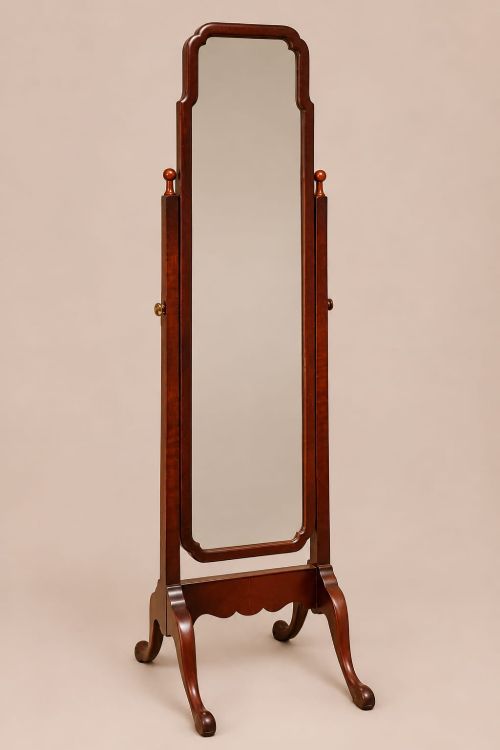
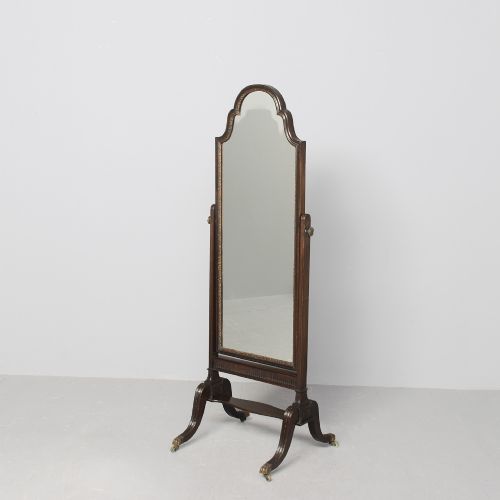
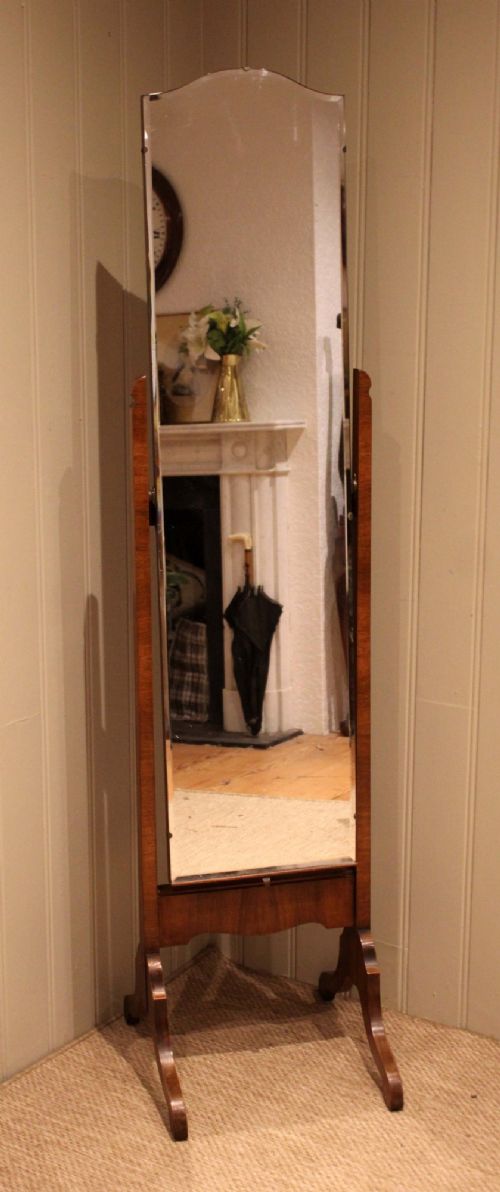
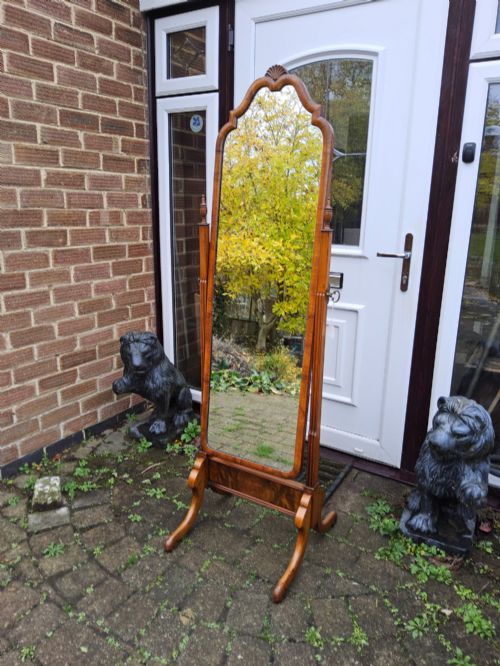
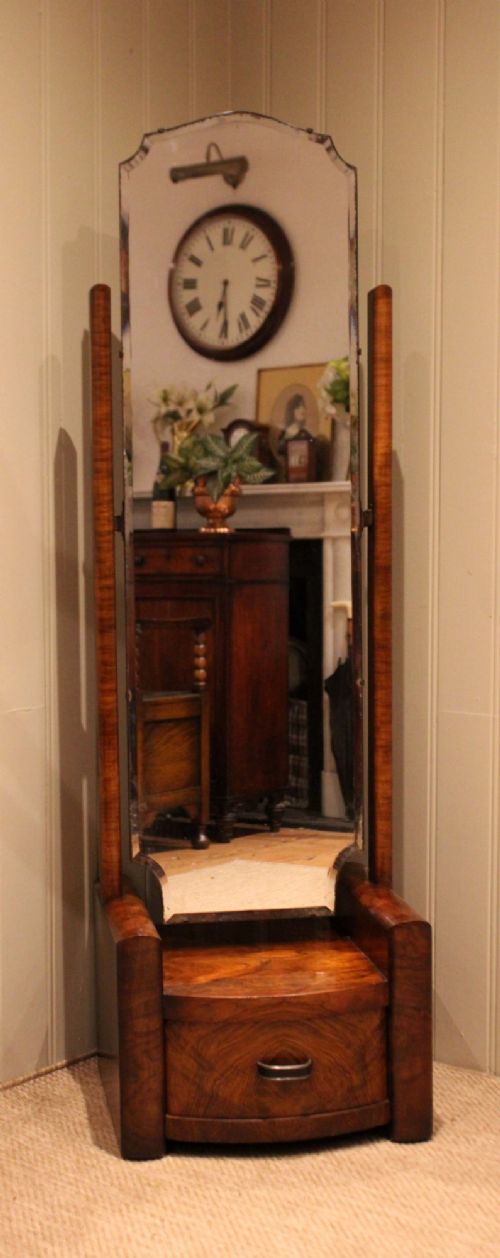
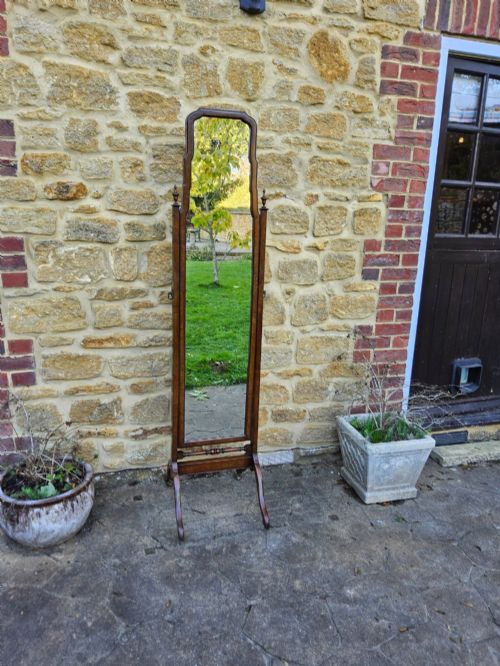
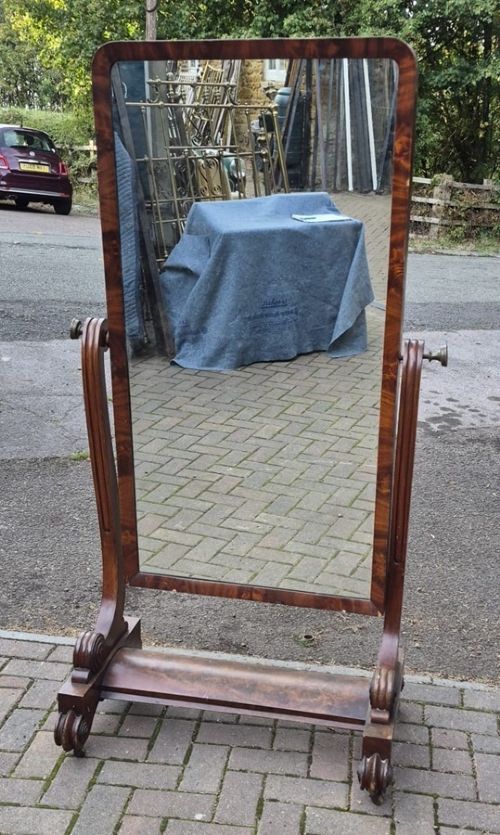
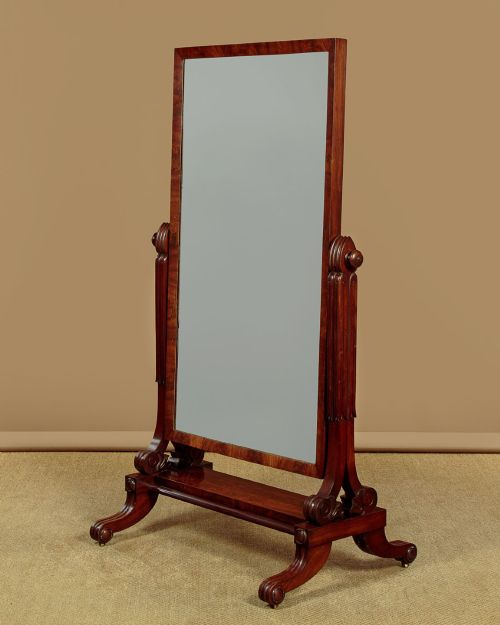
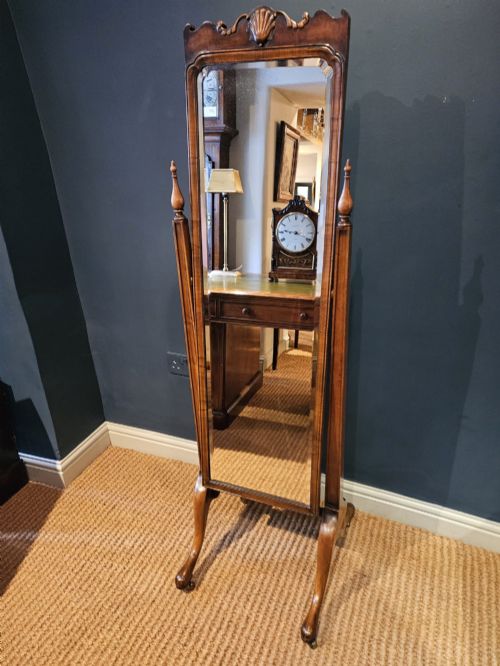
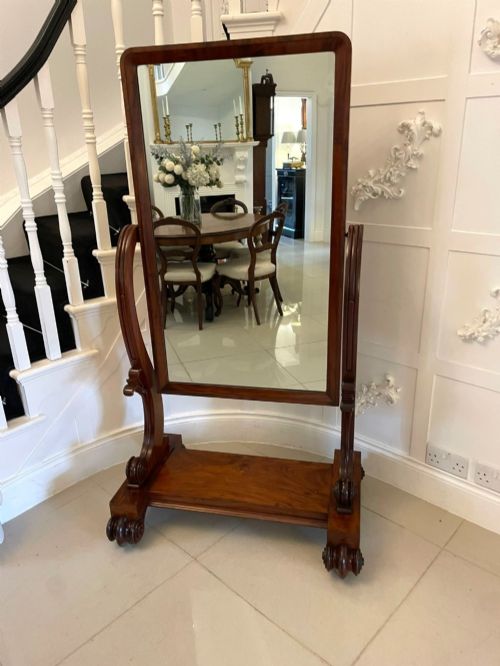
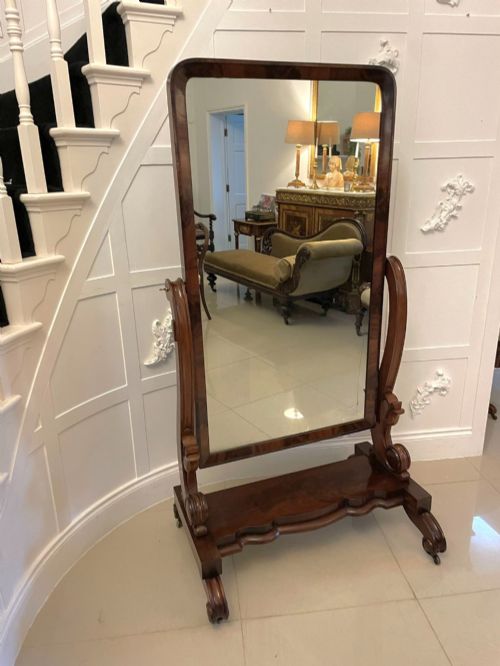
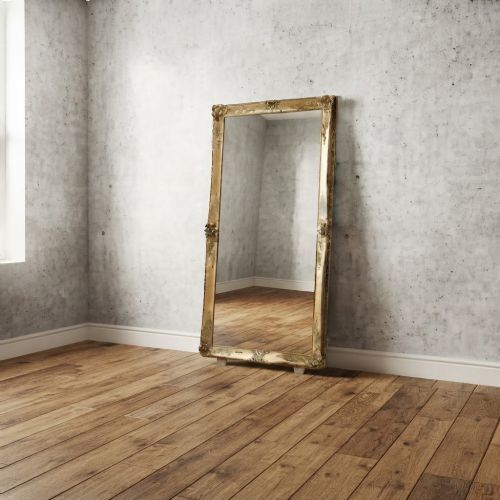
When you search for a vintage bedroom floor mirror, you find tall freestanding glasses designed to pivot within a supportive frame. These pieces originate from periods spanning the Georgian era through to the 1920s.
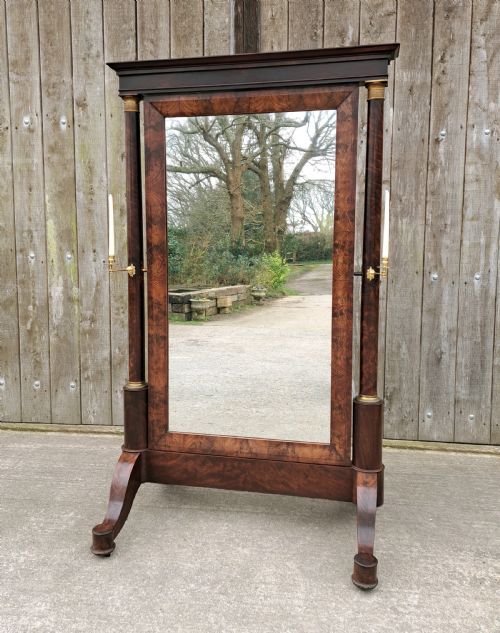
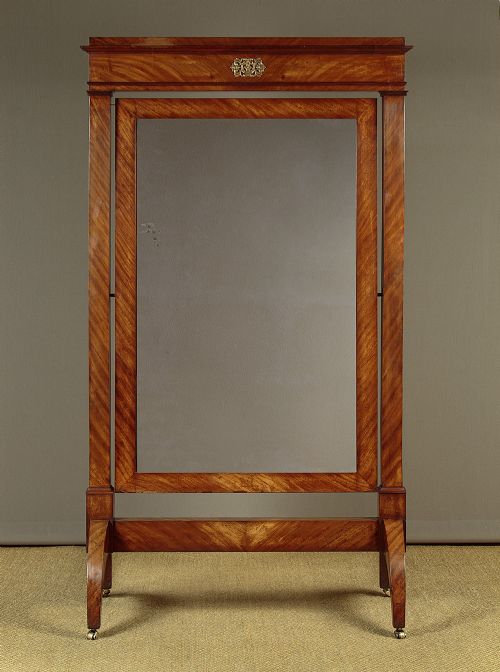
The most common form you meet on this page is the cheval mirror, constructed to stand directly on the floor. Mahogany remains the dominant wood across these surviving examples.
Designs range from simple Regency turned frames to elaborate Edwardian satinwood marquetry and French Chateau styles. They serve both a practical dressing function and a decorative architectural role.
How they were made
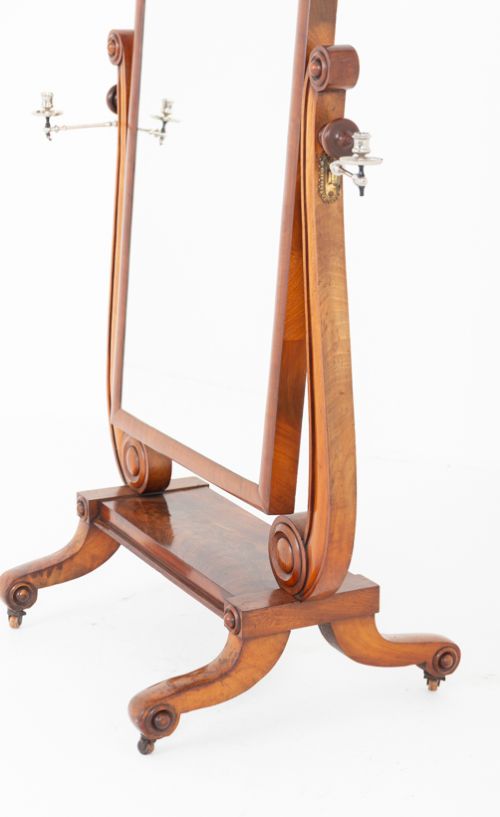
Cabinet makers utilised dense timbers such as mahogany, walnut, satinwood, and satin birch to build sturdy upright stands and supportive floor bases. Selected woods often received fine marquetry inlay or carved decorative details.
The glass plate sits within an adjustable frame, supported by brass pivots and mounted on legs frequently finished with brass castors. Heavier frames demand robust joints to maintain stability while the glass tilts.
Vintage Bedroom Floor Mirror Retail Price Guide 2026
Typical asking prices for vintage bedroom floor mirror among the pieces listed under this phrase on Sellingantiques today, from the lower quarter to the upper quarter. They describe what is for sale here now, not the wider market.
Listings feature timbers such as mahogany, walnut, satinwood, and satin birch, alongside glass and brass elements.
What varies in quality
The sophistication of the timber selection and inlay work separates standard items from superior pieces. Finely figured mahogany and intricate satinwood marquetry indicate careful workshop production.
The robustness of the pivoting mechanism and the weight of the supporting brass fittings dictate how smoothly the glass tilts. Original mirror glass and balanced frame proportions mark the highest grade of execution.
The Vintage Bedroom Floor Mirror Glossary
- Cheval mirror
- A large freestanding mirror suspended on vertical pivots within a frame. This design allows the glass to swing freely to various angles.
- Marquetry
- Decorative patterns formed by inserting thin pieces of wood, ivory, or shell into a wooden veneer. This technique adorned high-status furniture surfaces.
- Satinwood
- A durable, yellowish timber prized for its lustrous sheen and smooth grain. It frequently appeared in fine marquetry and inlay work.
- Giltwood
- Timber that has been coated with a thin layer of gold leaf or gilt gesso. It provides a bright decorative finish to ornate frames.
Vintage Bedroom Floor Mirror: Frequently Asked Questions
How do I place a floor mirror?
Position the piece against a bedroom wall where it receives adequate natural light for dressing.
Ensure the floor surface remains level so the frame stands firmly without straining the side pivots.
Are these mirrors stable on carpets?
Most frames feature wide standing feet or castors designed to distribute the weight evenly.
Thick carpets might require careful adjustment of the base to prevent the mirror from leaning.
Can the mirror angle be adjusted?
The pivoting mechanism on the vertical supports allows the glass to tilt forward or backward.
Tightening the side screws holds the glass securely at your preferred viewing angle.
How do I identify a Victorian mirror?
Look for dense mahogany frames, substantial proportions, and often rich carved decoration.
Many examples from this era incorporate brass castors and robust floor stands.