



Vintage Beach Artwork
Vintage beach artwork captures the shifting light and salt air of the coast through oils and watercolours spanning the Victorian era to the mid-twentieth century.
Vintage Beach Artwork
Vintage beach artwork encompasses painted coastal scenes, harbours, and shorelines created across the nineteenth and twentieth centuries. These pieces record maritime life, leisure scenes, and rugged littoral landscapes through the eyes of various historical schools.
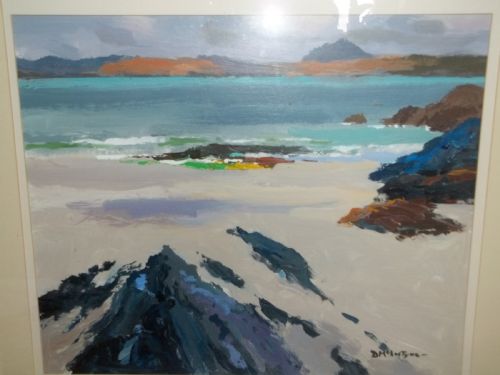
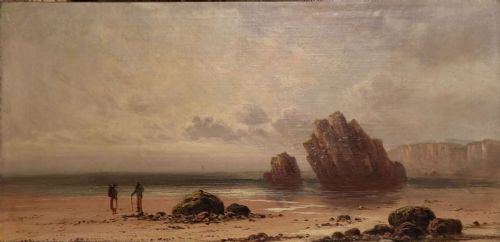
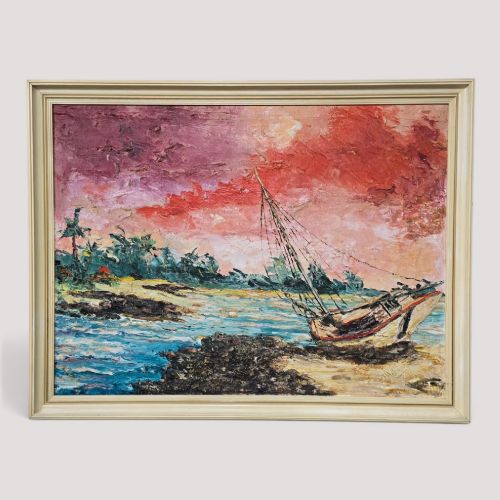
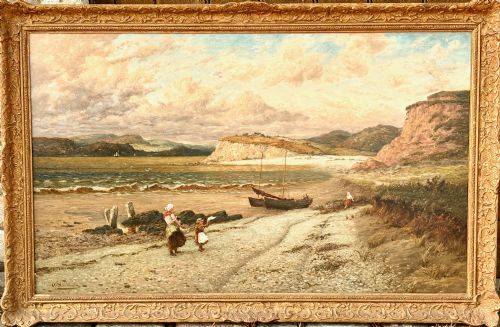
The selections available here lean heavily into traditional British impressionism, Victorian realism, and mid-century modern interpretations. You encounter oil paintings on canvas and board alongside delicate watercolour paintings and prints.
Subjects range from bustling fishing ports like St Ives and Whitby to quiet sandy coves and stormy sea stacks. Painters capture specific regional geographies, from Scottish borders and Welsh shores to French coastal inlets.
Materials and methods
Artists worked primarily with oil paint on canvas or wooden boards, and watercolour applied to heavy paper. Oils allowed for textured impasto depicting churning waves and seaweed carts, while watercolours achieved luminous, transparent washes for skies and tide flats.
Many works retain their original period framing, including ebonised surrounds and hand-enamelled polychrome frames. Prints and etchings utilise traditional plates and aquatint techniques on paper supports.
One canvas preserves a breezy seaside moment alongside a boxer, a photographer, and an unidentified lady in white.
What separates the best pieces
Quality rests upon the artist's command of atmospheric light and tonal balance rather than the mere subject matter. Stronger works convey the palpable movement of tides and the specific weight of coastal air.
Condition of the pigment and the integrity of the original support determine lasting value. Pieces retaining their period frames without excessive overpainting or canvas relining command greater attention from collectors.
Donald McIntyre·William Banks Fortescue·Joseph Edward Hennah·Robert Leslie Howey·George Hamilton Constantine·Sir William Russell Flint·Owen Bowen·Daniel Sherrin·Edmund Gouldsmith·Norman Janes·Yves Brayer·Thomas Bush Hardy
The Vintage Beach Artwork Glossary
- Impressionism
- A nineteenth-century painting style focusing on accurate depiction of light in its changing qualities. Artists used visible brushstrokes and unblended pigments to capture momentary outdoor effects.
- Seascape
- A work of art depicting the sea, coastal views, or marine activities. These compositions often balance expansive skies against turbulent or calm water.
- Etching
- A printmaking method where lines are incised into a metal plate with acid before ink is applied. Aquatint is a related tonal etching technique often combined with the primary lines.
- Impasto
- Paint applied thickly to a canvas, standing out from the surface so that brush or palette knife marks remain visible. This technique adds tactile dimension to crashing waves and rocky shores.
- Provenance
- The documented history of ownership and origin for a work of art. Verified attribution to a known painter anchors the historical context of a coastal scene.
Vintage Beach Artwork: Frequently Asked Questions
How do I date a vintage coastal painting?
Dating relies on stylistic clues, framing materials, and artist biography records. Victorian works typically feature darker, more conservative palettes, whereas mid-century pieces embrace brighter impressionist or modern idioms.
Examine the back of the canvas or paper support for old exhibition labels, dealer stamps, or handwritten inscriptions. These details often pinpoint the exact decade or location depicted.
Are these paintings executed outdoors?
Many nineteenth-century and early twentieth-century painters produced small oil sketches directly on the shore to capture transient weather. Finished exhibition pieces were often completed later in studio spaces using these initial plein-air studies.
Watercolours were particularly suited for rapid outdoor sketching due to their quick-drying nature. Artists utilised portable boxes to record changing tides before the light shifted.
How should I care for antique watercolours?
Watercolours on paper are highly sensitive to ultraviolet light and damp environments. Hang them away from direct sunlight and areas prone to humidity changes to prevent fading and foxing.
Ensure the framing utilises acid-free mounts so the paper does not touch the glass directly. Proper archival framing preserves the delicate pigments for future decades.
What distinguishes British impressionism from Victorian art?
Victorian marine art often prioritises narrative detail, dramatic narrative action, and precise topographical accuracy. The palette tends toward sombre, naturalistic tones suited to moody domestic interiors.
British impressionism shifts focus toward light, brushwork, and atmospheric atmosphere. Forms soften into broader strokes of colour that evoke the physical sensation of wind and spray.