


Vintage Balloon Back Chairs
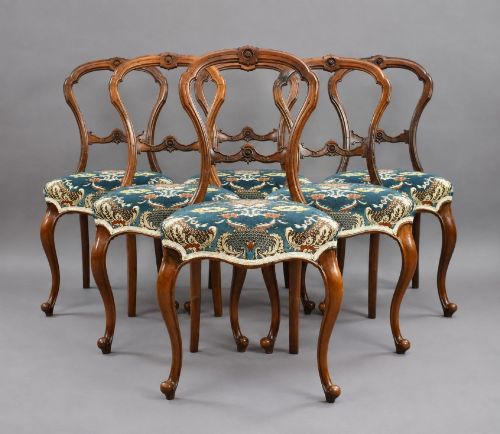
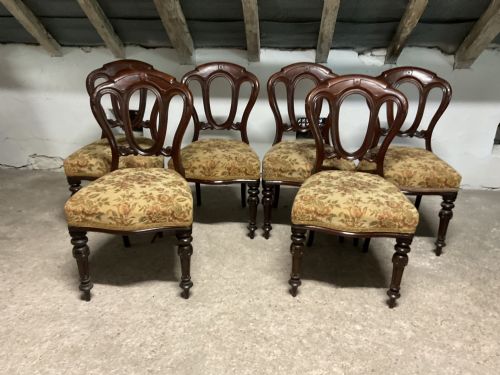
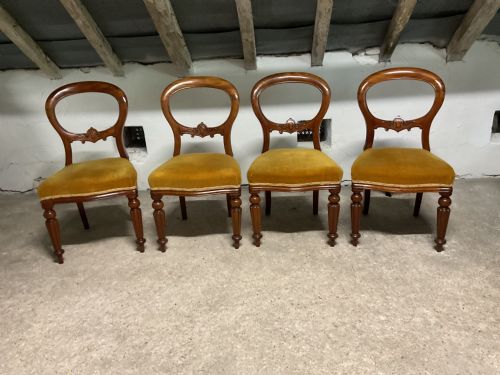
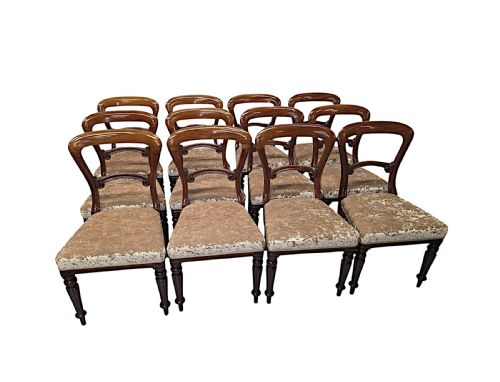
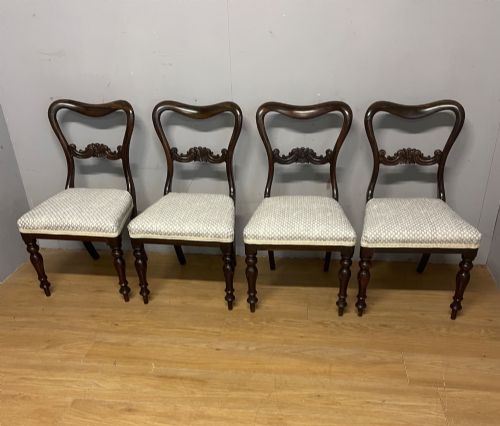
Vintage balloon back chairs are nineteenth-century seats defined by their curved, oval top rails, offering robust timber frames and upholstered comfort for dining and parlour settings.
Vintage Balloon Back Chairs
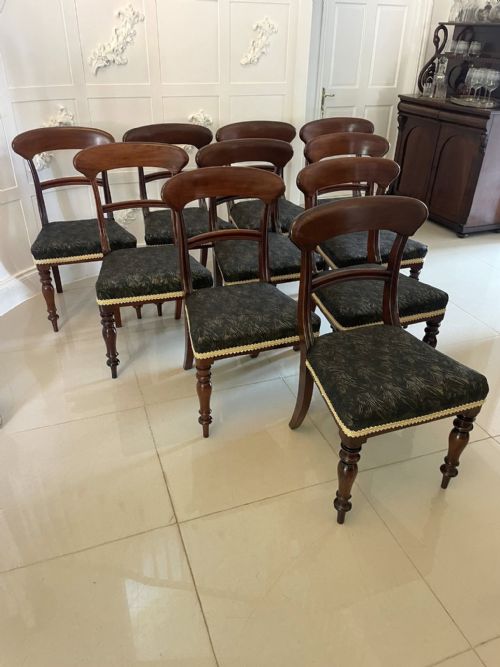
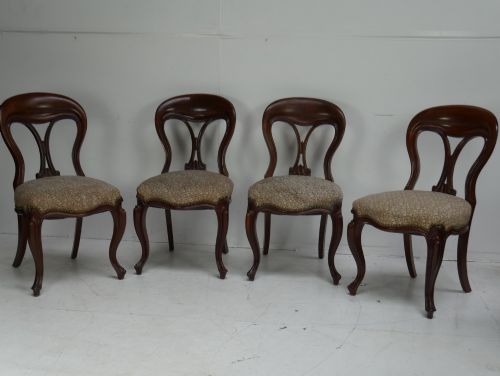
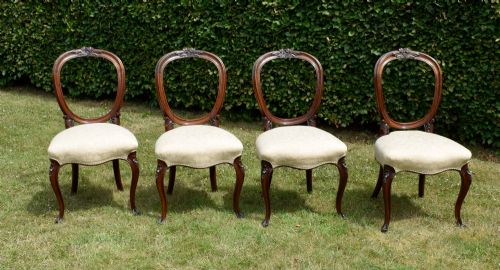
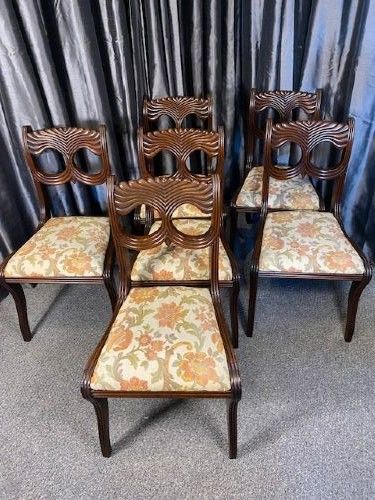
When you search for vintage balloon back chairs, you encounter nineteenth-century seating primarily rooted in the Victorian and Regency eras. These pieces appear most frequently as dining chairs sold in sets of four, six, eight, or twelve, alongside individual armchairs, side chairs, and desk chairs.
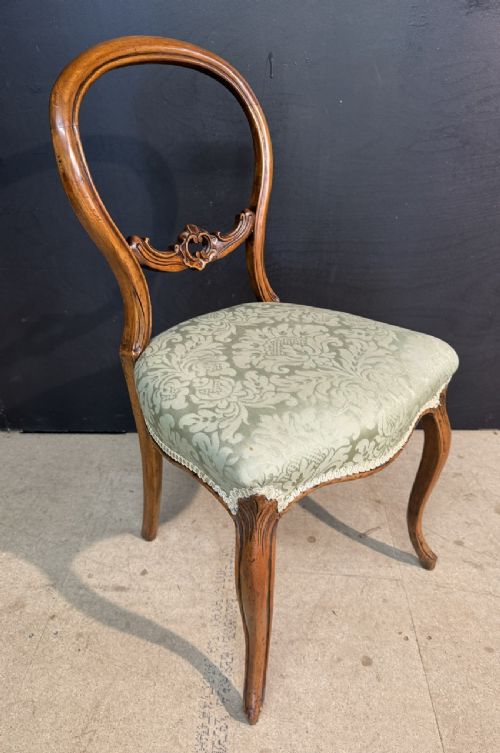
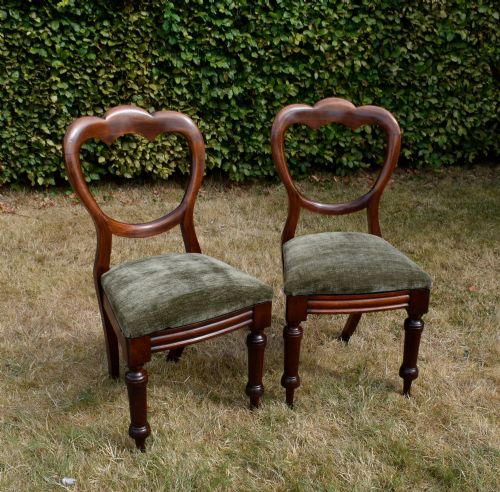
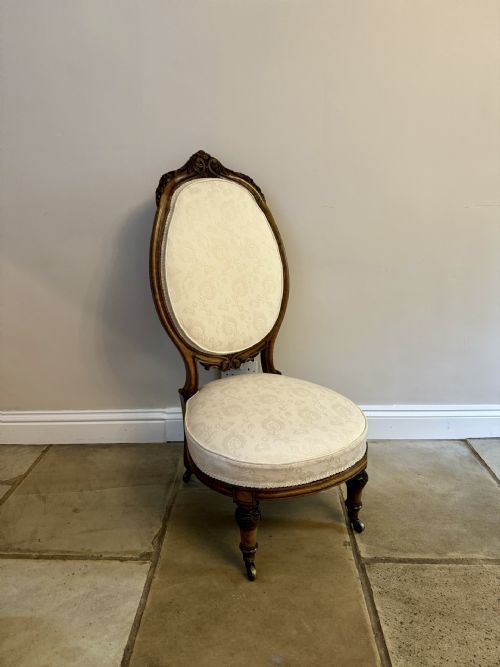
The defining characteristic is the rounded, open backrest resembling the shape of a balloon, often supported by a central carved splat. The selection on this page spans walnut, mahogany, and rosewood timbers, frequently paired with upholstered seats in fabric, velvet, or leather.
How they were made
Cabinet makers constructed these frames predominantly from solid hardwoods such as mahogany, walnut, and rosewood, utilising steam-bending techniques to achieve the signature curved back rail. Joinery relied on mortise and tenon methods to ensure structural rigidity under daily use.
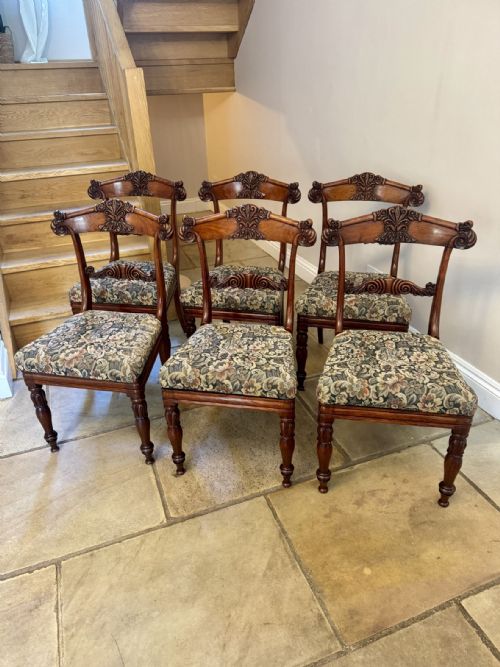
Seat bases utilised traditional webbing and stuffing materials finished with textile, velvet, or leather upholstery secured by tacks. Carved details on the splats and legs were executed by hand, varying from simple moulded profiles to elaborate floral motifs.
Listings feature nineteenth-century seating constructed primarily from mahogany, walnut, and rosewood timbers.
What varies in quality
Quality rests in the selection of dense timber grains and the crispness of hand-carved details along the back splat and frame. Superior examples display seamless joinery at the curved joints where the back meets the seat rail.
The proportion and weight of the wood dictate stability, with heavier rosewood and mahogany frames offering greater longevity than lighter secondary woods. Original upholstery configurations and well-preserved timber patination elevate an individual piece above standard production models.
Gillows
The Vintage Balloon Back Chairs Glossary
- Balloon back
- A chair back shaped like a rounded oval or hot air balloon, popular during the Victorian period. This profile provides ergonomic support through its curved top rail.
- Cabriole leg
- A furniture leg that curves out and then in, resembling the leg of an animal. This style appears frequently on salon and desk chairs from the nineteenth century.
- Rosewood
- A dense, dark timber with distinct figuring utilised in high-end Regency and Victorian seating. It accepts a high polish and provides exceptional weight and durability.
Vintage Balloon Back Chairs: Frequently Asked Questions
How do I date a balloon back chair?
Dating relies on timber choice, leg style, and construction methods recorded across the nineteenth century. Earlier pieces often display Regency or William IV characteristics with rosewood frames, while later Victorian examples utilise walnut or mahogany with machine-assisted joinery.
Examine the underside of the seat rail for tool marks and assembly clues. Hand-cut screws and traditional glue blocks generally point to earlier production dates before standardised factory manufacturing took over.
Are these chairs comfortable for daily dining?
Most of these chairs were designed for formal dining and feature upright backs that encourage an upright posture. The curved top rail accommodates the spine well during shorter periods of sitting.
Upholstered seat pads vary in firmness depending on whether the webbing has been restored. Selecting sets with supportive padding ensures they function comfortably for modern dining use.
How do I match mismatched dining chairs?
Matching disparate chairs requires finding commonalities in timber species, such as pairing mahogany frames or matching dark rosewood tones. Similar back heights and carving motifs help unify a mixed group around a table.
Keeping the upholstery fabric consistent across different chair frames ties a varied set together visually. Stick to similar nineteenth-century revival styles to maintain a cohesive appearance.
How do I care for antique wood finishes?
Preserving the timber involves applying microcrystalline wax periodically to nourish the wood and protect the polished surface from moisture. Avoid placing chairs in direct sunlight or near heat sources that can dry out the nineteenth-century timber.
Dust regularly with a soft, dry cloth to prevent particulate buildup in the carved recesses of the back splats. Gentle care maintains the natural patination built up over decades of use.