

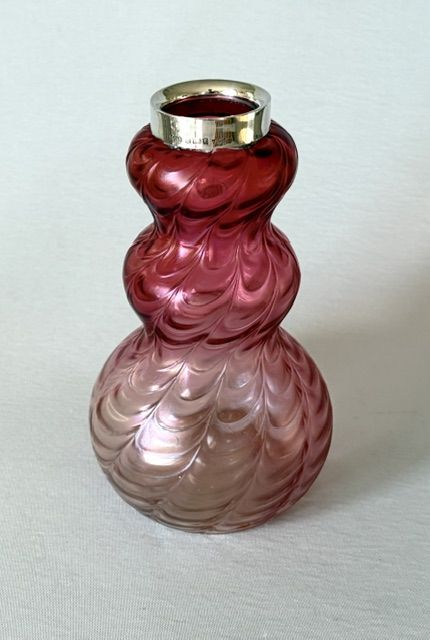
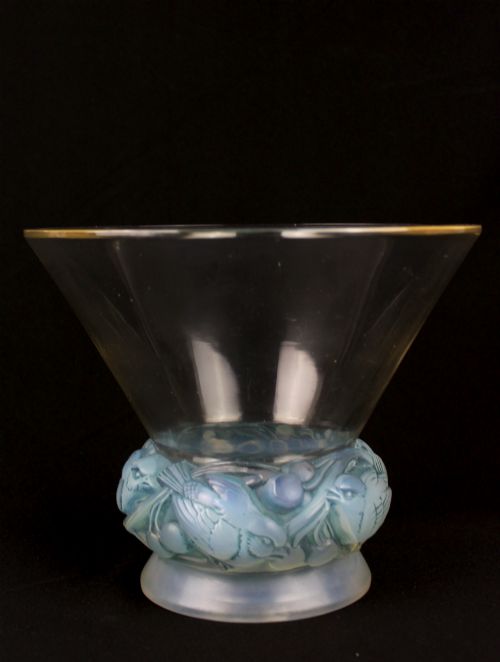
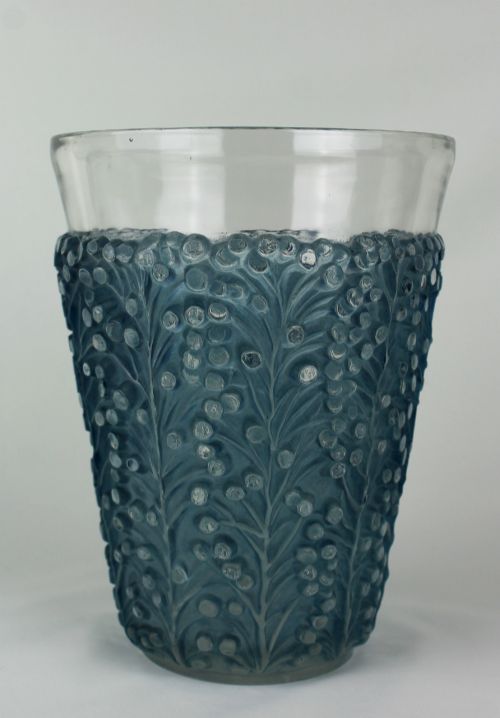
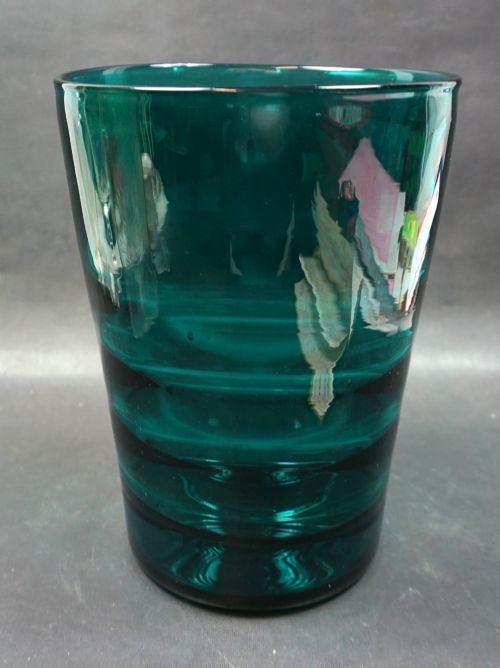
Vintage Art Glass Vase
When you choose a vintage art glass vase, you bring home a vessel that captures the shifting aesthetic movements of the late nineteenth and early twentieth centuries.
Vintage Art Glass Vase
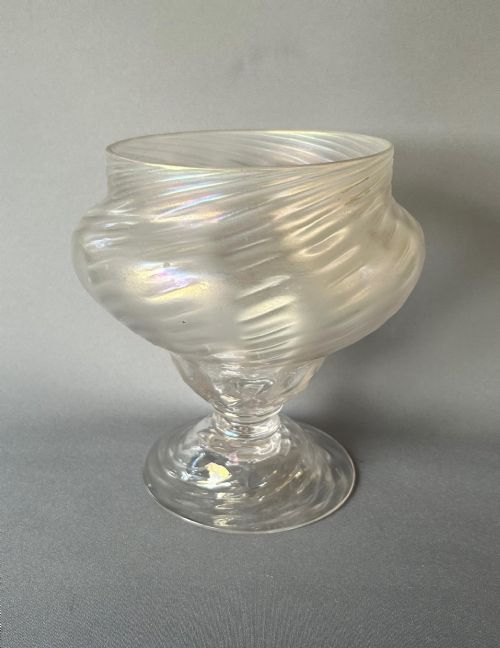
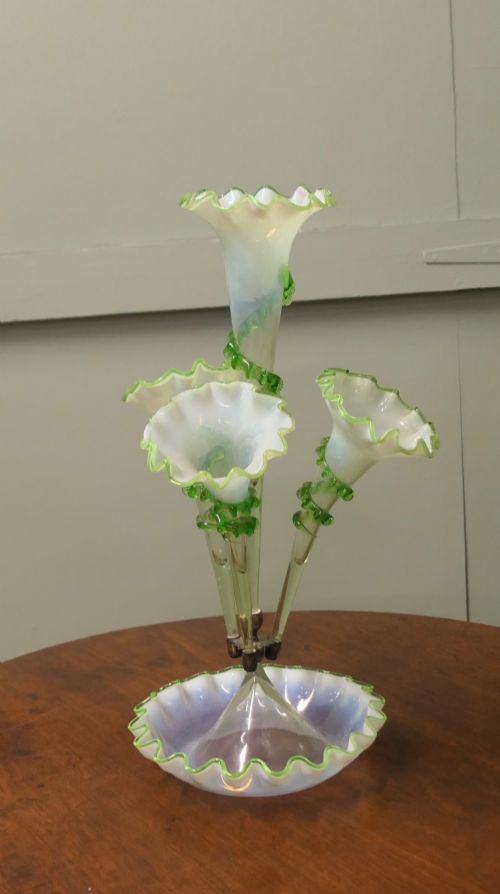
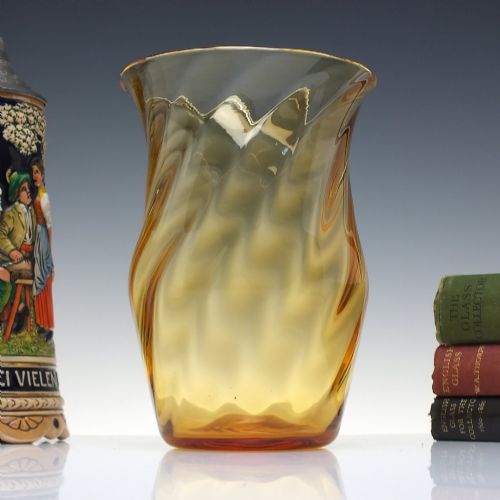
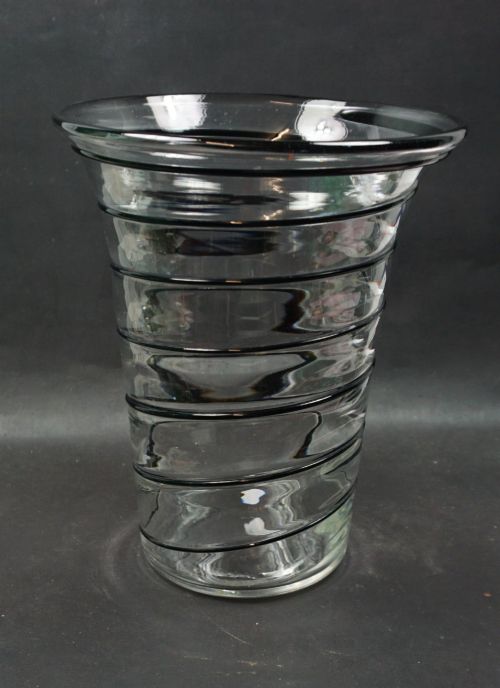
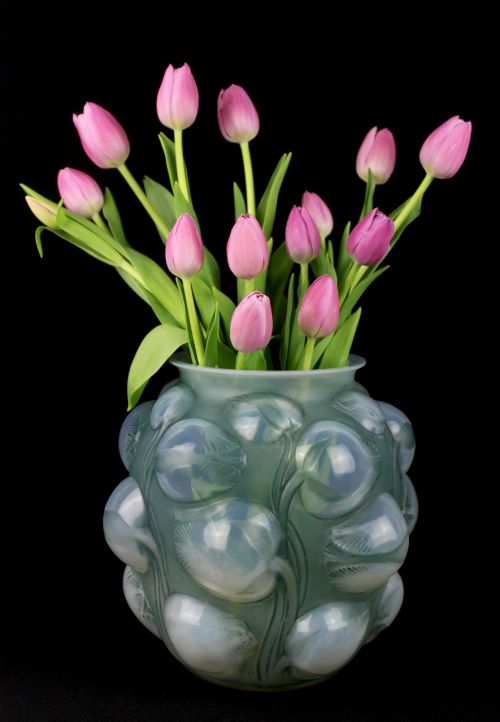
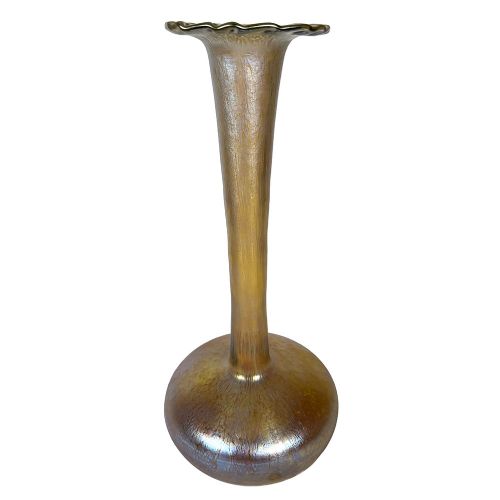
A vintage art glass vase encompasses decorative vessels produced across distinct design periods, ranging from intricate nineteenth-century creations to streamlined mid-century modern pieces. The items listed on this page frequently display characteristics of Art Nouveau, Art Deco, and the Arts and Crafts movement.
Collectors encounter blown glass, cameo glass, and lead crystal forms shaped by notable makers and workshops from France, Belgium, Bohemia, and Britain. These objects functioned primarily as ornamental centrepieces or decorative tableware within period interiors.
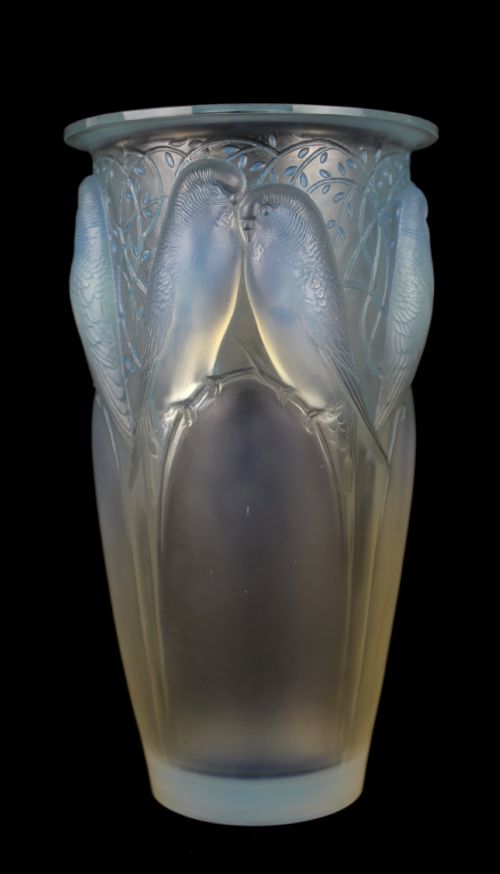
The assortment on this page reflects diverse manufacturing origins, spanning French cameo pieces, Belgian crystal, and Czech geometric designs. Each vintage art glass vase demonstrates the prevailing decorative tastes of its decade of production.
Methods and materials
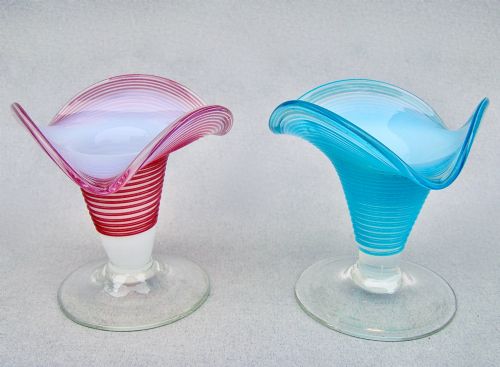
Makers utilised techniques such as glass blowing, acid-etching, and cameo carving to build layered depths and tactile surfaces. Molten material received coloration through metallic oxides, enamel decoration, or overlaid crystal casing.
Production methods often combined free-blown manipulation with mould-pressing, particularly during the Art Deco period when geometric clarity was desired. Surface finishes ranged from frosted and opalescent effects to deeply etched patterns and applied gilding.
Vintage Art Glass Vase Retail Price Guide 2026
Typical asking prices for vintage art glass vase among the pieces listed under this phrase on Sellingantiques today, from the lower quarter to the upper quarter. They describe what is for sale here now, not the wider market.
Several vintage vases incorporate powdered aventurine glass inclusions that glitter like tiny metallic stars suspended within the cooled material.
Distinctions in execution
Quality in these vessels rests upon the precision of the glassmaker's technique and the clarity of the material itself. Master workshops achieved finer control over multi-layered cameo glass and acid-etched depths, resulting in crisper botanical or abstract motifs.
The artistic ambition of the design and the sophistication of the colour integration separate standard production items from benchmark pieces. Heavier lead crystal bodies and well-balanced proportions indicate superior craftsmanship by established European glasshouses.
Rene Lalique·Daum·Emile Galle·Johann Loetz·Val St Lambert·Karl Palda·Fulvio Bianconi·James Powell
The Vintage Art Glass Vase Glossary
- Cameo Glass
- A vessel formed of multiple fused layers of glass of different colours, carved or acid-etched away to produce a raised design against a contrasting background.
- Opalescent Glass
- A semi-translucent glass type that milky-blue or fire-like highlights when lit from the front, frequently utilised by French makers.
- Pate de Verre
- A method of glass casting where crushed glass is packed into a mould and fused in a kiln, creating a dense, granular texture with painterly colour variations.
- Lead Crystal
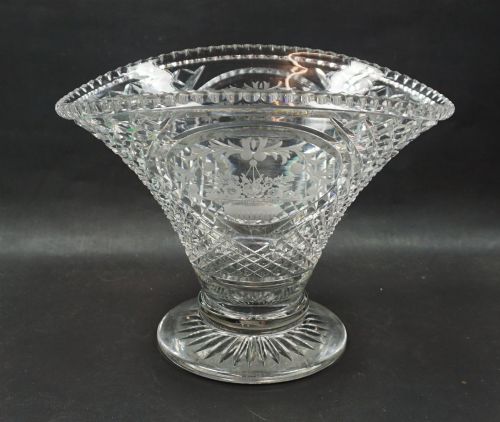
- Glass containing metallic oxide that increases weight, brilliance, and refractive index, allowing for deeper cutting and clearer ringing tones.
- Enamel Decoration
- The application of coloured glass powders mixed with a medium onto the surface, which is then fired to fuse the design permanently to the vessel.
Vintage Art Glass Vase: Frequently Asked Questions
How do I identify Art Nouveau glass?
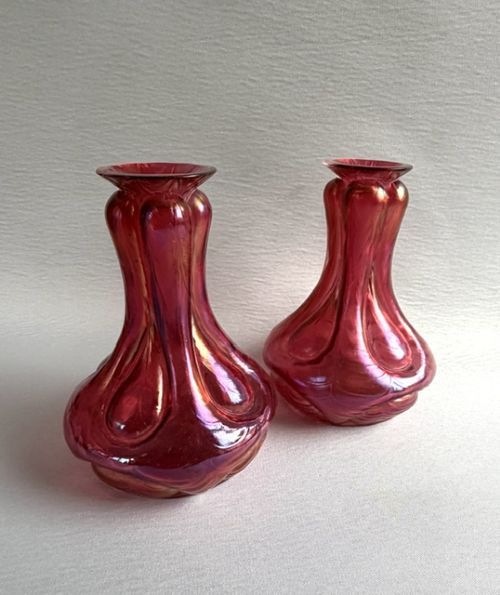
Art Nouveau glass typically exhibits fluid, organic lines inspired by natural forms such as flowers, vines, and insects. Makers often employed iridescent surfaces, cameo layering, and soft colour gradients to mimic the asymmetries found in nature.
Look for signatures integrated directly into the design rather than marked mechanically underneath. The style flourished around the turn of the twentieth century, prioritising handicraft over industrial uniformity.
What defines Art Deco glassware?
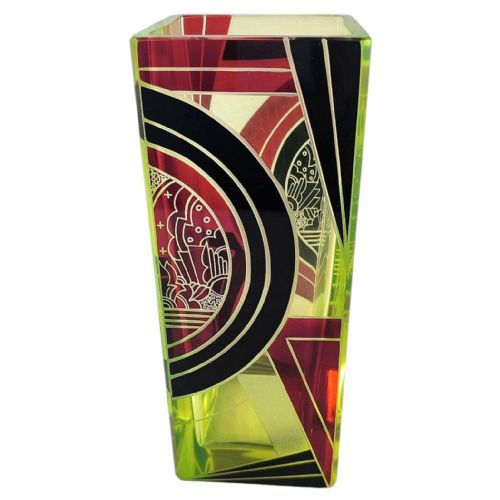
Art Deco glassware relies on symmetry, stylised geometry, and bold colour contrasts. Vessels from this era often display stepped patterns, abstract motifs, or stylised animal and human figures moulded in heavy clear or opalescent glass.
European factories utilised acid-etching and deep sandblasting to create textural contrast on heavy lead crystal bodies. The aesthetic reflects the machine age and modern architecture of the nineteen-twenties and thirties.
Where were these pieces made?
The majority of these decorative vessels originate from major European centres of glass production, notably France, Belgium, Bohemia, and Britain. French studios in Nancy and Paris dominated the luxury market for cameo and moulded crystal.
Regional hubs also developed distinct specialities, such as coloured crystal in Belgium and geometric cutting in Bohemia. Each region contributed specific technical innovations to the evolution of decorative glassware.
How should I display a glass vase?
Display these vessels in spaces with adequate natural light to activate their transparent, opalescent, or iridescent qualities. Placing them near windows or under focused spotlights highlights the layered depths of cameo carving and enamel work.
Keep them away from direct heat sources and unstable surfaces due to their weight and historic fragility. Allowing adequate clearance around each piece ensures the silhouette and surface texture remain the visual focus.