
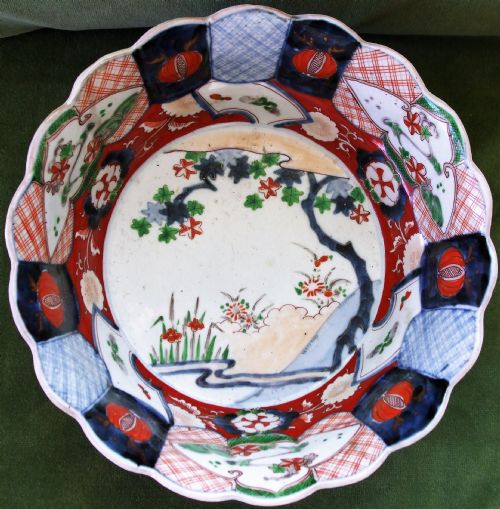
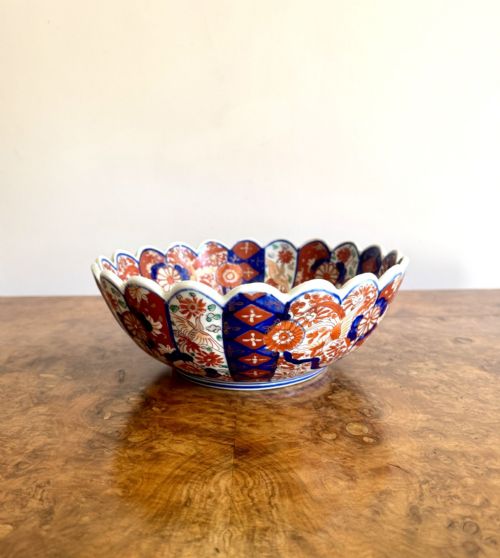


Vintage Arita Porcelain Bowl
These vintage arita porcelain bowl pieces bring enduring Japanese craftsmanship into your home, offering centuries of decorative tradition.
Vintage Arita Porcelain Bowl
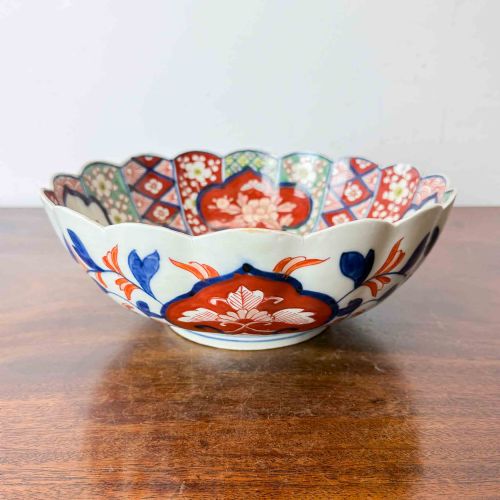
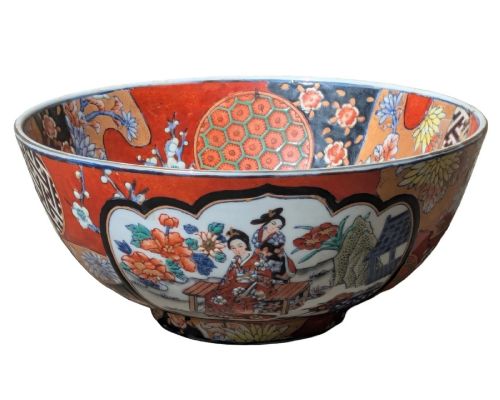
A vintage arita porcelain bowl represents centuries of ceramic tradition originating from the town of Arita in Japan, spanning periods from the seventeenth century through to the twentieth century. These vessels range from deep decorative bowls to shallow dishes, chargers, and scallop-edged plates.
The pieces most frequently met on this page showcase Japanese Imari styles and blue and white decoration, alongside Edo and Meiji period examples. Collectors encounter various forms, including hexagonal bowls, tripod vessels, and clam shell dishes.
Each object reflects the distinct aesthetic priorities of its era, whether the robust forms of the seventeenth century or the intricate patterns typical of the nineteenth century and the 1930s.
Materials and methods
The foundation of every piece is fine porcelain or ceramic, shaped by hand and fired in kilns to achieve durability and a smooth surface. Artisans then applied cobalt underglaze pigments beneath the final transparent coat before secondary firings.
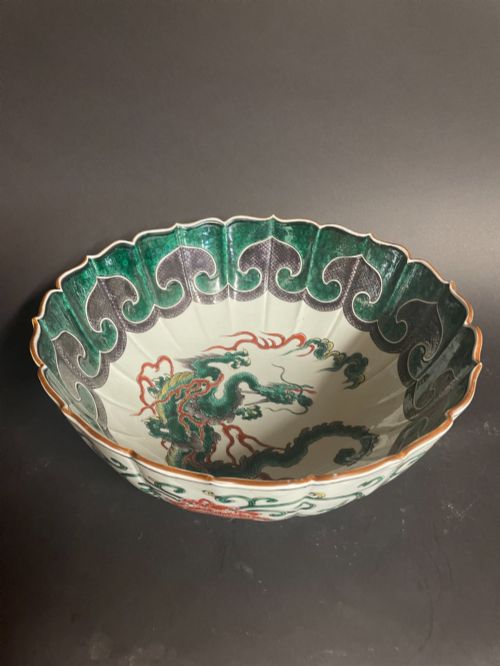
Enamel colours, gold leaf, and gilt details were frequently added over the glaze to create rich, multi-layered decorative schemes. Celadon glaze finishes also appear across the selection, providing a soft green translucent surface.
Potters utilised skilled brushwork to paint intricate scenes of cranes, floral motifs, and geometric borders directly onto the clay body.
Listings span from the seventeenth century through to the nineteen-thirties, featuring porcelain, enamel, gold leaf, and celadon glaze.
What distinguishes the work
Quality in these ceramics rests upon the precision of the brushwork and the vibrancy of the cobalt underglaze and enamel colours. Superior examples display crisp outlines and a harmonious balance between painted elements and exposed porcelain.
The complexity of the form also dictates the standard of the piece, with moulded scallop edges, hexagonal sides, and tripod feet requiring advanced throwing and shaping skills. Application of gold leaf and intricate gilding further separates standard production from finer studio output.
The clarity of the glaze and the refinement of the fired body indicate the level of care taken during kiln operations.
The Vintage Arita Porcelain Bowl Glossary
- Arita
- The historic Japanese town where porcelain production began in the early seventeenth century following the discovery of suitable clay deposits. It remains the heartland of Japanese ceramic manufacturing.
- Imari
- A style of Japanese porcelain decorated in underglaze blue, iron red, and gold, named after the port from which these wares were shipped to Europe. This palette dominates many pieces from the Edo and Meiji periods.
- Cobalt underglaze
- A blue pigment applied directly to the unfired ceramic body before glazing and firing at high temperatures. This technique ensures the colour remains permanent and protected beneath the glass layer.
- Celadon
- A transparent jade-green glaze applied over a white porcelain body, often producing subtle crackle patterns as it cools. It originates from ancient Chinese traditions adopted by Japanese potters.
- Edo period
- The period in Japanese history spanning from sixteen hundred and three to eighteen hundred and sixty-eight, characterised by economic growth and regional stability that fostered the arts.
Vintage Arita Porcelain Bowl: Frequently Asked Questions
How are these bowls dated?
Dating relies on stylistic markers, potting techniques, and the specific characteristics of the underglaze pigments used during different historical eras. Eighteenth-century pieces often exhibit distinct body densities compared to later nineteenth-century or nineteen-thirties items.
Examining the foot ring and the manner of glaze application also provides reliable clues to the period of manufacture.
What is Japanese Imari?
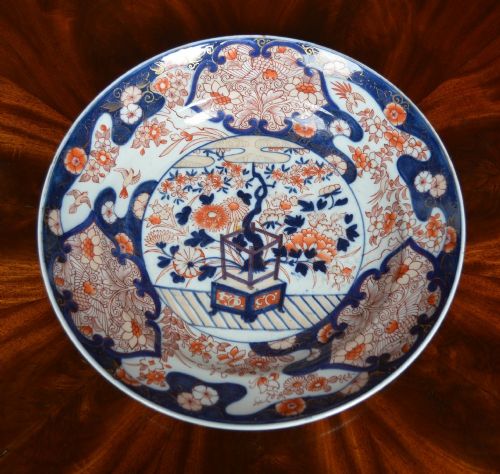
Japanese Imari refers to porcelain decorated with a distinctive palette of cobalt blue, iron red, and supplementary gold leaf. This style developed in Arita and gained immense popularity in Europe during the seventeenth and eighteenth centuries.
Artisans painted intricate floral and geometric motifs that covered nearly the entire surface of the plate or bowl.
How should I display a bowl?
These decorative bowls and dishes suit placement on stable surfaces such as wooden tables, cabinets, or dedicated plate stands. Because many feature delicate enamel and gilt details, placement away from direct foot traffic ensures their safety.
Shallow bowls and chargers work well mounted on walls using specialised display hangers designed for ceramics.
Are these pieces waterproof?
While fired porcelain is inherently non-porous and holds water without issue, antique pieces with delicate overglaze enamels and gold leaf require gentle treatment. Hand washing in lukewarm water with mild soap is recommended rather than soaking.
Harsh detergents and mechanical dishwashers can degrade the surface decorations applied over the glaze during historical manufacturing.