
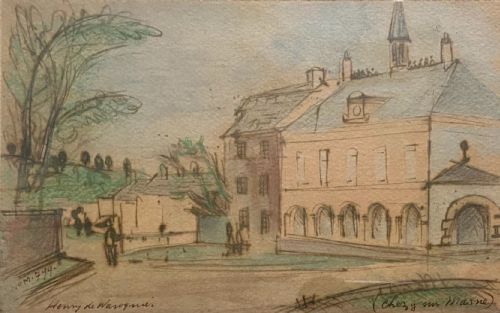


Vintage Architectural Drawing
Vintage architectural drawing captures the precision and artistry of historic design, offering buyers a tangible connection to the built heritage of past centuries.
Vintage Architectural Drawing
When you search for vintage architectural drawing, you encounter works that range from detailed academic studies of Gothic churches to grand watercolour plans of royal palaces and continental buildings. These pieces span the nineteenth and twentieth centuries, originating from British, French, and Dutch hands.
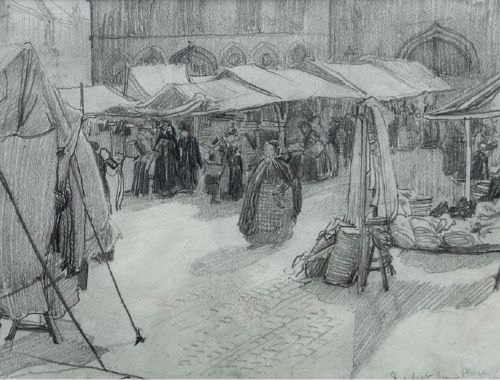
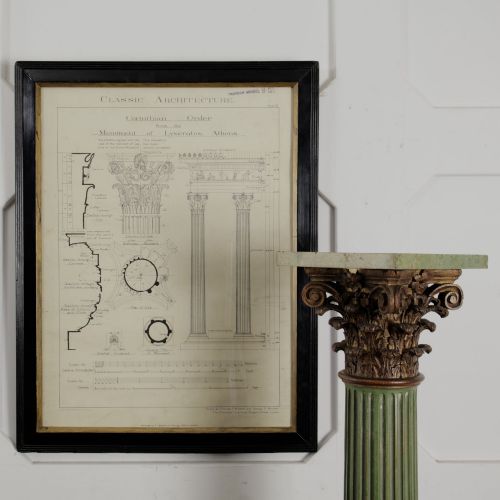
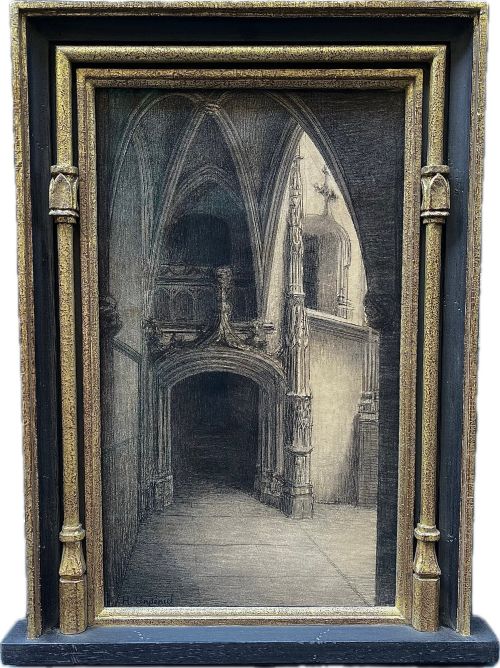
The selection on this page frequently includes framed prints, ink and watercolour washes, and charcoal sketches depicting structures such as cathedral fronts, town halls, and classical orders. Many of these works carry inscriptions, signatures, or dates pointing to specific schools and makers.
Buyers often meet works associated with educational institutions, such as the South Kensington School, alongside professional draughtsman outputs. Whether rendered in monochrome ink or augmented with pastel, each piece documents the evolving methods of building design.
Materials and technique
These works rely primarily on paper supports treated with graphite, charcoal, or ink to map out crisp perspective lines and elevation details. Draughtsmen utilised pencil and wash alongside fine pen work to achieve exacting tonal accuracy.
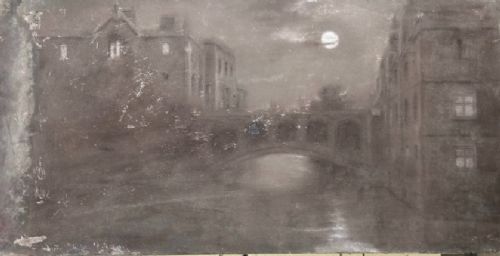
Watercolour and gouache frequently bring colour and depth to architectural prints and original designs, highlighting stonework, roofs, and surrounding landscapes. Artists also employed mixed media, combining pastel and ink on paper to capture atmospheric townscapes.
Framed lithographs and industrial prints demonstrate the translation of hand-drawn plans into multiple copies for distribution and study. Wooden frames and glass protect these delicate paper artefacts from environmental wear.
One seventeen-year-old student signed his palace design for the South Kensington School in eighteen-eighty, preserving a teenage architect's ambition for posterity.
Judging quality in architectural art
The calibre of a piece rests upon the firmness of the draughtsmanship and the accuracy of the perspective, distinguishing careful academic or professional output from casual sketches. Detail in structural elements like Corinthian capitals or stonework reveals the hand of a trained artist.
Condition of the paper surface and the preservation of the original ink, graphite, or watercolour pigments dictate the visual impact of the work. Evidence of provenance, such as artist signatures, dated inscriptions, or documented institutional origin, elevates the historical significance of the object.
Henry Percy Huggill·Henri Charles Angéniol·Henry de Waroquier·Charles James Lauder·J W Hogley·Denis William Reed·Fred Lawson·Thomas Dunn·John Scott Russell·Joseph Hansom·George De Paris
The Vintage Architectural Drawing Glossary
- Lithograph
- A print made from a planographic process, using a smooth stone or metal plate where ink adheres only to grease-treated image areas. These were commonly utilised for architectural plans and industrial plates.
- Gouache
- An opaque watercolour medium containing a white pigment filler, giving it a heavier consistency than traditional transparent watercolour. Artists used it to create solid areas of colour on architectural drawings.
- Pantograph
- A mechanical instrument based on parallelogram linkages used for scaling and copying maps, plans, and drawings. Draughtsmen relied on these to reproduce architectural designs accurately at different sizes.
- Corinthian Order
- One of the classical architectural styles originating in Greece, defined by slender fluted columns and ornate capitals decorated with acanthus leaves. Plates depicting this order served as educational references.
Vintage Architectural Drawing: Frequently Asked Questions
What is an architectural drawing?
An architectural drawing is a technical or artistic illustration of a building, structure, or interior plan created by an architect, draughtsman, or student. These works served practical building purposes or academic study.
They range from precise ink plans to grand watercolour perspectives of cathedrals and palaces, executed on paper supports.
How were these drawings used historically?
Historically, these pieces functioned as working blueprints for builders, competition entries for students at institutions like the South Kensington School, or records of existing historic structures during tours.
Draftsmen and architects utilised specialised tools like pantographs and beam compasses to draft these precise elevations and plans.
How should I frame and display paper artwork?
Paper artworks require conservation framing using acid-free mounts and UV-filtering glass to prevent fading of the original ink, graphite, or watercolour pigments over time.
Keep them away from direct sunlight and damp environments to protect the fragile paper support and any delicate charcoal or pastel mediums.
How can I tell the period of a drawing?
Dating relies on stylistic clues within the depicted architecture, clothing of figures, handwriting on inscriptions, and signature styles of known artists or schools.
Many pieces bear contemporary ink dates or watermarks on the paper that help place them within the nineteenth or twentieth century.