

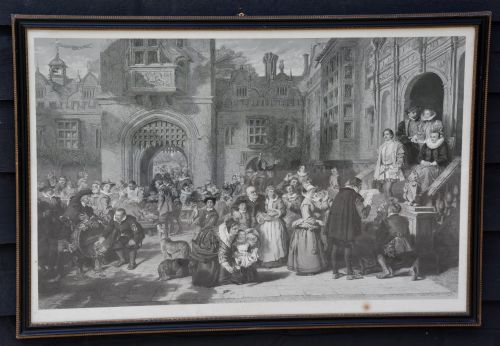

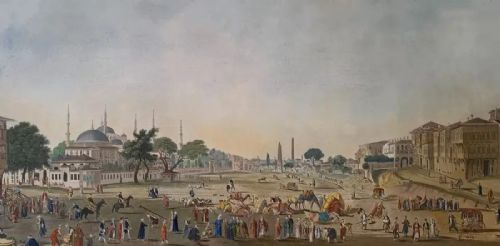
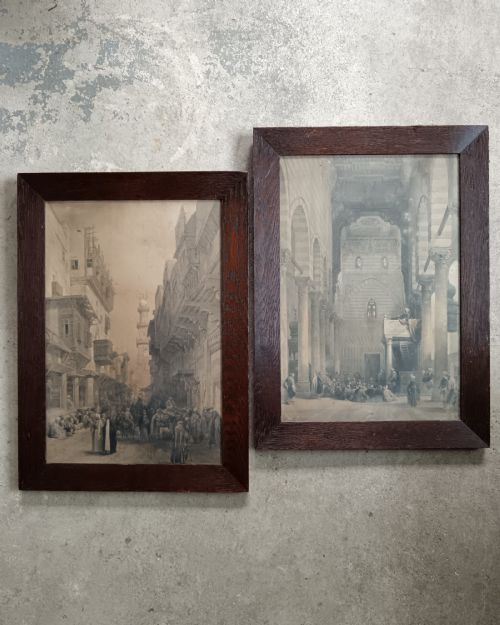


Framed Architectural Print
A framed architectural print brings the grand facades, classical columns and historic streetscapes of past centuries directly onto a modern wall.
Framed Architectural Print
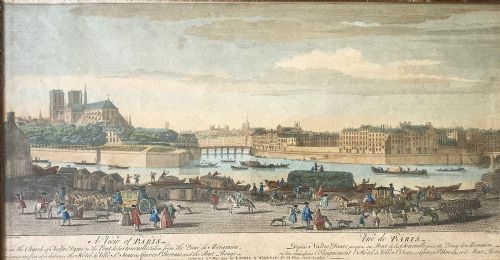
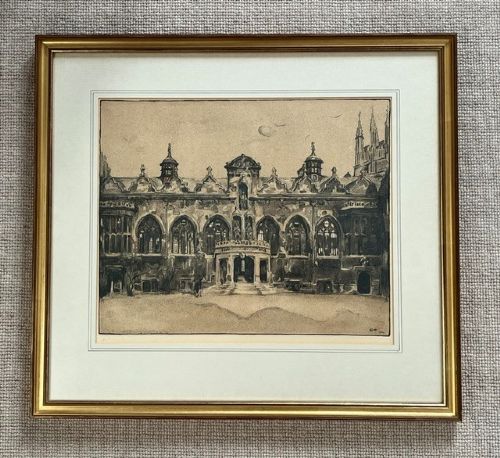
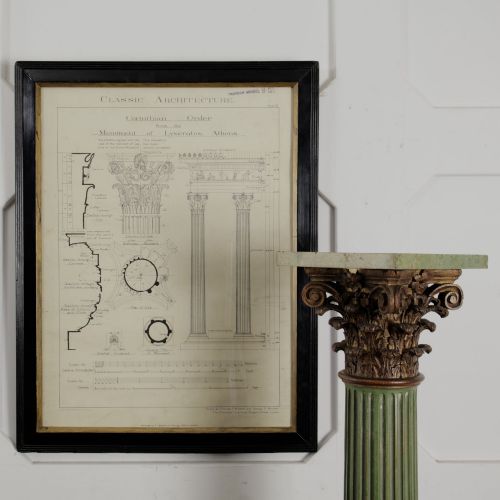
A framed architectural print encompasses works depicting buildings, monuments, streetscapes and structural studies rendered through various printmaking techniques. These pieces capture everything from grand European cathedrals and classical orders to intricate French architectural plans and ancient ruins.
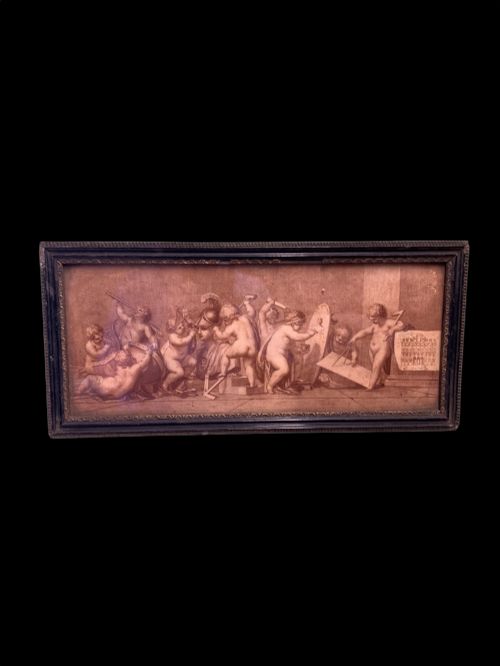
The versions most commonly met on this page originate from the eighteenth and nineteenth centuries, alongside early twentieth-century examples. They frequently arrive in period surrounds such as original Hogarth frames or gilded wood.
Makers and artists range from celebrated figures like Francesco Piranesi and David Roberts to skilled students and anonymous draftsmen. Their subjects span diverse movements including Neoclassical, Gothic Revival and Orientalism.
How they were made
Paper forms the primary surface for these works, carrying images applied through ink, monochrome ink, lithography, etching and engraving. Many examples incorporate original hand colouring or delicate watercolour washes over the printed lines.
Protective glass shields the paper, held securely within frames constructed from wood, gilt wood, or gilded wood. Selected pieces feature gold leaf accents that highlight the framing details and complement the imagery within.
One recorded architectural drawing was executed by a seventeen-year-old student named H.H. Wyatt for the South Kensington School.
What varies in quality
Quality reveals itself in the precision of the draughtsmanship and the clarity of the printed lines, where finer details in masonry, ornamentation and perspective remain sharp and defined. The depth of the hand colouring or watercolour application also separates standard print runs from exceptional works.
The integrity of the original frame plays a significant role, with period surrounds such as Hogarth mouldings or gilt wood adding contextual value. The preservation of the paper, free from excessive fading or distortion, maintains the visual strength of the architectural subject.
Sir William Nicholson·David Roberts·Anton Ignaz Melling·Francesco Piranesi·Louis Haghe
The Framed Architectural Print Glossary
- Engraving
- A printmaking technique where an artist cuts lines directly into a metal plate with a burin. This method produces crisp, highly detailed architectural lines that hold their definition across centuries.
- Lithography
- A planographic printing process based on the repulsion of oil and water on a limestone or metal plate. It allows for smooth tonal gradations well suited to capturing architectural washes and plans.
- Etching
- A method where acid bites lines into a metal plate prepared with a protective ground. The resulting image yields a fluid, free-flowing quality often seen in period views of cities and monuments.
- Neoclassical
- A style drawing inspiration from the classical art and architecture of ancient Greece and Rome. Works in this vein frequently feature columns, symmetry, and monumental facades.
- Gilt wood
- Wood coated with a thin layer of gold leaf or metallic paint. This finish frames many eighteenth and nineteenth-century works to provide a rich border.
Framed Architectural Print: Frequently Asked Questions
What is a framed architectural print?
A framed architectural print is an artwork or technical drawing depicting buildings, structural plans, or historical landmarks, preserved behind glass within a period frame.
These pieces range from eighteenth-century engravings of cathedrals to nineteenth-century lithographs of classical monuments and French architectural designs.
How do I date an architectural print?
Dating relies on examining the paper quality, printing technique, and stylistic markers such as Neoclassical or Gothic Revival influences. Typography, publisher details, and framing styles also offer clues to the period.
Engravings often point to the eighteenth century or earlier, while lithographs frequently align with the nineteenth and early twentieth centuries.
Where should I hang these prints?
These works suit studies, hallways, and living rooms where their fine linework and historic subjects can be viewed closely. They pair well with traditional interiors, especially when grouped together to create a gallery wall.
Keep them away from direct sunlight to protect the paper and any original watercolour or hand colouring from fading.
Are these prints hand coloured?
Many prints feature original hand colouring or washes applied over the ink lines after printing. This technique adds depth to skies, vegetation, and masonry details.
Closer inspection reveals subtle brushstrokes and tonal variations that distinguish hand-applied colour from modern machine printing.