


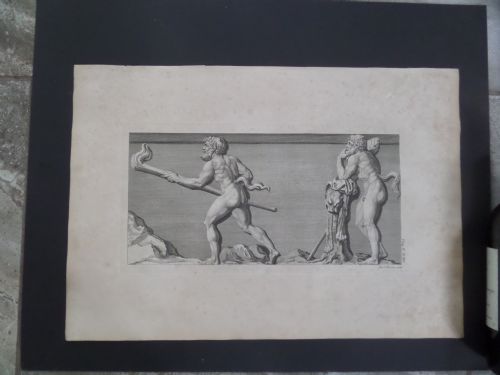


James Basire Print
A james basire print captures neoclassical grandeur, offering an eighteenth-century window into Greek mythology and classical architecture.
James Basire Print
A james basire print typically forms part of the published antiquities of Athens, recording classical Greek architecture and mythological subjects from the eighteenth century. These works capture Grand Tour aesthetics through detailed engravings on paper.
Collectors encounter large format engravings depicting satyrs, winged gods, and architectural studies. The imagery reflects neoclassical taste and scholarly documentation of ancient sites.
How they were made
The production relies upon ink applied to paper through traditional engraving techniques. Artisans incised lines into metal plates to transfer complex architectural details and figural scenes onto sheets.
These eighteenth-century methods achieved precise linework suitable for illustrating scholarly volumes and folio plates.
James Basire Print Retail Price Guide 2026
Typical asking prices for james basire print among the pieces listed under this phrase on Sellingantiques today, from the lower quarter to the upper quarter. They describe what is for sale here now, not the wider market.
What varies in quality
Quality rests upon the crispness of the ink impression and the preservation of the paper sheet. Clear platemarks and strong contrast distinguish sharper impressions from worn examples.
Condition involves the integrity of the margins and the absence of heavy toning or staining across the paper surface.
James Basire
The James Basire Print Glossary
- Engraving
- A printmaking technique where an artist cuts lines into a metal plate using a sharp tool called a burin. The inked plate then transfers the design under pressure to paper.
- Neoclassical
- A style originating in the eighteenth century that draws inspiration from the classical art and culture of ancient Greece and Rome. It emphasises symmetry, proportion, and classical motifs.
- Grand Tour
- A traditional trip through Europe undertaken by upper-class young European men of means in the eighteenth century to flourish their education and collect art. These journeys inspired scholarly publications of classical antiquities.
- Platemark
- The indentation left on paper by the edge of a metal printing plate during the pressing process. This physical ridge serves as an indicator of traditional intaglio printing.
James Basire Print: Frequently Asked Questions
What subjects appear in these works?
The compositions focus on Greek gods, architectural studies, and mythological figures such as satyrs. These subjects derive directly from archaeological documentation of Athens.
Such plates served to record classical antiquity for scholars and collectors during the eighteenth century.
How large are these engravings?
Many examples measure on a large scale to accommodate detailed architectural elevations and complex figural groups. The dimensions reflect their original purpose as folio plates within bound volumes.
Framing requires adequate space to display the full sheet and its surrounding margins.
Which period do they date from?
All listed examples originate in the eighteenth century. This era marked a peak in neoclassical scholarship and archaeological documentation.
The paper and printing techniques align strictly with this period of production.
How should I frame a paper print?
Conservation framing protects the paper from environmental damage and acidic materials. Using UV-filtered glass and acid-free mounts prevents yellowing and fading over time.
Keep the engravings away from direct sunlight and damp conditions to preserve the ink and paper.