


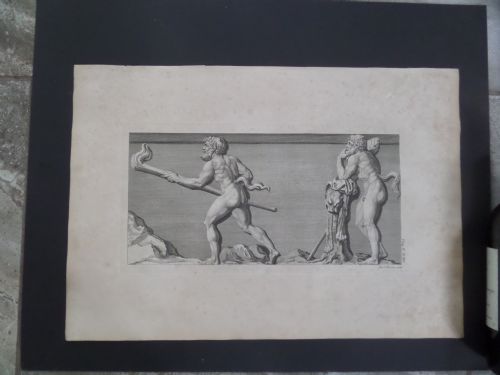

Classical Relief Print
A classical relief print brings neoclassical antiquity into a room through engraved interpretations of Greek gods, architecture and mythological scenes.
Classical Relief Print
When you search for a classical relief print, you encounter historical engravings that capture architectural ruins, mythological figures and classical sculpture from the eighteenth and nineteenth centuries.
The pieces on this page are predominantly eighteenth-century architectural and figural engravings associated with the antiquities of Athens, featuring deities, satyrs and classical architecture.
These works reflect the neoclassical fascination with ancient Greece, translating archaeological discoveries into detailed ink on paper for domestic display.
How they were made
These pieces are produced using ink on paper, taking the form of detailed engravings created during the eighteenth and nineteenth centuries.
Many examples are preserved behind glass within gilt wood frames that complement the neoclassical aesthetic of the imagery.
Current listings span the eighteenth and nineteenth centuries, featuring works executed in ink on paper and housed in gilt wood with glass.
What varies in quality
Quality in these engravings depends on the crispness of the ink lines and the depth of detail achieved in depicting architectural elements and mythological figures.
The distinction between standard examples and superior pieces rests on the clarity of the impression and the prestige of the engraver responsible for the plate.
James Basire·Edward Rooker·J Brown
The Classical Relief Print Glossary
- Engraving
- A printmaking technique where an artist cuts an image into a metal plate using a sharp tool. The resulting lines hold the ink for transfer onto paper.
- Neoclassical
- A style spanning the eighteenth and nineteenth centuries that draws inspiration from the classical art and culture of ancient Greece and Rome.
- Gilt wood
- Wood that has been treated with a thin layer of gold leaf or gold paint. This material is commonly found on traditional picture frames.
- Antiquities
- Relics, works of art or architectural remains originating from the ancient world. Eighteenth-century publications often documented these historical subjects.
Classical Relief Print: Frequently Asked Questions
What is a classical relief print?
These works are historical engravings on paper that depict ancient Greek architecture, deities and mythological scenes.
They originate primarily from the eighteenth and nineteenth centuries during periods of intense neoclassical study.
How were these prints originally displayed?
Many of these engravings were published as part of systematic folios documenting archaeological discoveries in Athens.
Over time, individual plates were separated, mounted and framed behind glass in gilt wood for interior decoration.
How do I care for an antique engraving?
Paper and ink works require protection from direct sunlight to prevent the fading of dark lines and discolouration of the page.
Maintaining stable humidity levels helps preserve both the paper support and the surrounding wooden frame.
How can I tell eighteenth and nineteenth-century prints apart?
Eighteenth-century examples on this page frequently document architectural surveys and archaeological studies of Athens.
Nineteenth-century pieces often expand into portraiture and theatrical subjects while maintaining neoclassical stylistic conventions.