
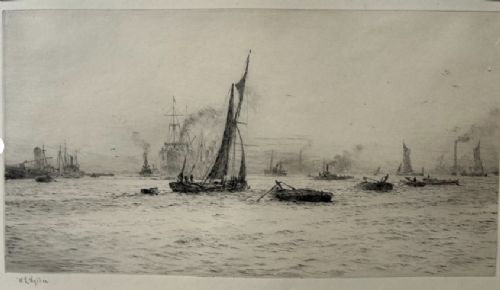
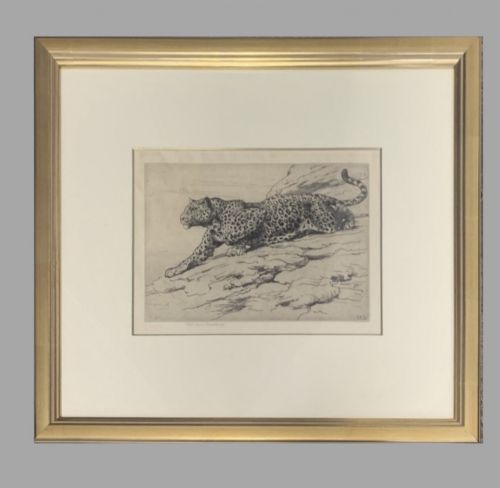
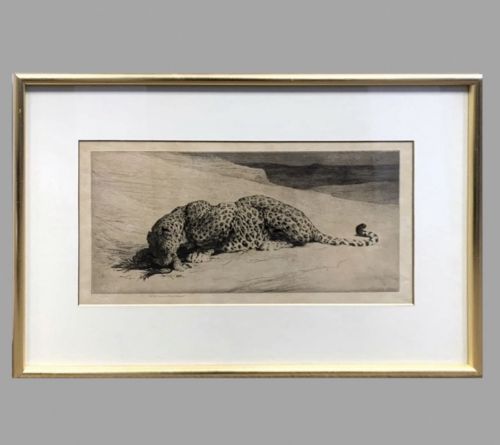
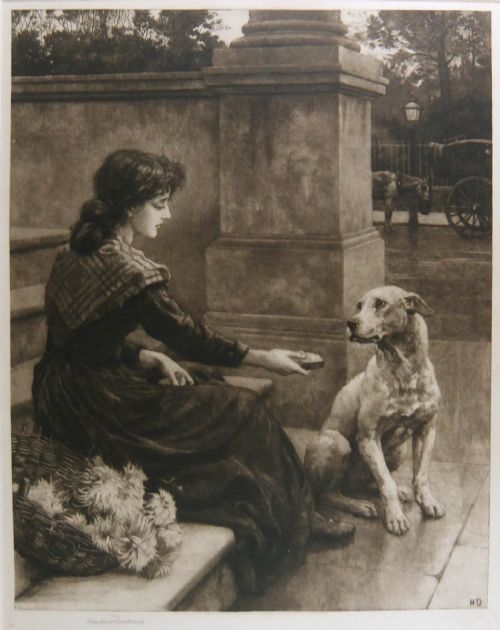
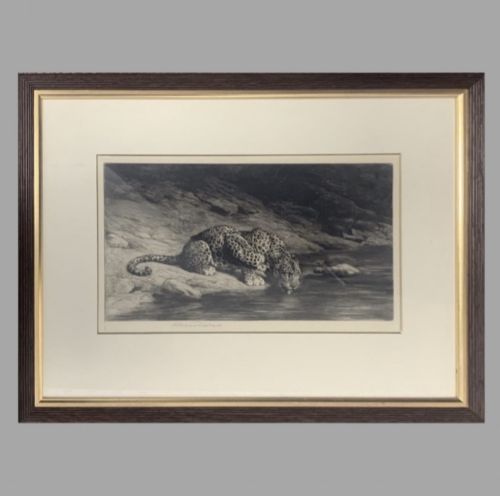
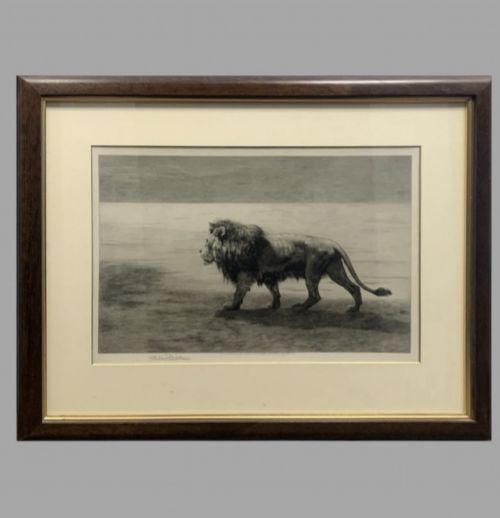
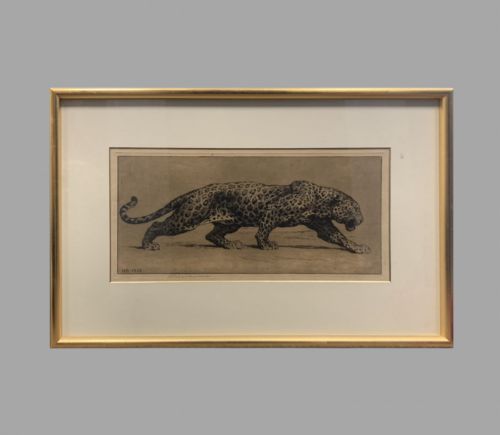
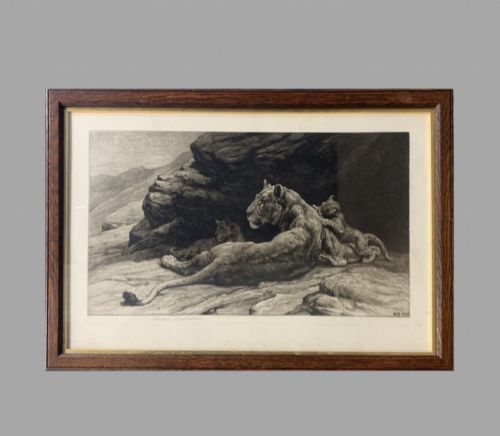


Original Signed Etching
An original signed etching brings home ink on paper or vellum, pulled from a plate handled by the artist.
Original Signed Etching
An original signed etching is a fine art print created when an artist draws through a ground onto a metal plate, bites the lines with acid, and pulls the impression on paper or vellum. On this page, you will most frequently meet works from the Victorian period through the early twentieth century and mid-century, spanning scenes of wildlife, landscapes, and architectural views.
The works listed encompass prints and wall art framed under glass, often preserved with wood frames and occasionally gilt wood or gold leaf. Creators sign these impressions in pencil beneath the plate mark, designating them as artist proofs or limited editions.
Subjects range widely from depictions of big cats and dogs by specialised animaliers to cityscapes, bridges, and coastal harbours. The selection bridges traditional realist printmaking and modernist British approaches.
How they were made
Makers prepare a metal plate by coating it with an acid-resistant ground, then draw through this layer with a sharp needle to expose the metal. Acid bites the incised lines into the plate, which is subsequently cleaned, inked, and wiped by hand before passing through a heavy rolling press.
Prints are pulled onto damp paper or vellum, absorbing the rich ink under pressure and leaving a distinct plate mark around the image. Some compositions incorporate aquatint tones for shadowed areas or delicate hand-colouring applied directly to the sheet.
Original Signed Etching Retail Price Guide 2026
Typical asking prices for original signed etching among the pieces listed under this phrase on Sellingantiques today, from the lower quarter to the upper quarter. They describe what is for sale here now, not the wider market.
Listings feature works spanning the Victorian era through the 1960s, executed on paper and vellum with oak and gilt wood framing.
What varies in quality
Quality rests in the strength of the wiping and the crispness of the inked lines transferred from the plate. An impression pulled early in the run retains deep blacks and sharp detail across the subject, whereas later pulls can soften.
Condition of the paper sheet, the absence of heavy toning or foxing, and the clarity of the pencil signature all separate fine examples from ordinary ones. The presence of contemporary framing materials and provenance labels also contributes to the standing of a print.
William Lionel Wyllie·Herbert Dicksee·Anne Goldthwaite·John Merrifield·Augustus Edwin John·Edgar J Maybery·Albert Terry·Norman Janes·Frank Greenwood·CB Prescott·Deidre Borlase·John Brunsdon·Petrus Johannes Arendzen·Kurt Meyer Eberhardt·Jean Vyboud·Frederick Cecil Jones·Reginald Green·Walter Denby Sadler·Henry Jackson Simpson·Ernest Meissonier·Armand Mathey·Gordon Story·Jean Hardy
The Original Signed Etching Glossary
- Etching
- A printmaking method where lines are bitten into a metal plate with acid rather than cut with a tool. This process allows for free, fluid lines resembling a pencil sketch.
- Artist Proof
- An impression printed outside the commercial edition for the artist's personal use or review. These are traditionally marked in pencil alongside the signature.
- Vellum
- A fine material made from calfskin, prized by printmakers for its smooth, durable surface that holds minute detail. It offers a creamy tone distinct from standard paper.
- Plate Mark
- The indented impression left in the paper by the edges of the metal plate during printing. Its presence confirms the work is a direct impression from a plate.
- Aquatint
- A printmaking technique used to create tonal areas of grey and shadow rather than simple lines. Rosin is dusted onto the plate and bitten by acid to produce granular textures.
Original Signed Etching: Frequently Asked Questions
What is an original signed etching?
An original signed etching is a print pulled from a metal plate created by the artist, who then signs the finished sheet in pencil. This separates it from later mechanical reproductions.
The artist personally oversees the printing process, ensuring each impression meets their standards before signing the margin.
How do I care for framed etchings?
Keep framed prints out of direct sunlight to prevent the ink and paper from fading over time. Maintaining a stable indoor environment protects the paper from moisture.
Ensure the framing uses acid-free materials and spacers so the glass does not touch the surface of the print.
Are all etchings printed on paper?
While paper is the most common support, select printmakers utilised vellum for special impressions. Vellum provides a distinct texture and warm tone.
Both materials require careful handling and conservation-grade framing to survive in good condition.
What does artist proof mean?
An artist proof is an impression pulled during the printing process for the creator to inspect and approve. They are typically set aside from the numbered edition.
Collectors often seek these out because they represent the earliest and sharpest pulls from the plate.