

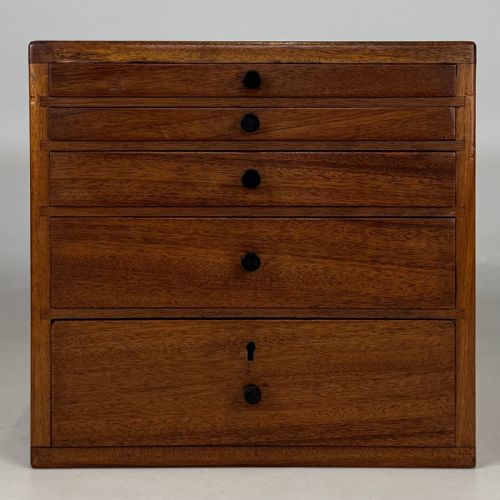
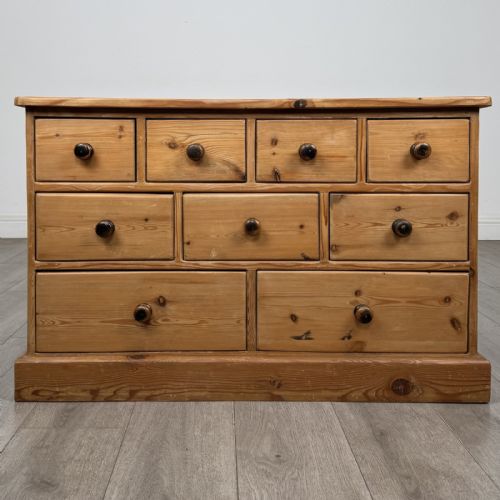
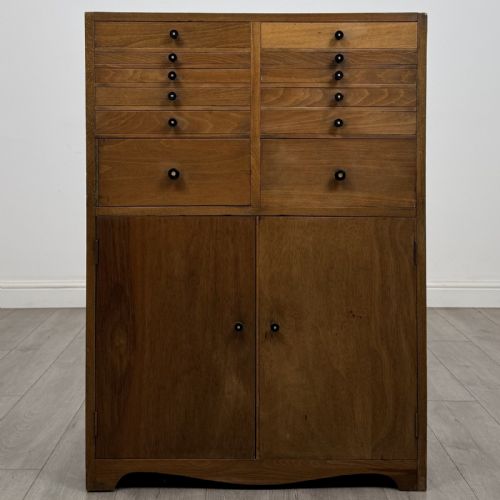
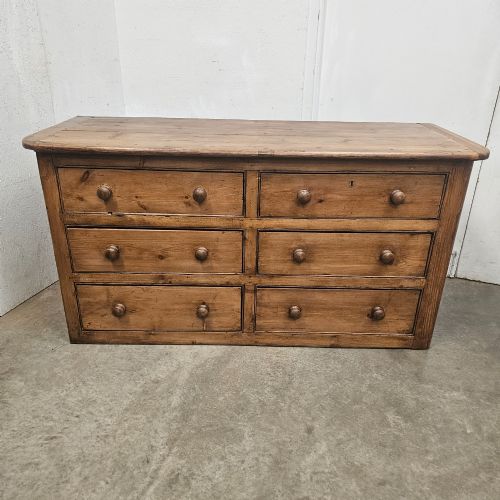
Vintage Apothecary Chest
These vintage apothecary chest pieces are multi-drawer storage items once used for medicine and remedies, offering serious utility and period character for modern rooms.
Vintage Apothecary Chest
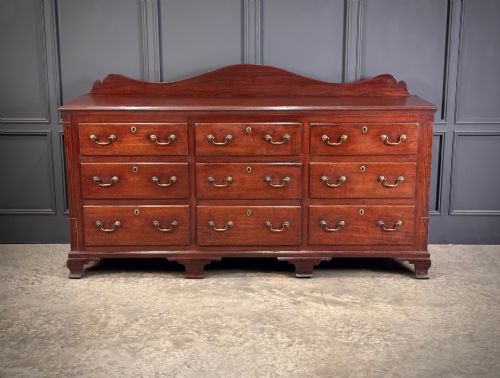
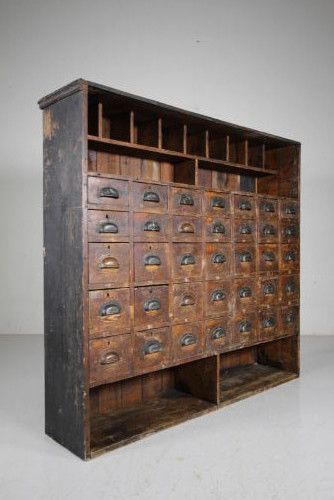
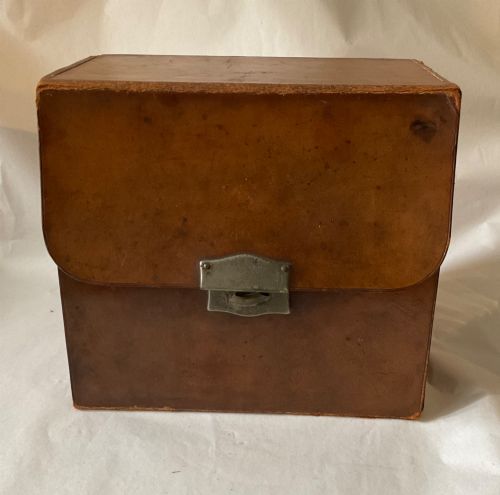
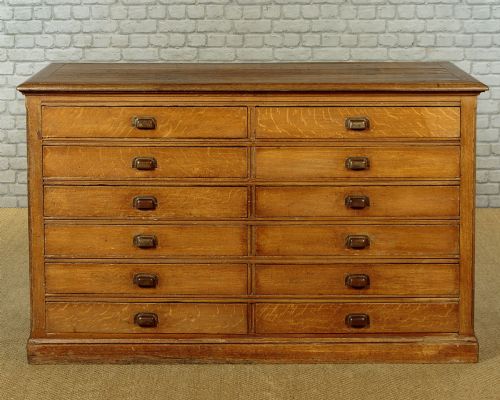
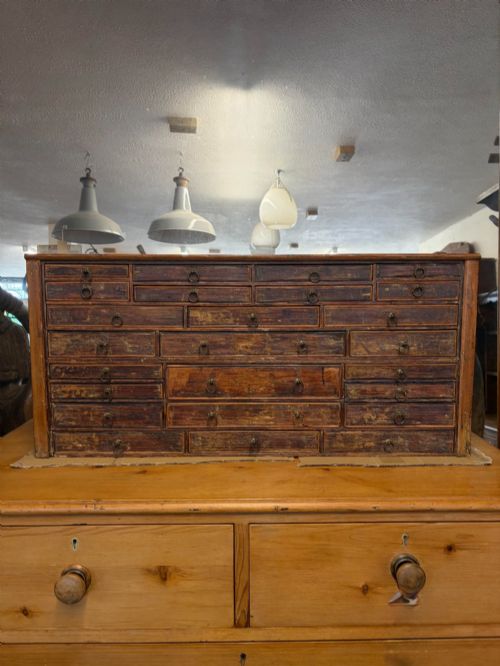
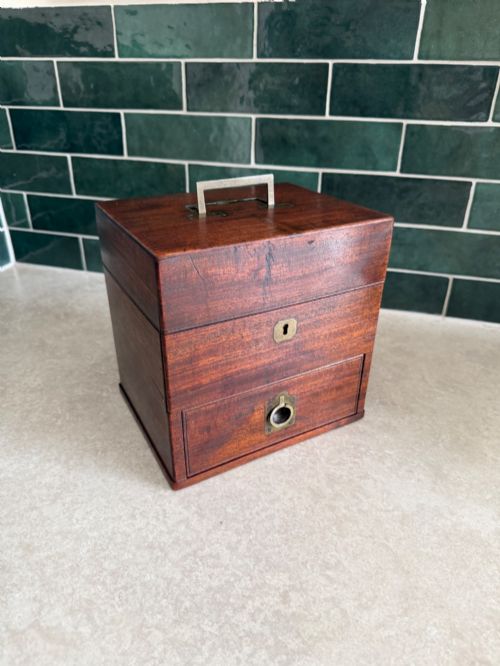
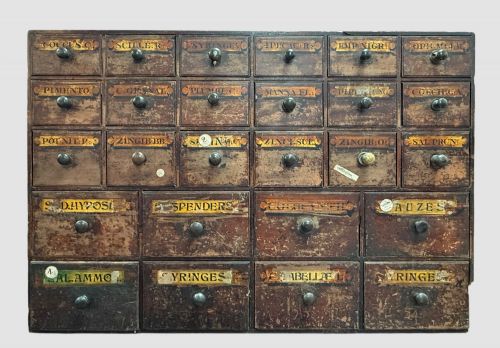
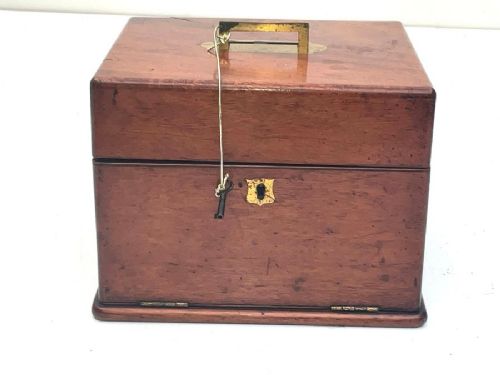
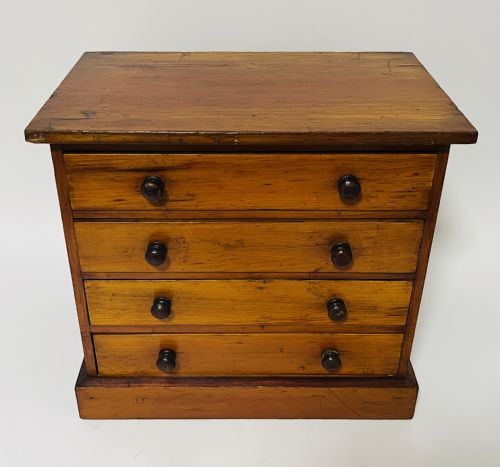
A vintage apothecary chest serves as a compact storage unit featuring numerous small drawers, originally designed to organise medicines, herbs, and medical apparatus. Buyers exploring this category encounter a range of forms, from small portable travelling cases to large banks of drawers originating from chemist shops and dispensaries.
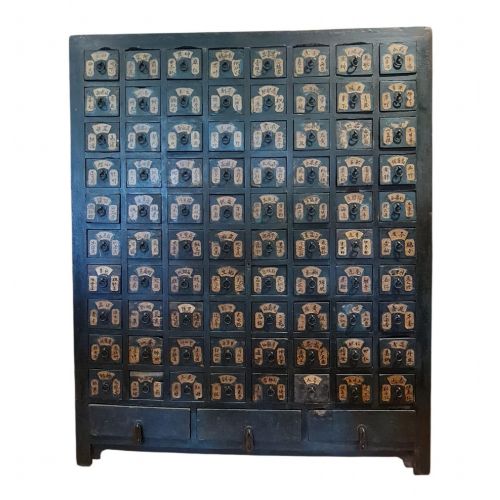
The pieces appearing here span several eras, predominantly featuring 19th-century and Victorian examples alongside Georgian pieces and early 20th-century workshop storage. Common variations include Chinese medicine cabinets with dozens of small compartments, tall banks of pine shop fittings, and mahogany countertop cabinets.
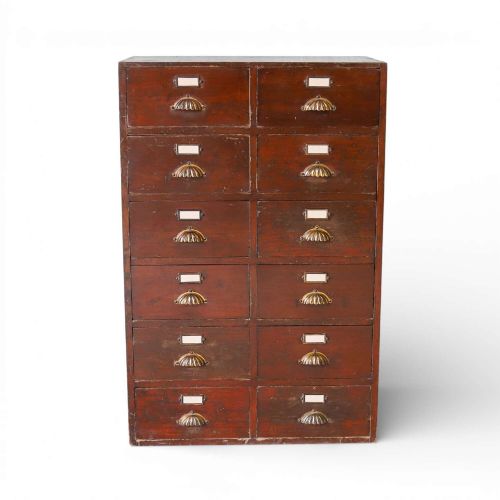
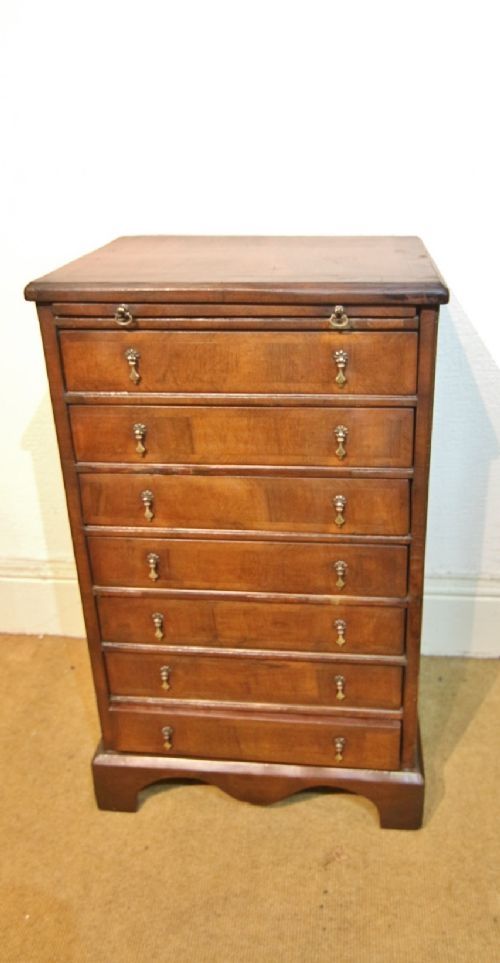
Origin and form dictate the visual impact of each piece, varying from utilitarian painted pine units to polished mahogany and elm furniture. Many retain original brass label holders and shell pulls that signal their historical function in pharmacies and surgeries.
Materials and construction methods
Makers relied on durable timbers such as mahogany, oak, pine, and elm to withstand heavy daily use in dispensaries and shops. Hardwoods like mahogany and walnut appear on refined cabinets, while pine and deal serve for utilitarian shop fittings and large banks of drawers.
Joinery methods reflect the functional demands of housing many small drawers, utilising tight joints and solid timber backs. Hardware components such as brass pulls, iron hinges, and glass bottles form integral parts of the construction, particularly in portable travelling boxes.
Vintage Apothecary Chest Retail Price Guide 2026
Typical asking prices for vintage apothecary chest among the pieces listed under this phrase on Sellingantiques today, from the lower quarter to the upper quarter. They describe what is for sale here now, not the wider market.
Periods represented span from the 18th century and Georgian era through the Victorian period to the early 20th century.
Judging the quality of a vintage apothecary chest
Quality rests upon the integrity of the original hardware, such as brass shell pulls, label holders, and working locks that remain intact. Pieces retaining their original painted finishes or polished patinas command greater attention than those stripped down or heavily altered over time.
The complexity of the drawer configuration and the precision of the joinery distinguish standard utilitarian storage from finer cabinet work. Internal completeness, including surviving glass bottles in travelling cases or original divisions within spice drawers, elevates the standing of the piece.
Luxmore's of Ilfracombe·D Napier & Sons
The Vintage Apothecary Chest Glossary
- Bank of drawers
- A large cabinet containing numerous small drawers arranged in a grid, built for efficient sorting and storage. These units frequently served shopkeepers and apothecaries.
- Apothecary box
- A portable wooden case fitted with internal compartments and glass bottles designed for transporting medicines safely. They date primarily from the Georgian and Victorian eras.
- Shop fitting
- Fixtures and furniture built specifically for commercial interiors such as chemist shops and apothecaries. These pieces often feature extensive banks of drawers for stock.
- Collectors cabinet
- A specialised piece of furniture housing shallow drawers for specimens, microscope slides, or small objects. Their construction mirrors the fine joinery found in apothecary furniture.
- Shell pull
- A semi-circular metal handle shaped like a scallop shell, commonly fixed to apothecary drawers. They frequently incorporate integrated holders for paper labels.
Vintage Apothecary Chest: Frequently Asked Questions
What is a vintage apothecary chest used for today?
These chests provide exceptional modular storage for modern homes, functioning as kitchen spice racks, jewellery organizers, or hallway drop zones. Their numerous small compartments make them practical for sorting craft supplies, office stationery, or small collections.
Beyond utility, they serve as striking focal points in living spaces and studies. The rich wood tones and repetitive grid of small drawers introduce industrial and period character into contemporary interiors.
How do I tell an 18th-century chest from a Victorian one?
Eighteenth-century examples, often dating to the Georgian period, typically employ solid mahogany or oak with hand-cut dovetails and subtle brass hardware. Their proportions tend to be more architectural and restrained compared to later pieces.
Victorian and later 19th-century chests frequently incorporate softer woods like pine, sometimes finished with painted surfaces or industrial branding. They often feature larger banks of drawers and standardised brass label holders as commercial pharmacy production expanded.
Did apothecary chests come with glass bottles?
Travelling apothecary boxes and specific medicine chests frequently retain their original fitted interiors complete with blown glass bottles and stoppers. These compartments kept liquid remedies secure during transit.
Larger banks of drawers and shop fittings generally did not include bottles, as they were designed for dry ingredients, herbs, and powders stored loose or in paper packets within the drawer units.