
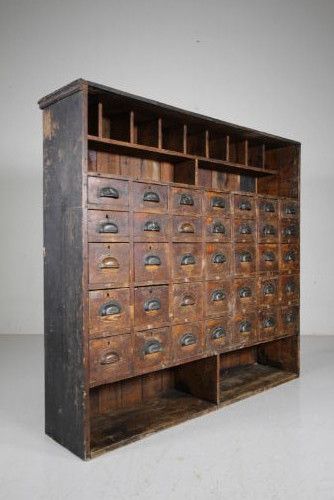
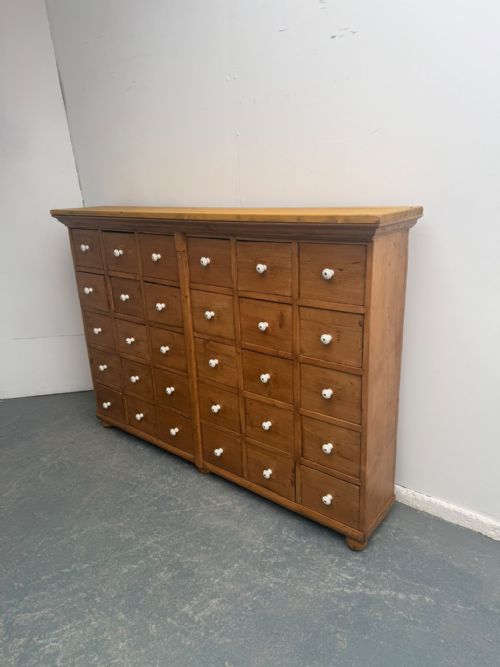


Large Multi Drawer Cabinet
These large multi drawer cabinet pieces are substantial storage units designed for sorting and organising, offering period character and immense utility for the home.
Large Multi Drawer Cabinet
When you search for large multi drawer cabinet designs, you encounter heavy bank of drawers, filing cabinets, and shop fittings originating from the nineteenth and early twentieth centuries. These substantial pieces served commercial, office, and domestic purposes, designed specifically to hold vast quantities of small items or documents in distinct compartments.
You are most likely to meet pine and mahogany examples spanning periods from the Victorian era through the nineteen-twenties and thirties. These items range from English and French shop counters to tall office cabinets featuring numerous individual compartments.
How they were made
Joiners constructed the main bodies and numerous drawer carcases primarily from solid pine and mahogany, ensuring structural integrity for heavy daily use. Tradesmen fitted brass or cast iron handles and label holders to the drawer fronts, combining utilitarian strength with functional design.
Many of these shop fittings and office cabinets retain their original painted finishes, often in cream or coloured hues applied over the timber. Cabinet makers built these units to withstand rigorous commercial environments using traditional joinery methods appropriate for large storage banks.
Listings feature items spanning the nineteenth century through the nineteen-thirties, constructed from pine, mahogany, metal, and cast iron.
What varies in quality
The distinction between standard utility storage and superior cabinet making rests in the timber selection and the complexity of the drawer count. Pieces featuring fifty or sixty-six drawers demonstrate exceptional scale and specialised purpose compared to smaller twelve or twenty-drawer units.
Original painted surfaces and authentic metal hardware elevate the character of a piece above stripped or later-restored examples. The integration of period brass pulls and cast iron fittings reflects the original commercial context and the standard of the workshop.
The Large Multi Drawer Cabinet Glossary
- Bank of drawers
- A large chest or cabinet containing many small drawers arranged in rows and columns, originally used in shops or offices for systematic storage. These units provide immense capacity for organising collections or paperwork.
- Shop fitting
- Fixtures and furniture built specifically for commercial retail premises, such as counters and drawer units designed to hold stock. They often exhibit robust construction to endure heavy retail use.
- Specimen cabinet
- A specialised piece of furniture designed to store natural history specimens, coins, or small collectables in shallow drawers. These cabinets typically utilise fine hardwoods like mahogany.
- Filing cabinet
- An office furniture item designed to hold paper documents in order, often featuring multiple stacked drawers. Industrial versions from the early twentieth century frequently incorporate metal or painted pine.
- Victorian
- The period of British history spanning the reign of Queen Victoria from eighteen thirty-seven to nineteen hundred and one. Furniture from this era is characterised by solid construction and utility.
Large Multi Drawer Cabinet: Frequently Asked Questions
What were large multi drawer cabinets used for?
These large units served primarily in shops, offices, and commercial premises to sort and store inventory, hardware, or documents. Retailers used them behind counters to keep small goods organised and accessible.
In administrative settings, clerks relied on them to file correspondence and records before modern filing systems emerged. Their numerous compartments made them essential for businesses handling vast amounts of small items.
How do I live with a large multi drawer cabinet?
Integrating a substantial multi-drawer unit into a modern interior requires careful consideration of its considerable footprint and height. They work exceptionally well as kitchen islands, hallway storage, or statement pieces in living areas.
The numerous small drawers offer practical organisation for household items, stationery, or collections while adding significant architectural character to a room.
How can I tell the period of these cabinets?
Dating relies on examining the timber species, construction techniques, and hardware style. Victorian examples frequently utilise solid pine or mahogany with traditional hand-joined drawer construction.
Later pieces from the nineteen-twenties and nineteen-thirties often incorporate industrial metal elements or specific painted finishes associated with twentieth-century offices and workshops.
Are these cabinets made of solid wood?
Period multi-drawer units and shop fittings are predominantly constructed from solid timbers such as pine and mahogany. Cabinet makers used sturdy woods to support the weight of numerous drawers and their contents.
Metal components like cast iron and brass appear frequently on handles, frames, and label holders, particularly on industrial and office variants.