





Vintage Antler Mount
These vintage antler mount pieces bring the robust character of the 19th century and early 20th century sporting lodge directly into modern interiors.
Vintage Antler Mount
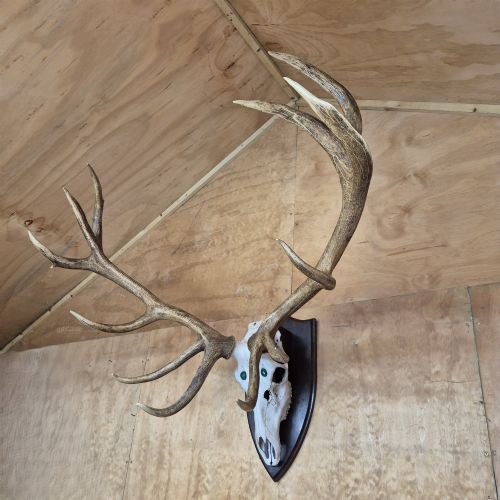
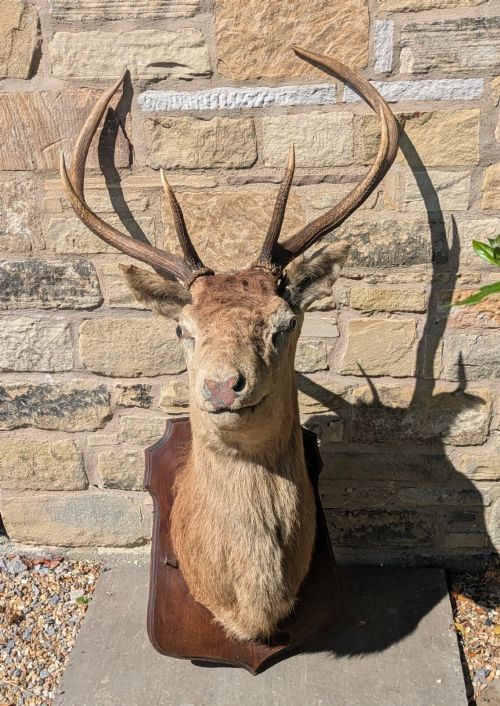
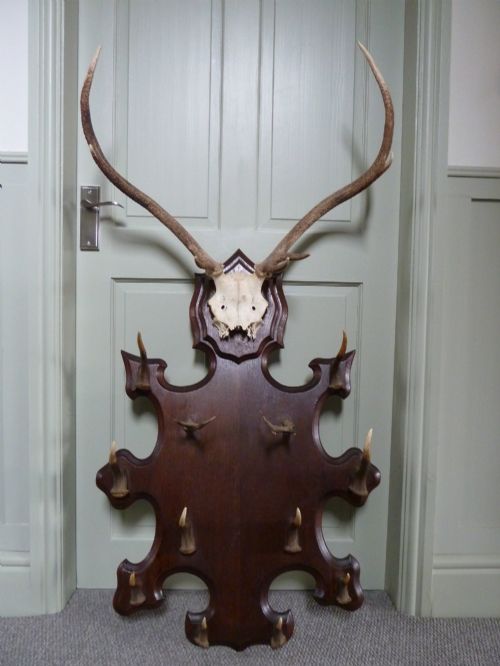
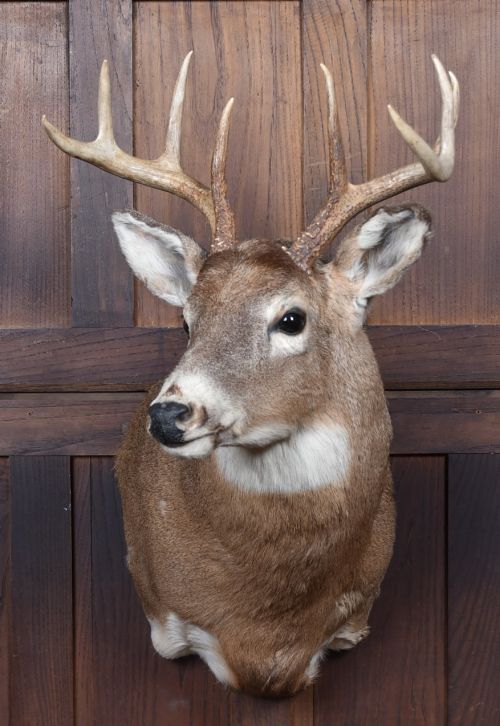
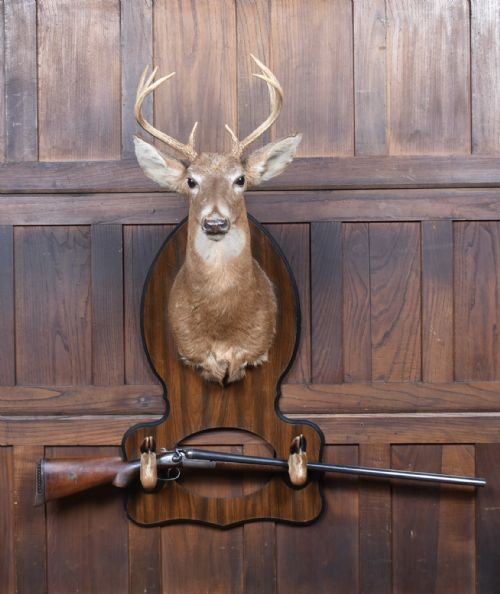
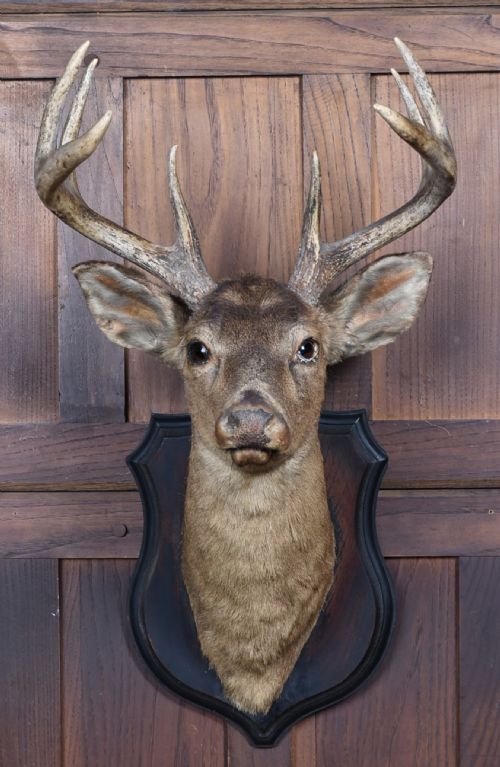
When you search for vintage antler mount, you enter the traditional world of Victorian country house taxidermy and Highland hunting lodge decor. The selection ranges from imposing stags' heads and mounted deer skulls to practical hallstands, coat racks, and desk accessories.
The pieces appearing on this page span the 19th century through to the 1930s, encompassing styles such as Victorian sporting, Highland traditional, and Black Forest design. You are most likely to encounter mounted red deer, roebuck, and white-tailed deer specimens attached to carved wood shields or fashioned into functional hallway furniture.
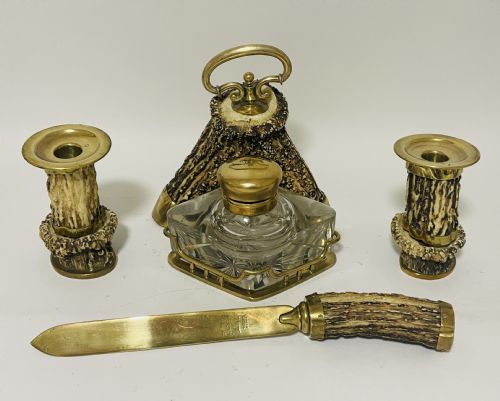
Beyond wall-mounted trophies, the category extends to equestrian accessories and smaller domestic items like ram's horns and carved oak desk sets. Each object reflects a period when natural history and rural sporting pursuits heavily influenced interior decoration.
How they were made
Taxidermists and craftsmen of the Victorian and Edwardian eras utilised natural materials such as antler, horn, bone, and natural hide, mounting them onto shaped wooden shields typically carved from oak. Metal elements like brass and silver frequently appeared as collars on riding crops or as structural mounts for desk sets and coat hooks.
The preservation and mounting process required careful taxidermy techniques to secure heavy skulls and antlers onto supportive wooden backing boards. Artisans combined carpentry with natural history preparation, ensuring that functional items like coat racks and hallstands could bear weight while displaying the natural form of the horn or antler.
Materials recorded across the inventory include red deer antler, oak, brass, silver, horn, bone, and natural hide.
What varies in quality
The distinction between standard pieces and the finest examples rests on the symmetry and point count of the antlers, such as a twelve-point royal set or an eleven-point Black Forest skull. Superior items feature deeply carved wooden shields and taxidermy work that maintains the natural posture and condition of the animal.
Execution and proportion dictate value across categories, from simple horn coat hooks to large stags' heads. Pieces that integrate utility with fine craftsmanship, such as fitted brass-mounted desk sets or robust hallstands, demonstrate greater design ambition than basic wall trophies.
The Vintage Antler Mount Glossary
- Taxidermy
- The art of preparing, stuffing, and mounting the skins of animals with lifelike effect. In these listings, it refers specifically to mounted heads, skulls, and horns.
- Shield
- A shaped wooden board, frequently carved from oak, used as a backing plate to securely mount antlers or animal heads to a wall.
- Hallstand
- A piece of hallway furniture combining coat hooks, umbrella stands, and hat pegs, often constructed using stags' horn and oak.
- Point
- An individual branch or tine on an antler. Counting these points helps describe the size and maturity of the trophy head.
- Black Forest
- A style of ornate, hand-carved wooden furniture and decorative objects originating from the Black Forest region of Germany, often featuring naturalistic animal motifs.
Vintage Antler Mount: Frequently Asked Questions
What periods do these pieces come from?
The listings span from the late 19th century through the Edwardian era and into the 1930s, heavily representing Victorian country house and Highland lodge aesthetics.
Stylistic clues like carved oak shields and silver collars help distinguish Victorian examples from later 20th-century pieces.
How should I clean antique antlers?
Dust antlers gently with a soft, dry cloth or a feather duster to remove surface particles without damaging the natural material.
Avoid using water, chemical polishes, or harsh detergents on taxidermy mounts and horn, as moisture can cause cracking or deterioration.
Were these items used outdoors?
Despite their robust construction and origins in hunting and equestrian pursuits, these pieces were strictly intended for interior display in hallways, libraries, and hunting lodges.
Exposing natural hide, bone, and mounted wood to outdoor weather or damp environments will rapidly ruin the materials.