





Wall Mounted Stag Antlers
Wall mounted stag antlers bring the spirit of the Highland hunting lodge and the Victorian country house directly into modern interiors.
Wall Mounted Stag Antlers
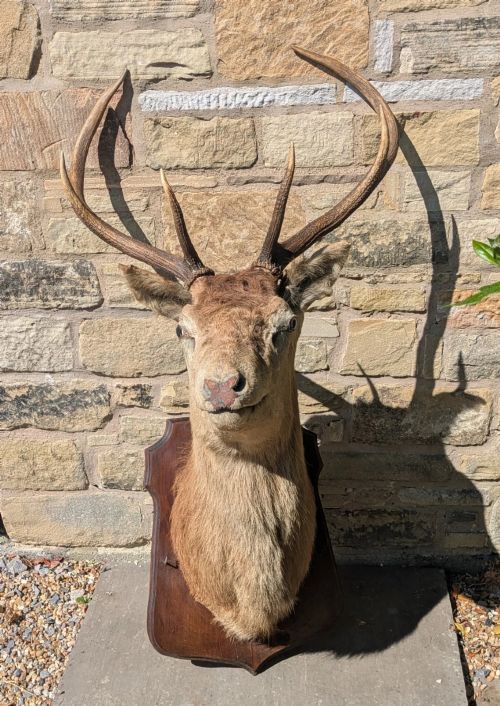
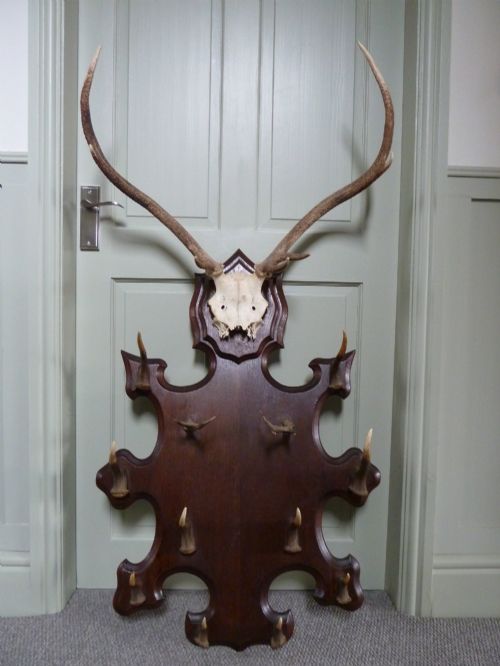
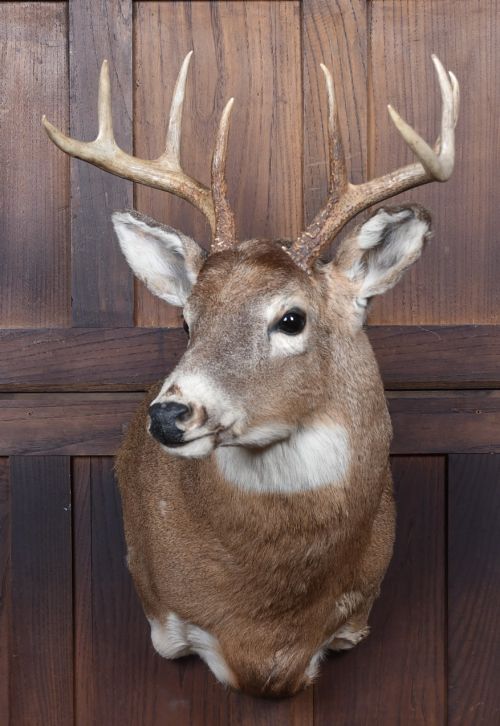
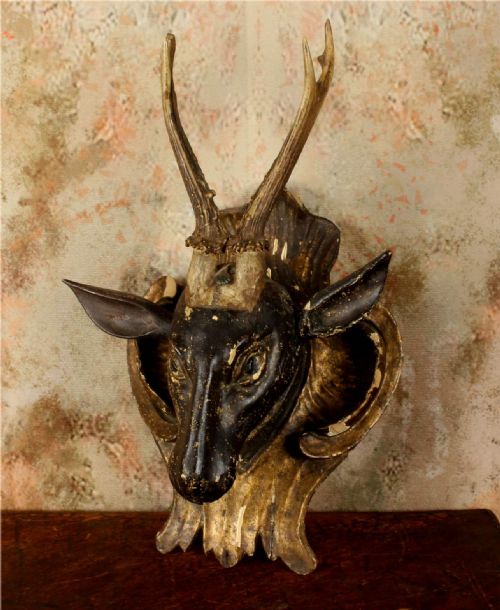
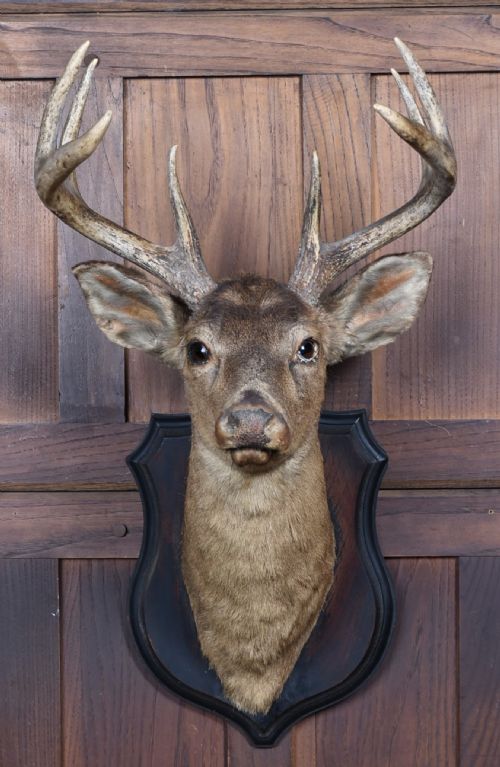
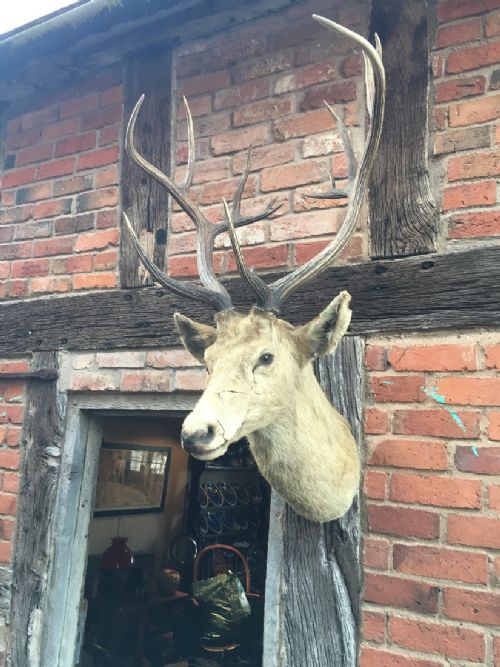
When you search for wall mounted stag antlers, you encounter a distinct category of taxidermy and folk art dating from the nineteenth and early twentieth centuries. These pieces encompass full stags' heads, substantial trophy mounts, carved wooden interpretations, and practical hall stands utilising natural horn.
The most common versions on this page are nineteenth century taxidermy mounts and simpler antler arrangements fixed to carved oak shields. Styles range from rigorous Victorian sporting pieces to characterful folk art and rustic Highland traditional designs.
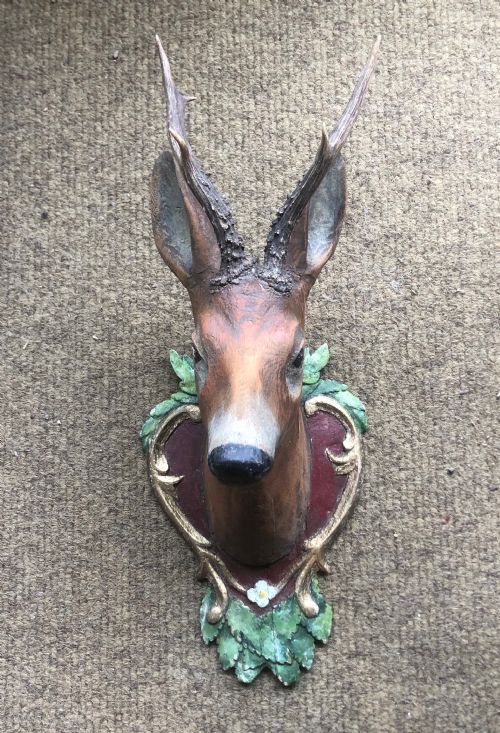
Origins span British country houses and continental workshops, including characteristic Black Forest carvings and Swedish painted pieces. Buyers select these items primarily for wall decor, bringing sculptural presence and historic character to large interior spaces.
How they were made
Makers constructed traditional taxidermy mounts by preparing natural hide and bone over anatomical forms, securing the skull and antlers to wooden shields made of oak or pine. Carved wood examples display hand-chiselled details, transforming timber into sculptural deer heads and decorative trophies.
Associated accessories incorporate traditional materials such as silver collars fitted to hunting whips and painted finishes applied to folk art pieces. Artisans utilised natural hide, bone, and timber to achieve durable and visually striking wall sculptures.
Wall Mounted Stag Antlers Retail Price Guide 2026
Typical asking prices for wall mounted stag antlers among the pieces listed under this phrase on Sellingantiques today, from the lower quarter to the upper quarter. They describe what is for sale here now, not the wider market.
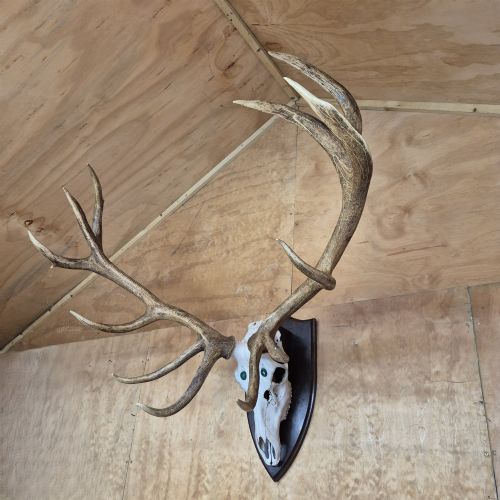
One determined stag proudly carries a twelve-point royal set spanning one point two metres across your wall.
What varies in quality
The anatomical accuracy of the taxidermy and the natural symmetry of the antlers define the upper tier of these pieces. Master taxidermists captured realistic expression and posture, whereas lesser examples lack lifelike proportions.
The quality of the supporting woodwork makes a substantial difference, particularly when shields feature deep hand-carving rather than plain, machine-cut boards. The preservation of the natural hide, bone, and horn also dictates the distinction between standard decorative items and fine sporting antiques.
Swaine Adeney
The Wall Mounted Stag Antlers Glossary
- Taxidermy
- The art of preserving and displaying animal specimens with a lifelike appearance. Nineteenth-century practitioners mounted stags and deer on wooden shields for interior display.
- Shield
- A shaped wooden board, frequently carved in oak, upon which antlers or taxidermy heads are mounted for wall hanging. This acts as both a structural anchor and a decorative frame.
- Point
- An individual tine or branch of an antler, counted to describe the size of the trophy. Larger sets of points command greater visual prominence.
- Folk art
- Utilitarian or decorative objects created by self-taught or local artisans outside academic traditions. These pieces often include hand-carved wooden deer heads and painted interpretations.
- Black Forest
- A style of intricate wood carving originating from the wooded mountain region in Germany during the nineteenth century. These items typically feature naturalistic animal forms and foliage.
Wall Mounted Stag Antlers: Frequently Asked Questions
How do I clean historic taxidermy and antlers?
Maintenance requires very gentle dusting with a soft, dry brush or a clean feather duster to remove surface particles without damaging fragile hair or bone. Avoid using water, chemical sprays, or liquid cleaners on historic hide and taxidermy.
Regular, careful maintenance keeps the natural materials stable and preserves the antique surface finish over decades of display.
Are these pieces from the Victorian era?
Many items in this category date from the nineteenth century and the Victorian period, reflecting the popularity of country house sporting trophies and Highland decor. Other examples extend into the Edwardian era and the early twentieth century, up around nineteen-thirty.
Stylistic cues such as the depth of the oak carving and the mounting technique help distinguish Victorian sporting pieces from later twentieth-century interpretations.
What is the difference between taxidermy and folk art deer?
Taxidermy mounts utilise the actual preserved hide, skull, and natural antlers of the animal mounted to create a lifelike representation. Folk art versions are entirely hand-carved from wood by artisans, offering a sculptural interpretation rather than a preserved specimen.
Both forms served as traditional wall decor in historic lodges and country houses, though folk art pieces often display charming regional variations in design.