

Vintage Albert Necklace
When you search for a vintage albert necklace, you are looking at nineteenth and early twentieth-century pocket watch chains adapted for the neck.
Vintage Albert Necklace
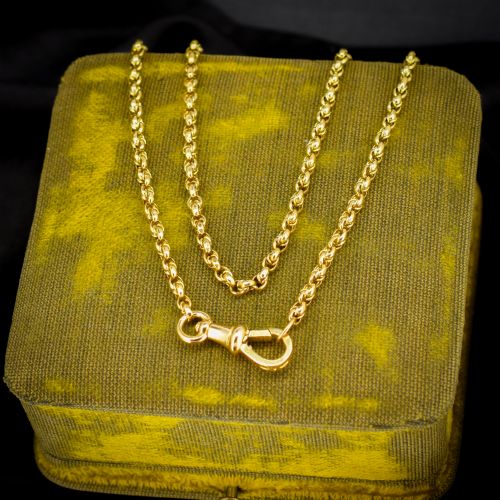
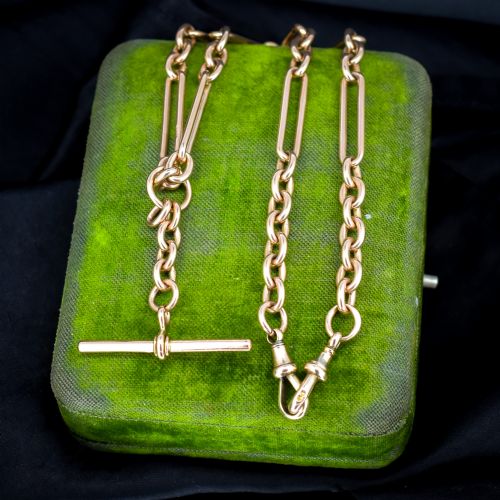
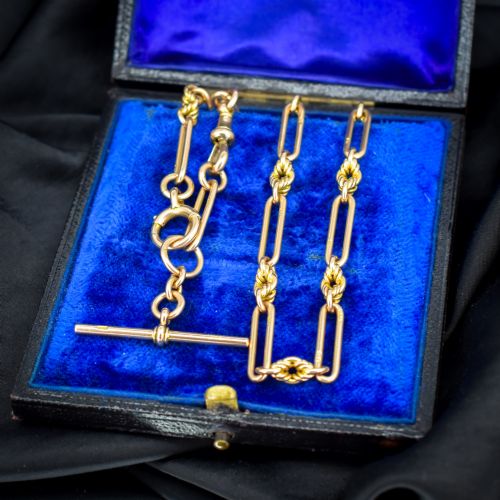
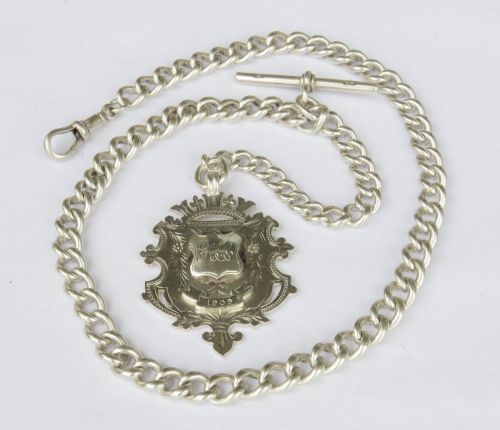
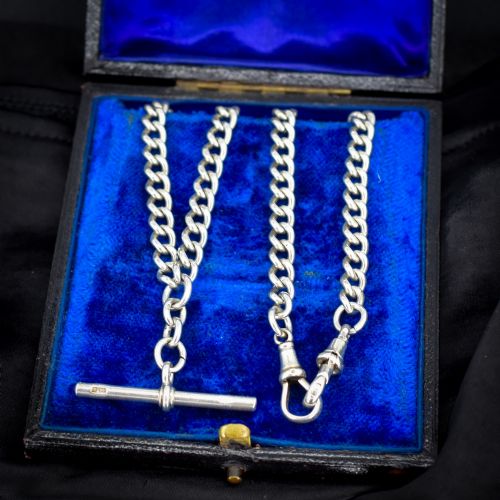
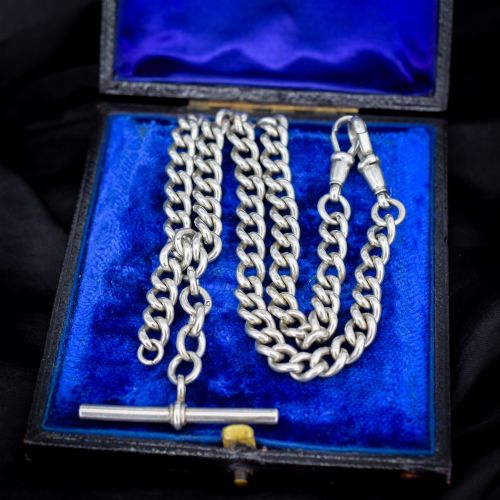
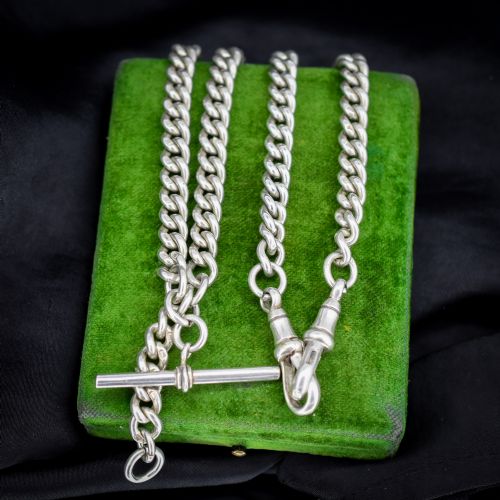
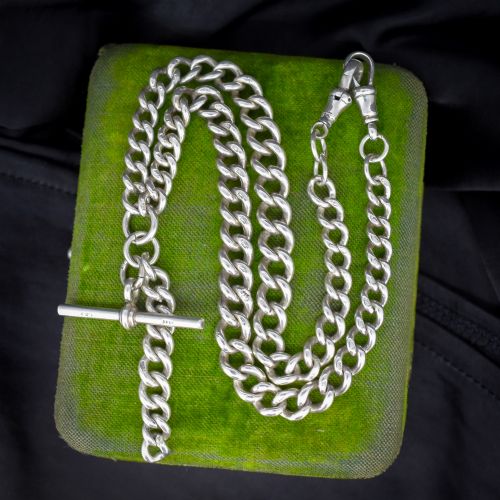
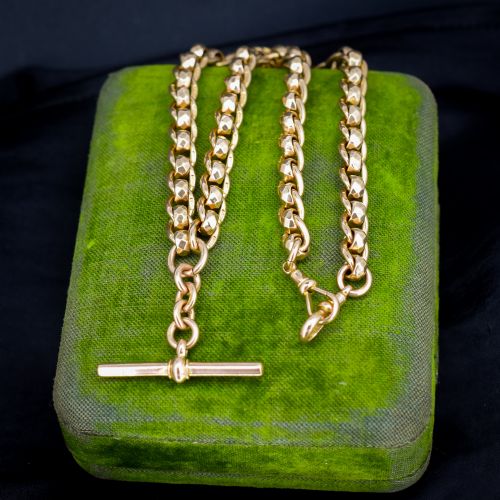
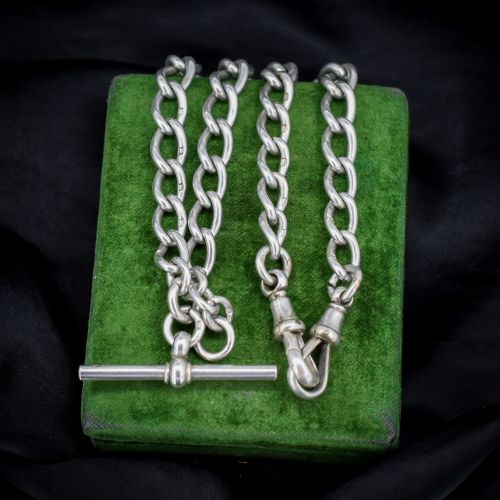
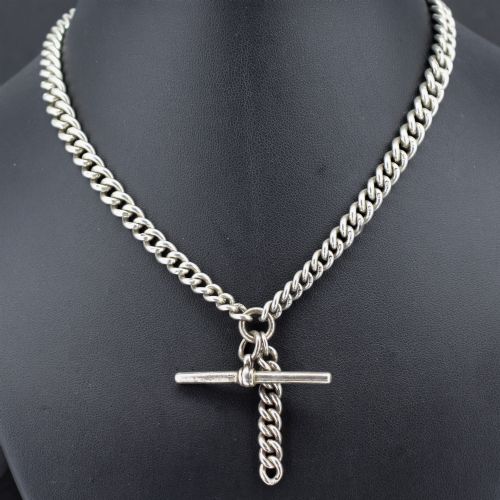
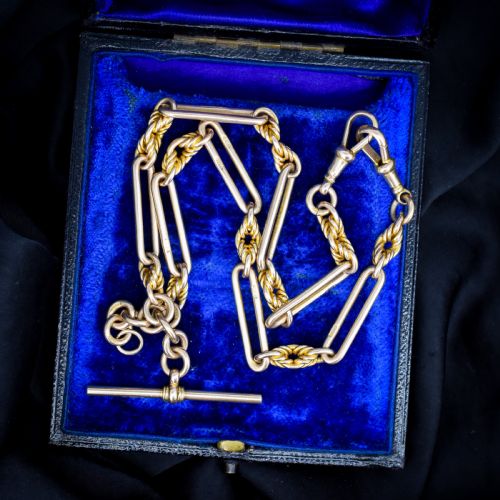
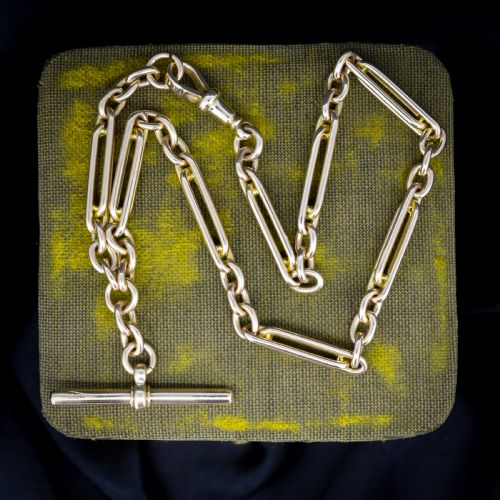
A vintage albert necklace originates from nineteenth and early twentieth-century gentleman's pocket watch chains, often carrying designations like Victorian, Edwardian, and Art Deco. These items typically arrive in forms such as curb links, trombone links, and love knot patterns.
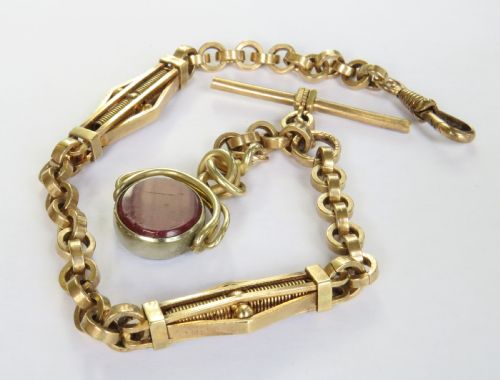
The pieces on this page span the late nineteenth century through to the 1930s, encompassing both single and double chains alongside guard chains. They frequently retain their original functional elements, including dog clips, swivel fobs, and T-bars.
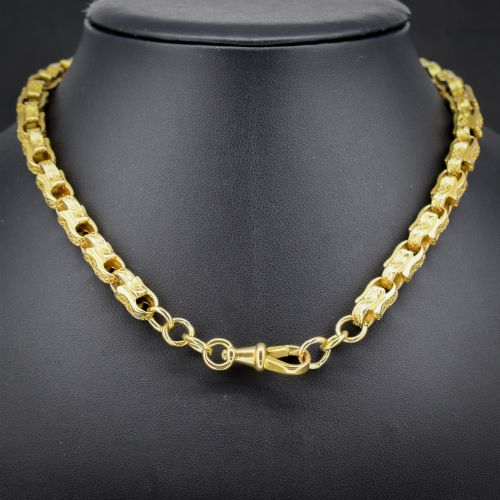
Originating from British assay offices like Chester alongside continental workshops, these necklaces display distinct regional characteristics in their links. The conversion from pocket watch chain to neckwear utilises existing fastenings to create a wearable length.
How they were made
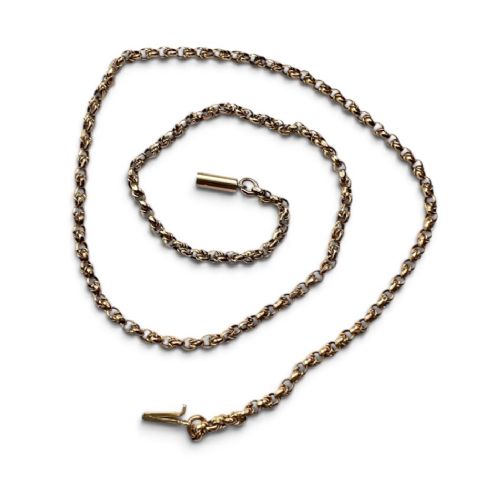
The materials used across these listings include 9ct gold in yellow and rose hues, 18ct yellow gold, sterling silver, rolled gold, and silver. Goldsmiths and silversmiths formed these metals into specific link configurations such as paperlink, rollerball, and fancy faceted curb.
Construction methods involved joining individual metal segments by hand, often incorporating hallmarks on every link to verify metal purity and origin. Functional components such as dog clips and spring-loaded bolt rings were integrated to secure the chains during daily wear.
Vintage Albert Necklace Retail Price Guide 2026
Typical asking prices for vintage albert necklace among the pieces listed under this phrase on Sellingantiques today, from the lower quarter to the upper quarter. They describe what is for sale here now, not the wider market.
Many of these chains still bear the tiny marks of the fingers that wound pocket watches over a century ago.
What varies in quality
Quality in these pieces is dictated by the complexity of the link structure and the completeness of the original components. Elaborate configurations like trombone and love knot combinations demand greater labour than simple uniform curbs.
The presence of fully functioning swivel fobs, matching dog clips, and clear hallmarks throughout every link elevate the standard of a piece. Solid gold and substantial silver weights distinguish the sturdier items from lighter rolled gold variations.
The Vintage Albert Necklace Glossary
- Albert chain
- A pocket watch chain named after Prince Albert, designed to secure a timepiece in a waistcoat pocket. These chains are frequently worn today as necklaces.
- Dog clip
- A spring-loaded fastener resembling a small clasp, used on watch chains to attach pocket watches or pendants. They often appear at one or both ends of an albert necklace.
- T-bar
- A short transverse bar attached to the centre of an albert chain, originally used to anchor the chain through a buttonhole. On a necklace, it serves as a decorative drop.
- Trombone link
- A distinct watch chain link shape featuring elongated rectangular outer sections connected by smaller circular or oval links. This pattern is prevalent in Edwardian pieces.
- Rolled gold
- A manufacturing method where a layer of gold is mechanically bonded to a base metal core. This provides the appearance of solid gold at a different material weight.
Vintage Albert Necklace: Frequently Asked Questions
What is an albert necklace?
An albert necklace is a converted nineteenth or twentieth-century pocket watch chain designed to be worn around the neck. These pieces retain historical elements such as dog clips and T-bars.
They bridge the gap between antique utility objects and contemporary jewellery, offering distinct link patterns from the Victorian and Edwardian eras.
How do I wear a T-bar?
The T-bar typically hangs as a decorative pendant drop at the front of the necklace. It originated as a fastener to anchor watch chains through waistcoat buttonholes.
In modern wear, it simply dangles from the central link or attaches to a dog clip.
What are dog clips used for?
Dog clips function as secure spring-loaded closures that allow the wearer to attach pendants, fobs, or connect the ends of the chain together. They are a defining feature of authentic watch chains.
On these necklaces, they often remain fully operational for daily use.
How do I date an albert chain?
Dating relies on hallmarks stamped onto the links, style markers such as Edwardian trombone links or Art Deco silver geometries, and material types. Assay office marks provide specific years of manufacture.
Looking at the construction of the links and the style of the dog clips also helps determine the period.