





Vienna Porcelain Cabinet Plate
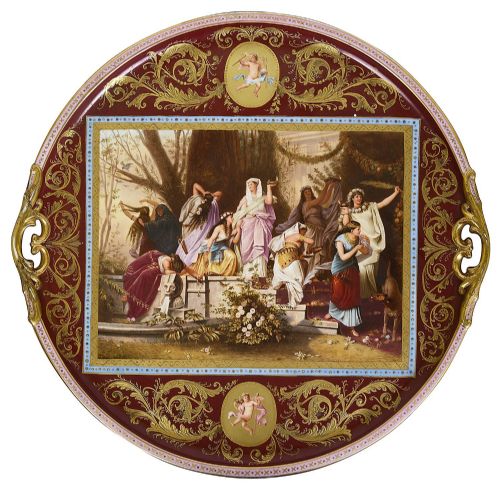
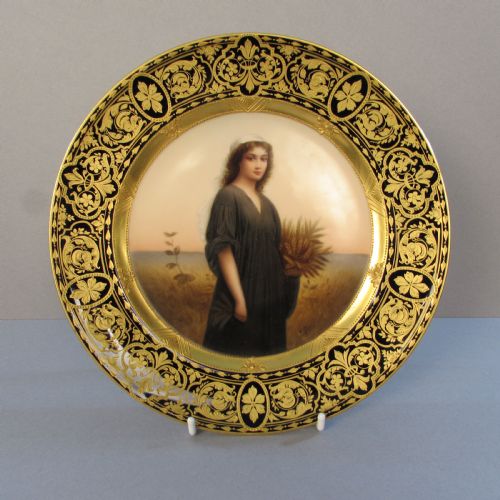
These vienna porcelain cabinet plate pieces are hand-painted display items depicting classical scenes, offering rich nineteenth-century decorative impact for collectors.
Vienna Porcelain Cabinet Plate
A vienna porcelain cabinet plate is a decorative ceramic object intended for display rather than dining, frequently measuring in large proportions such as chargers or trays. These pieces surface across the nineteenth century, including specific dates like 1850, 1890, and 1920, aligning with neoclassical, grand regency, and historicism styles.
The most common versions met on this page are large chargers and cabinet plates painted with mythological, literary, or historical narratives. Scenes range from classical figures like Cupid and Psyche, Venus, and Bacchus to dramatic subjects like King Tristan's Death and Caesar at the Grave of Alexander the Great.
What varies in quality
Quality rests in the precision of the hand-painted narrative scene and the complexity of the surrounding decoration. Finer pieces demonstrate accomplished brushwork in figural anatomy and facial expression, executed by named artists.
The richness of the gilding and cobalt glaze work also dictates grade, alongside structural variations such as pierced porcelain borders or exceptional physical scale reaching up to sixty centimetres in diameter.
Bacchus and Ariadne share cabinet space with foolish virgins, calvary battles, and tragic literary deaths.
The Vienna Porcelain Cabinet Plate Glossary
- Cabinet plate
- A decorative ceramic dish intended for display in a cabinet or on a wall rather than practical table service. These items usually feature intricate painted artwork.
- Charger
- A large ornamental plate or tray exceeding standard dining dimensions. Evidence shows these pieces often serve as canvases for elaborate historical or mythological depictions.
- Cobalt glaze
- A deep blue ceramic colouring applied beneath or over the glaze, frequently paired with gilding on these plates. It provides a striking contrast to the central painted panels.
- Gilding
- The application of gold leaf or gold gilt to ceramic surfaces. On these objects, it decorates borders and frames the pictorial scenes.
- Neoclassical
- An artistic style drawing inspiration from the classical art and culture of ancient Greece and Rome. This aesthetic governs the subject matter and decorative motifs found on the plates.
Vienna Porcelain Cabinet Plate: Frequently Asked Questions
What is a vienna porcelain cabinet plate?
It is a hand-painted ceramic display piece created during the nineteenth century or early twentieth century. These objects function as decorative works of art.
They typically depict mythological, classical, or historical narratives rendered in enamel pigments and highlighted with gold gilding or cobalt glaze.
How were these plates used historically?
These items served as decorative display objects rather than functional tableware. Owners placed them in cabinets or mounted them on walls to showcase wealth and taste.
Their large proportions and detailed pictorial scenes made them central focal points for interior decoration in formal rooms.
How do I identify the period?
Dating relies on stylistic markers associated with nineteenth-century historicism, neoclassical revivals, and specific recorded production years such as 1850, 1890, and 1920. Physical marks, such as the Bidenschild mark, also help determine origin.
Examining the complexity of the hand-painted enamel and the application of gold leaf provides further chronological context.
Who painted these porcelain plates?
Skilled porcelain painters executed the detailed figural scenes, occasionally signing their work directly onto the ceramic surface. Recorded signatures include artists such as S. Stanley, Sibl, Wagner, and F. Geller.
These signatures indicate high-grade studio production associated with royal vienna styles.
How should I display a charger?
Due to their substantial physical diameter, often reaching up to forty or sixty centimetres, these large chargers require sturdy wall mounts or dedicated plate stands.
Display them away from direct sunlight to protect the enamel pigments and gold leaf from fading over time.