

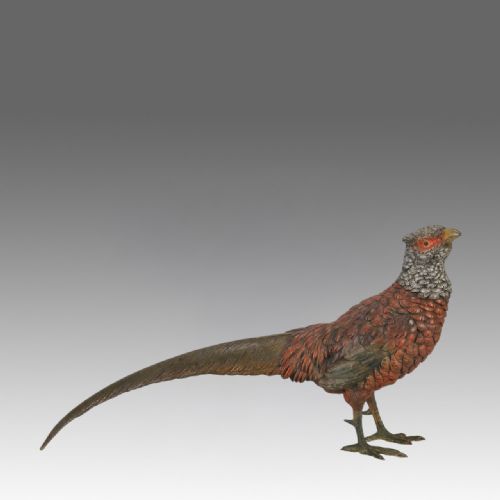


Vienna Bronze Bird Figure
A vienna bronze bird figure brings miniature avian life to a cabinet, cast in metal and finished with delicate colour.

Vienna Bronze Bird Figure
When you search for a vienna bronze bird figure, you enter a field dominated by small sculptures and figurines shaped around avian subjects. These pieces span the late nineteenth century and the early twentieth century, capturing birds such as pheasants, woodcocks, blackbirds, grouse, and kingfishers in metal.
You are most likely to meet pieces cast in the Viennese and Austrian traditions, often taking the form of miniature figurines or standing figures mounted on natural bases. The styles range from Victorian work to Art Nouveau and Austrian naturalist representations.
Makers in this category rendered avian forms with careful observation, producing everything from solitary parrots and magpies to pairs of grouse and hawks perched upon quartz rock bases.
Materials and methods
These figures rely upon bronze as the primary cast metal, shaped through foundry methods into detailed bird forms. Once cast, the metal receives its distinct surface character through cold-painting techniques rather than firing in a kiln.
Vienna Bronze Bird Figure Retail Price Guide 2026
Typical asking prices for vienna bronze bird figure among the pieces listed under this phrase on Sellingantiques today, from the lower quarter to the upper quarter. They describe what is for sale here now, not the wider market.
Some hawks stand forever frozen upon genuine quartz rock bases, refusing to fly away from the display cabinet.
Judging quality in metal and pigment
Quality rests upon the crispness of the initial metal cast and the realism achieved in the bird's posture and anatomy. Finer examples display meticulous chisel work on the feathers before any pigment touches the surface.
The preservation and skill of the cold-painted finish further distinguish superior pieces, as master workshops applied layered polychrome and enamel paints that held their definition across decades. The presence of clear signatures or known foundry marks adds further distinction to the casting.
Franz Bergman·Franz Xaver Bergmann
The Vienna Bronze Bird Figure Glossary
- Cold-Painted Bronze
- Bronze sculpture decorated with paint applied after casting, without the application of heat to fuse the pigment. This technique allows for a wide range of naturalistic colours on the metal surface.
- Polychrome Paint
- Multiple colours applied to an object to create a lifelike appearance. In these figures, it defines the varied plumage of different bird species.
- Quartz
- A hard mineral crystal sometimes utilised as a natural base for larger bronze bird sculptures. It provides a contrasting rocky perch for the cast metal figure.
- Vienna Bronze
- Small bronze sculptures produced in Austrian foundries, particularly noted for realistic animal subjects and painted finishes. The style flourished during the nineteenth and early twentieth centuries.
Vienna Bronze Bird Figure: Frequently Asked Questions
What is a vienna bronze bird figure?
A vienna bronze bird figure is a small metal sculpture depicting an avian subject, produced primarily in Austrian workshops during the late nineteenth and early twentieth centuries.
These pieces capture birds like pheasants, kingfishers, and grouse with detailed casting and painted surfaces.
How were these bronze figures painted?
The figures were decorated using cold-painting methods, where enamel or polychrome paint was applied directly to the cast bronze without firing.
This technique preserved fine surface details and allowed for realistic coloration of feathers.
How do I date these bird figures?
Dating relies on stylistic markers from periods such as Art Nouveau, Victorian design, and early twentieth-century naturalist movements.
Foundry marks and signatures from makers like Franz Bergman also help establish the chronology of specific pieces.
Where should I display my bronze bird?
These miniature sculptures suit enclosed display cabinets or shelves where their delicate painted surfaces remain protected from handling and direct sunlight.
Their small scale allows them to sit comfortably among books or within dedicated collections.