



Victorian Yew Wood Chair
A victorian yew wood chair brings the rich warmth of English country carpentry into a room.
Victorian Yew Wood Chair
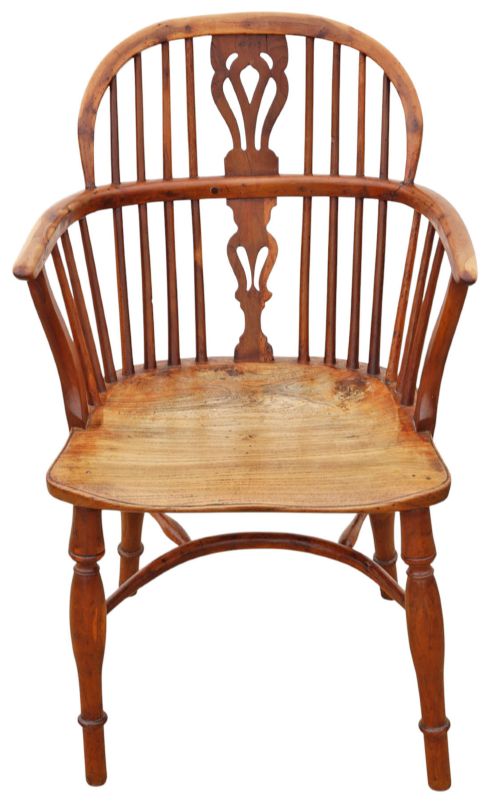
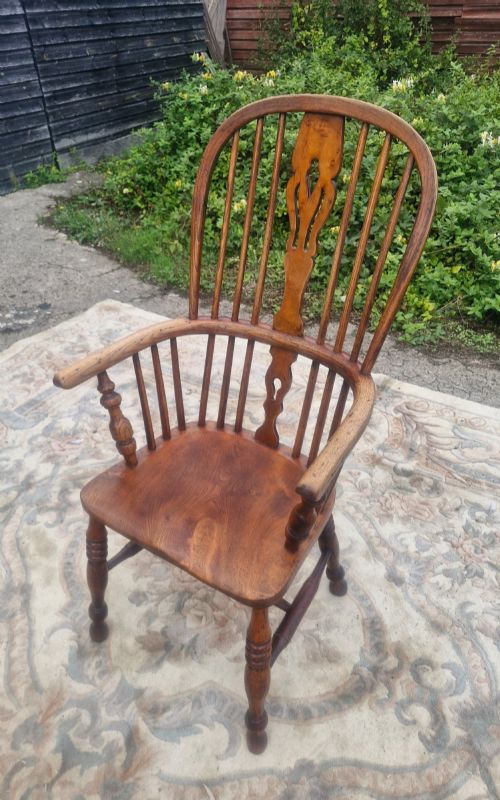
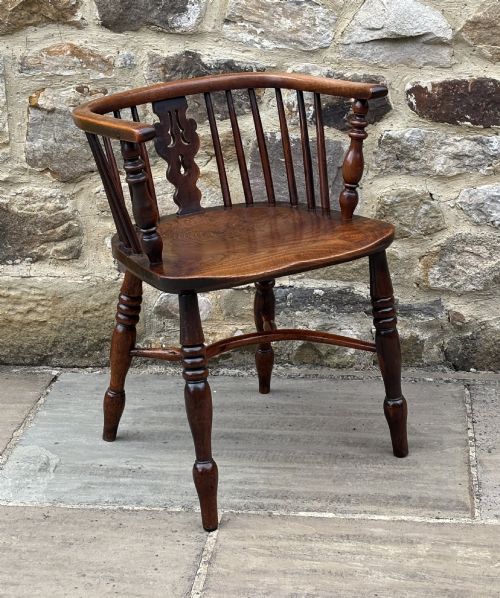
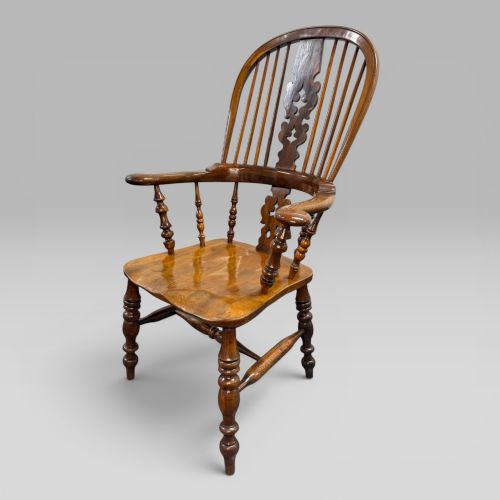
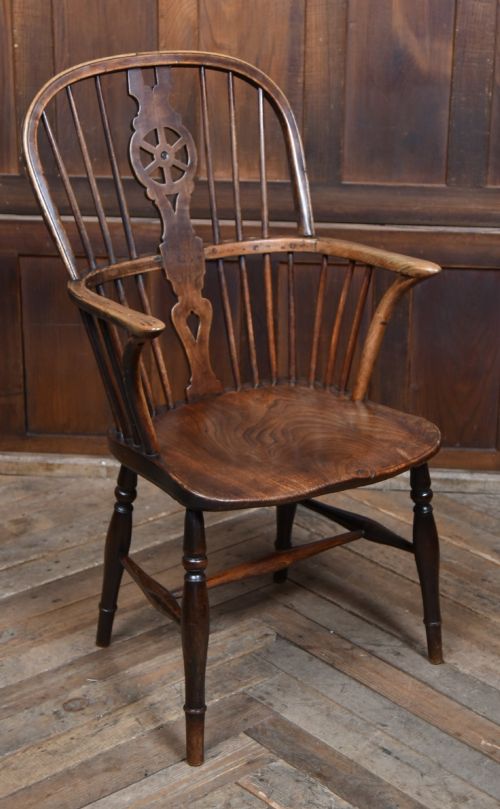
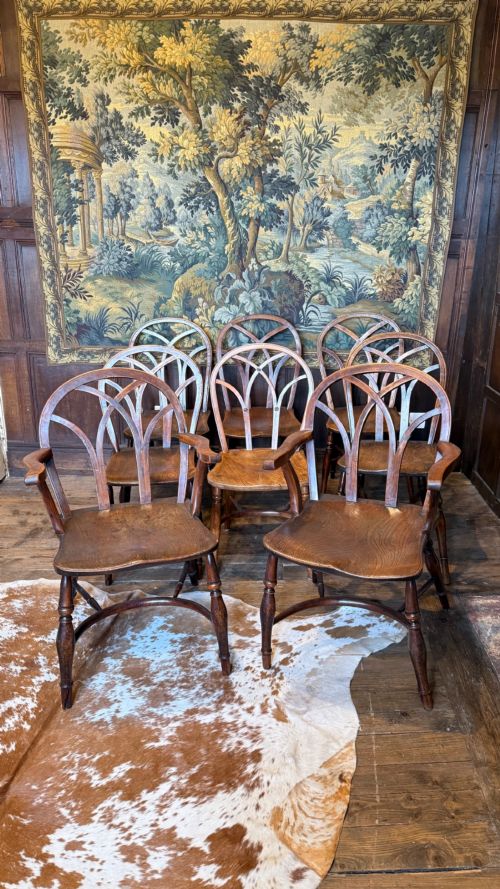
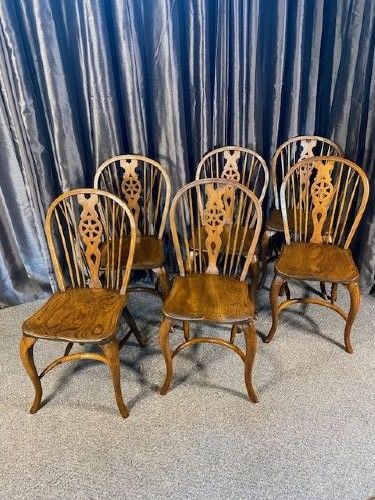
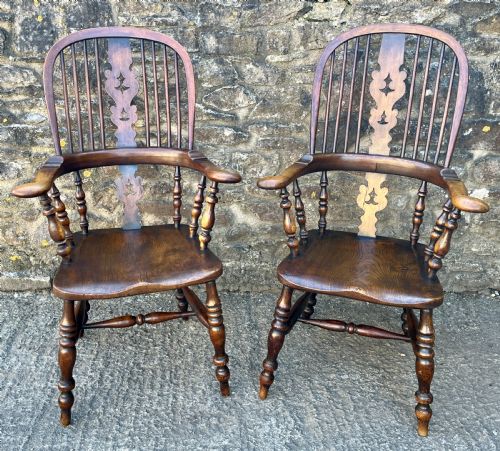
A victorian yew wood chair typically takes the form of a traditional Windsor armchair, featuring an elm seat paired with richly figured yew wood framing. These pieces originate from nineteenth-century English country workshops and provincial makers.
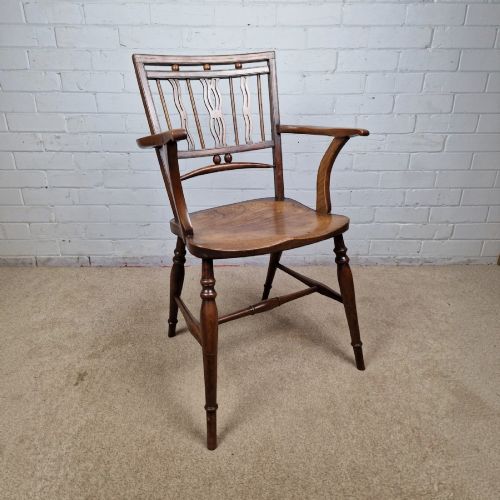
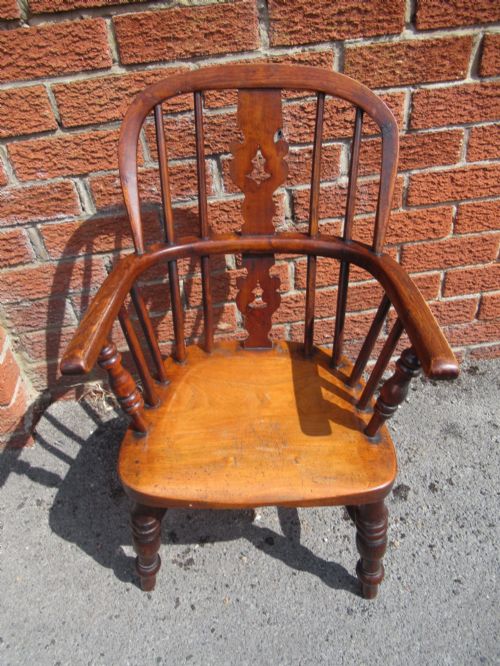
Buyers will encounter various regional iterations on this page, including high-back models, low-back captains chairs, and broad-arm designs. Child-sized versions and rocking variants also appear alongside standard dining formats.
How They Were Made
Chairmakers utilised a combination of turned green woods, shaping pliable ash or beech for the spindles and steam-bending yew for the bows. The seats were heavily sculpted from solid elm slabs to provide ergonomic comfort.
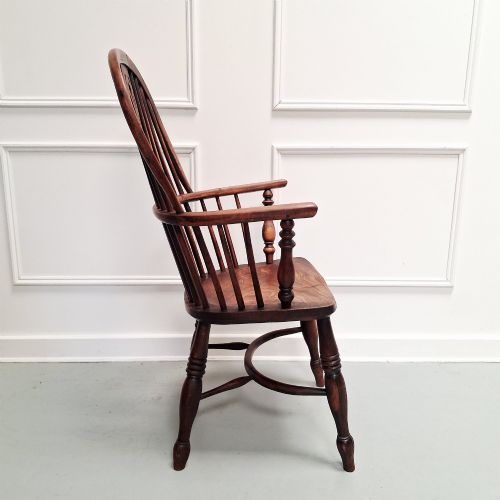
Constructed using traditional Windsor joinery, the legs and spindles were wedged directly into bored holes in the thick seat base rather than connected via a traditional frame.
Listings feature nineteenth-century provincial workshops utilising local British timbers including yew, elm, beech, ash, and fruitwood.
What Varies in Quality
The density of the timber grain and the intensity of the natural figure across the yew wood set the benchmark for visual appeal. Examples with deep, fiery amber tones and well-matched timber sections command greater attention.
Structural integrity depends on the original turning execution and the preservation of the delicate spindle joints beneath the seat. Retaining the original crinoline stretcher and avoiding excessive limb replacement distinguishes superior examples.
J SPENCER
The Victorian Yew Wood Chair Glossary
- Windsor chair
- A wooden chair constructed with a solid sculpted seat into which the legs and back spindles are directly inserted. This form evolved through English provincial workshops during the eighteenth and nineteenth centuries.
- Crinoline stretcher
- An arched or bowed underframe connecting the legs of a Windsor chair to provide structural rigidity. It often takes a hoop shape reminiscent of historical petticoat hoops.
- Broad arm
- A chair arm widened significantly on one side to serve as a writing surface or rest. These are frequently found on smoker or captain variants.
- Carver
- An armchair designed in the style of the matching smaller dining chairs around a table. These often feature sweeping elbows and robust back bows.
- Elbow chair
- A traditional regional term for an armchair with low supports for the arms. They appear frequently in nineteenth-century country settings.
Victorian Yew Wood Chair: Frequently Asked Questions
Are these chairs comfortable for daily use?
The sculpted elm seats are ergonomically hollowed out by hand to fit the body comfortably over long periods. Their sturdy braced construction makes them entirely practical for everyday seating around a dining table or desk.
Positioning them away from direct heat sources ensures the aged timber remains stable in modern homes. Regular gentle waxing maintains the protective surface sheen.
How do I identify a genuine nineteenth-century example?
Look for the subtle tool marks left by drawknives and adzes on the underside of the solid elm seat. Genuine nineteenth-century pieces display authentic wear patterns and rich patination developed through generations of use.
Inspect the wedged tenon joints visible through the top of the seat board. Hand-turned spindles naturally exhibit slight individual variations rather than machine-tooled uniformity.
What is the difference between a low back and high back Windsor?
Low-back chairs feature a continuous curved arm rail terminating below shoulder height, allowing easier movement for tasks like writing or smoking. High-back versions extend upward to support the entire head and shoulders.
Both styles utilise the same underlying greenwood bending techniques. High-back variants often incorporate central splats or wheel motifs within the spindle array.
How should I care for yew wood furniture?
Maintain the timber by applying a traditional beeswax polish sparingly with a soft cloth. Avoid placing the chair in direct sunlight or beside modern radiators to prevent the wood from drying out.
Allowing the wood to breathe naturally preserves the timeworn patina accumulated over the centuries. Gentle dusting with a dry cloth is sufficient for routine maintenance.