


19th Century Nursery Chair
A 19th century nursery chair provides seating for children through rocking, high chair, and armchair forms shaped by regional vernacular traditions.
19th Century Nursery Chair
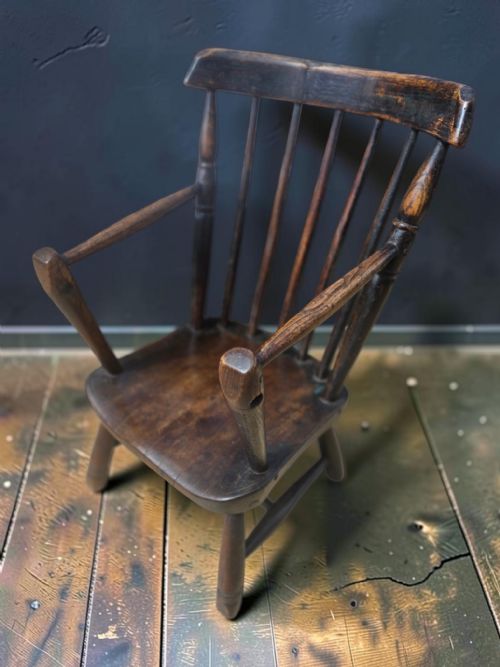
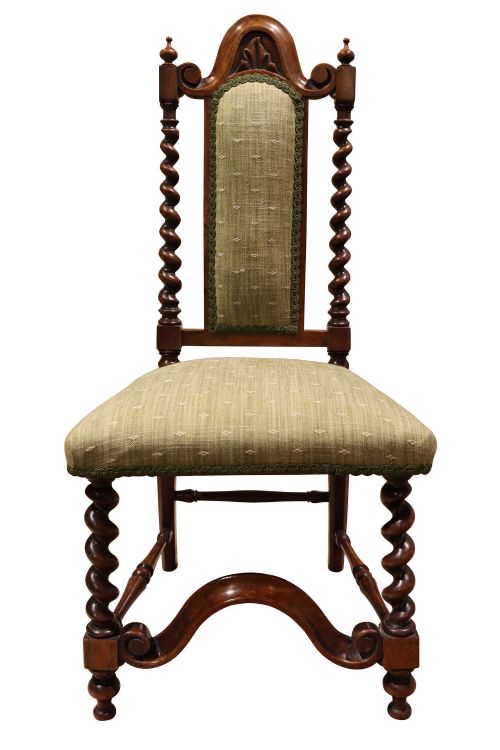
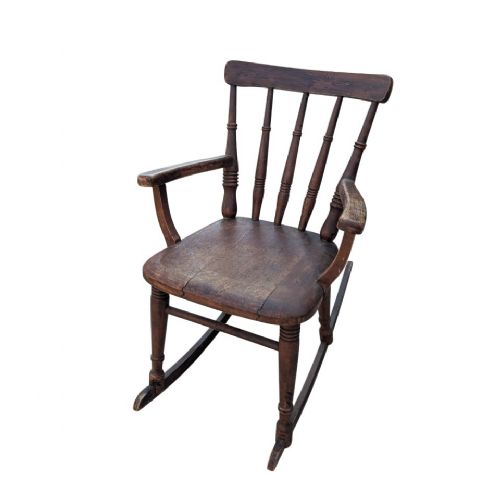
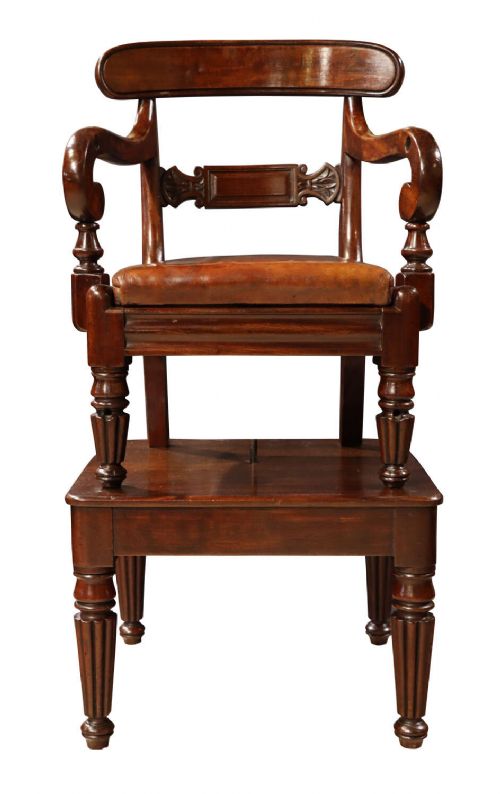
A 19th century nursery chair encompasses small-scale seating designed for children, appearing in forms such as rocking chairs, high chairs, armchairs, and side chairs. The selections span periods from the Georgian and Regency eras through the Victorian period, reflecting both formal cabinetmaker designs and rural regional vernacular traditions.
Materials and construction
Makers utilised solid timbers including elm, ash, yew wood, mahogany, walnut, and fruitwood to construct these small chairs, often employing traditional turning and Windsor construction methods. Spindle backs, bobbin turning, and barley twists appear alongside rustic pegged joints and steam-bent components.
Seating surfaces incorporate woven cane, rush, and leather upholstery, sometimes fixed with brass details. Painted finishes and ebonised treatments also occur, occasionally referencing specific regional or continental decorative styles.
Listings demonstrate a strong presence of Windsor construction in ash, elm, and yew wood across the 19th century.
Distinctions in quality
The degree of refinement in timber selection and turning separates standard utility pieces from more ambitious examples. Selected yew wood, figured mahogany, or walnut frames demonstrate greater skill in the workshop compared to simple ash and elm vernacular builds.
Originality of the structural elements and seating materials dictates the integrity of a piece. Intact early canework, original leather upholstery, and unaltered mechanical conversion systems in metamorphic chairs distinguish higher examples from heavily restored ones.
Liberty of London
The 19th Century Nursery Chair Glossary
- Windsor chair
- A wooden chair constructed with a solid saddle-shaped seat into which the legs and back spindles are socketed directly. These chairs frequently utilise ash, elm, and yew wood in regional vernacular designs.
- Bergere
- An enclosed armchair with a cane seat and back panel enclosed within a wooden frame. These appear in mahogany and other timbers during the Georgian and Victorian periods.
- Metamorphic high chair
- A convertible piece of furniture designed to alter its configuration between a high chair for feeding and a low chair for play. Examples exist in mahogany and beech from the Regency and Victorian periods.
- Bobbin turned
- A form of woodturning characterised by a series of rounded, spool-like shapes carved along the length of a chair leg or stretcher. This decorative technique appears on ebonised and hardwood frames.
- Rush seat
- A seating surface woven from dried marsh rushes tightly bound around the chair frame rails. This traditional method provides a durable and textured platform.
19th Century Nursery Chair: Frequently Asked Questions
What is a 19th century nursery chair?
A 19th century nursery chair is a small-scale seat created for children, encompassing rocking chairs, high chairs, armchairs, and standard side chairs.
These pieces were produced in various styles ranging from English country vernacular and Windsor forms to formal mahogany and walnut Victorian designs.
How were metamorphic high chairs used?
Metamorphic high chairs served a dual purpose in the home by converting from an elevated feeding chair into a lower floor chair or desk unit.
Mechanisms allowed the upper section to detach or pivot down, adapting the furniture as the child grew older.
What timbers are common on these chairs?
Makers relied on locally available hardwoods like elm, ash, and yew wood for vernacular Windsor and country chairs.
More formal urban pieces utilised imported or costly cabinet timbers such as mahogany, walnut, and rosewood.
How do I distinguish regional styles?
Regional styles reveal themselves through the choice of timber and the simplicity or elaboration of the turning.
Country pieces often combine ash and elm with naive spindle work, whereas Regency and Victorian urban examples feature turned mahogany or walnut frames.