
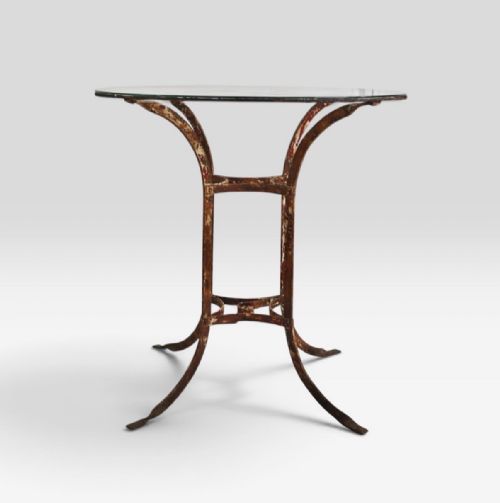
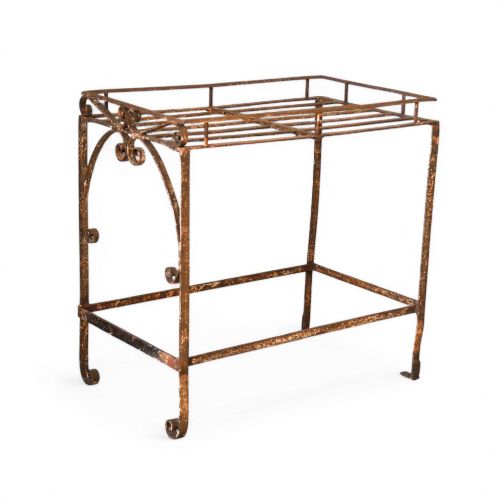


Victorian Wrought Iron Table
These Victorian wrought iron table pieces bring sturdy metalwork and garden utility straight to your home and terrace.
Victorian Wrought Iron Table
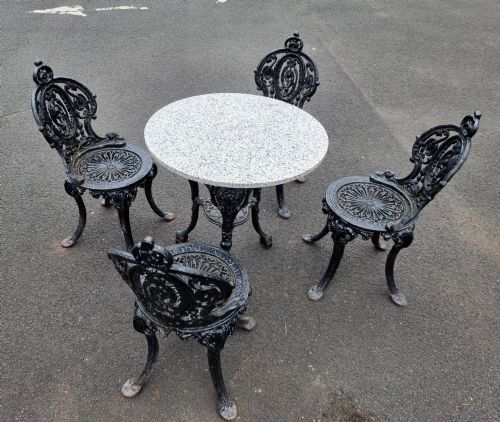
A victorian wrought iron table search brings up robust outdoor and conservatory furnishings made during the nineteenth and early twentieth centuries. These pieces encompass garden dining sets, plant stands, bistro tables, and side tables designed for both utility and decorative display.
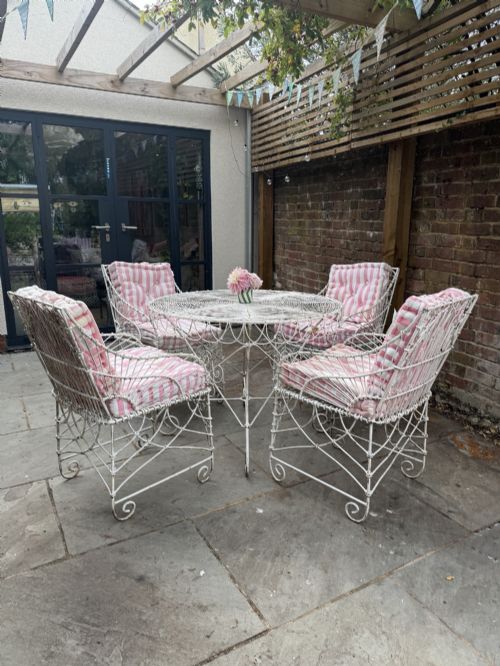
You are most likely to encounter nineteenth-century garden tables and occasional stands featuring scrolled iron supports paired with stone or metal tops. The selection also includes French provincial examples, wirework conservatory pieces, and heavy foundry tables originating from estate and industrial contexts.
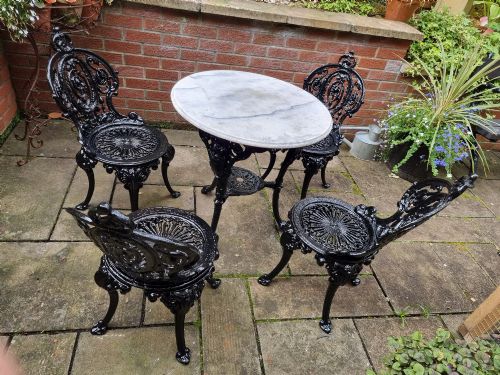
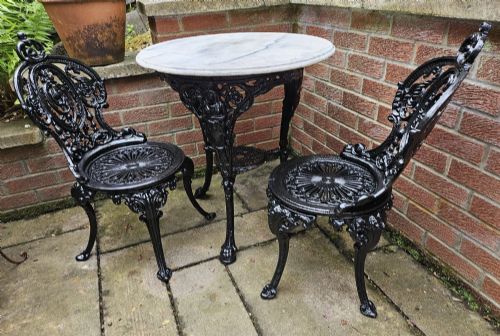
Beyond standard garden tables, related items such as wash stands, console tables, and bistro sets appear frequently across the listings. Their forms range from simple utilitarian scrollwork to ornate architectural ironmongery built to withstand outdoor elements.
How they were made
Makers utilised a combination of forged wrought iron, cast iron components, and supportive metal frames to build durable structural bases. These metal foundations were frequently paired with heavy marble tops, wooden surfaces, or wirework mesh depending on the intended function.
Hot forging and casting techniques allowed artisans to shape intricate scrolls, structural legs, and decorative brackets by hand or in foundry settings. Protective layers of paint were often applied to shield the ironwork from corrosion in damp garden environments.
Listings feature periods spanning from the 1850s through to the 1930s, incorporating Victorian, Edwardian, and Art Nouveau stylistic influences.
What varies in quality
The distinction between ordinary and superior pieces rests on the complexity of the ironwork and the integrity of the materials used for the top. Heavier gauge metal, finely hand-forged scrolls, and intact marble or timber surfaces elevate certain examples above standard utilitarian items.
The pedigree of manufacture also plays a significant role, with estate-made or foundry-cast items showing superior structural weight and refined decorative detailing. Original painted surfaces and balanced proportions further distinguish the finer pieces in the range.
The Victorian Wrought Iron Table Glossary
- Wrought iron
- A tough, malleable form of iron that can be heated and hammered into decorative scrolls and structural supports. It differs from cast iron by containing less carbon and featuring a fibrous grain.
- Cast iron
- Molten iron poured into a mould to create rigid structural parts and decorative bases. It provides heavy weight and detailed ornamentation for garden tables.
- Wirework
- Metal strands woven into open mesh patterns, commonly used for lightweight conservatory plant stands and garden furniture during the Victorian period. It offers a delicate appearance while maintaining structural rigidity.
- Bistro set
- A small table paired with matching chairs designed for compact outdoor dining spaces. These sets frequently combine metal bases with marble or slatted tops.
- Foundry table
- A heavy utilitarian table produced in an ironworks, often utilising robust industrial materials like pine and cast iron. These pieces were built for practical workspaces rather than polite drawing rooms.
Victorian Wrought Iron Table: Frequently Asked Questions
Are these tables suitable for outdoor use?
Most of these pieces were originally constructed for gardens, conservatories, or estate grounds, utilising durable iron and stone materials designed to withstand the elements.
Protecting the metalwork with appropriate coatings helps preserve the iron against moisture during wetter months.
How do I identify a Victorian piece?
Nineteenth-century examples typically display characteristic casting methods, hand-forged scrollwork, and traditional material combinations like heavy iron paired with marble or oak.
Examining the construction joints and surface wear provides reliable clues regarding the age and production period.
What is the difference between cast and wrought iron?
Cast iron is formed by pouring molten metal into a mould, resulting in rigid and heavy decorative components. Wrought iron is heated and hammered by hand into shape, offering greater tensile strength and fibrous texture.
Many garden tables combine both techniques to achieve structural stability alongside ornate detailing.
How do I clean a marble topped table?
Marble surfaces require gentle cleaning with mild soap and water to avoid damaging the polished stone. Harsh chemical cleaners can etch the surface and dull the historical finish.
Regular wiping maintains the appearance of the stone without compromising the integrity of the iron base.