

Victorian Writing Table Drawers
Victorian writing table drawers bring period character and practical storage to a room, offering sturdy timber surfaces paired with functional compartments.
Victorian Writing Table Drawers
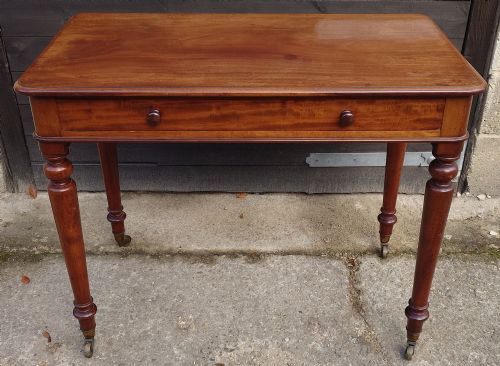
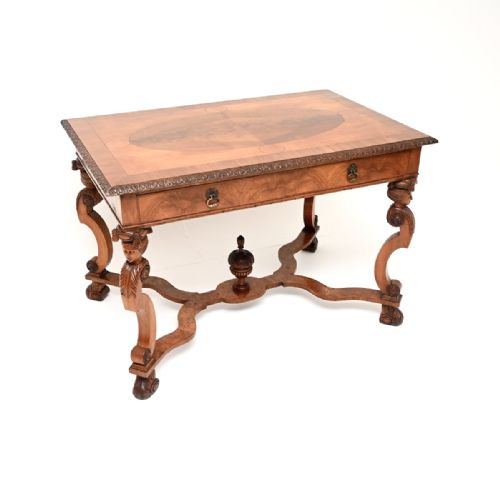
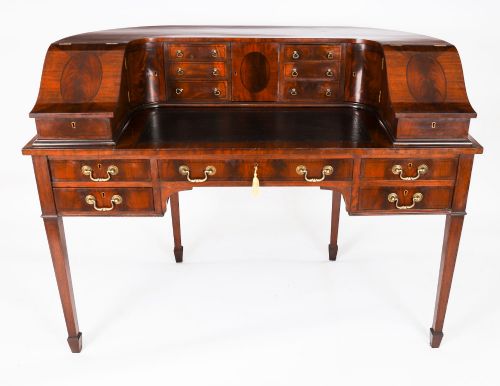
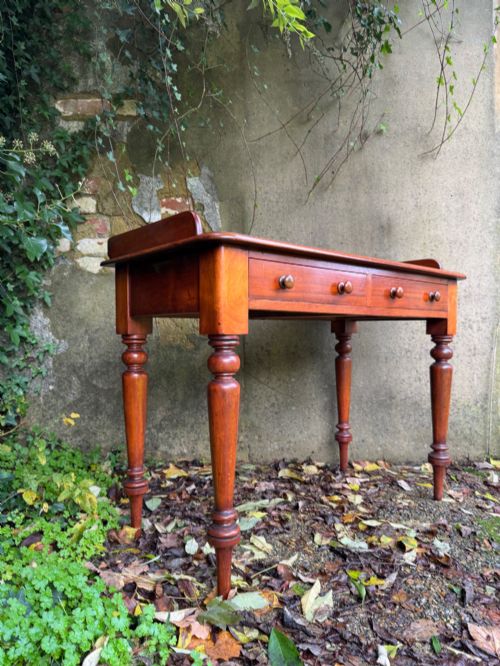
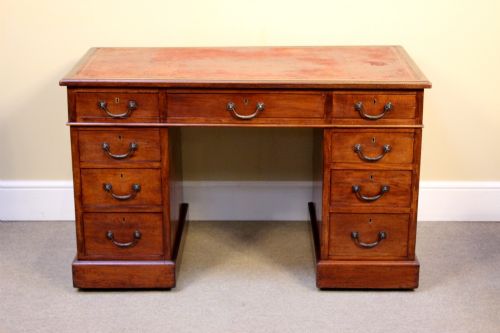
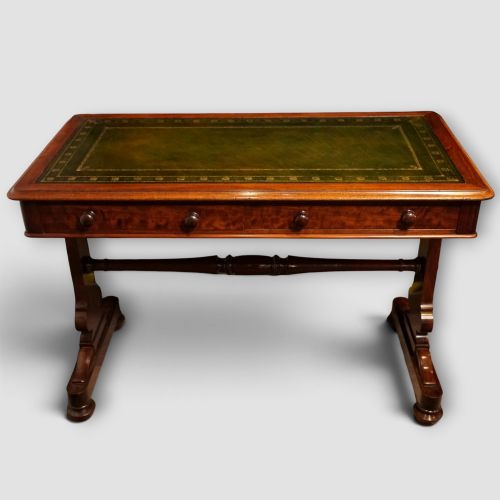
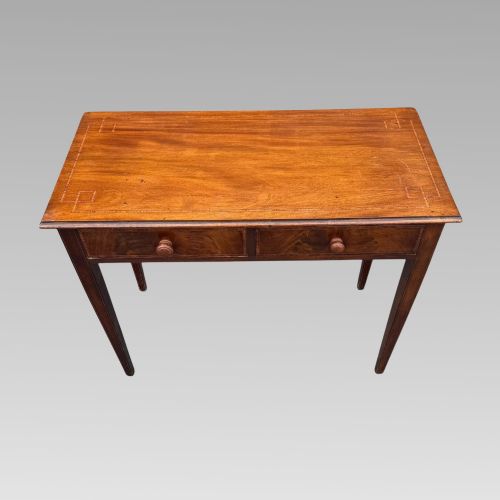
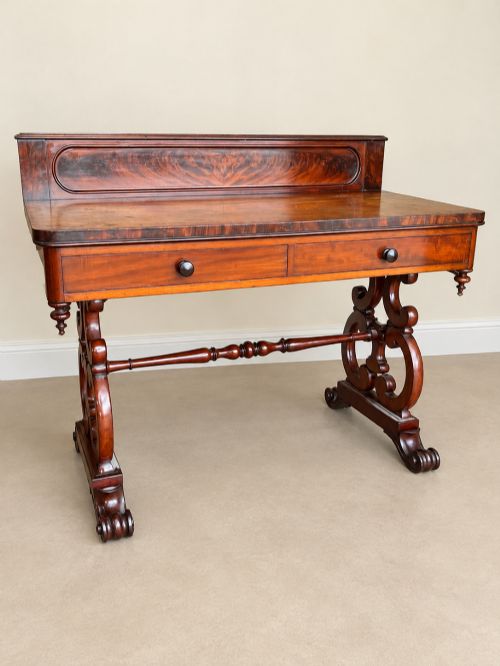
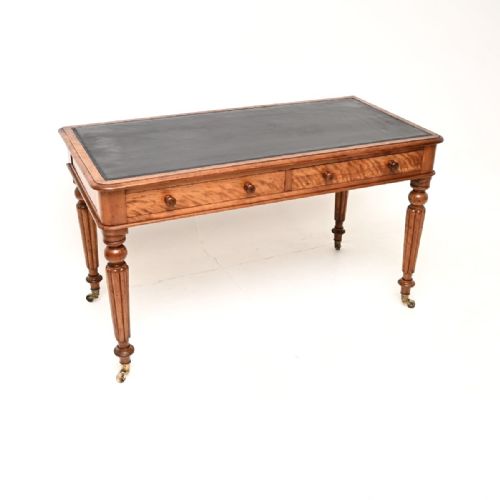
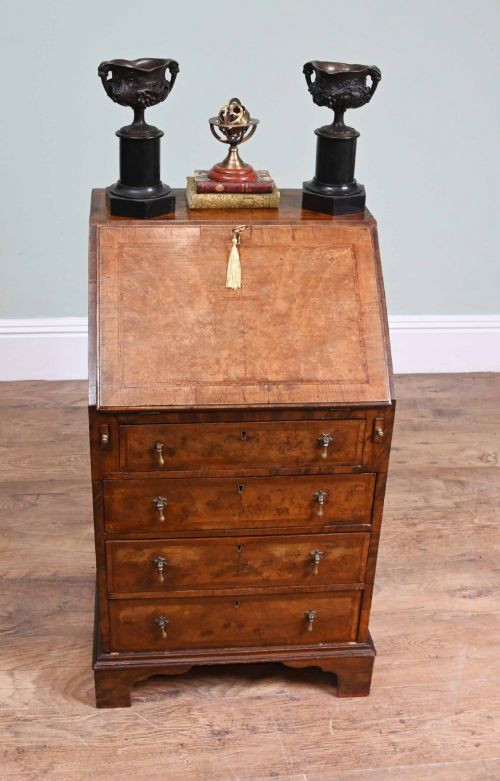
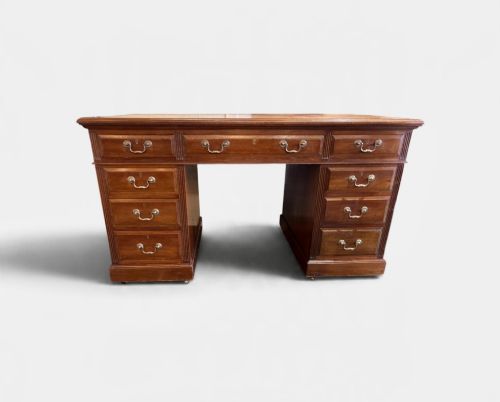
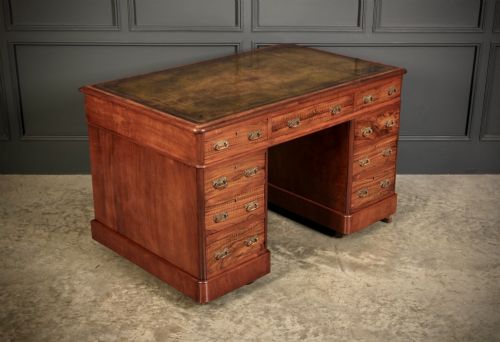
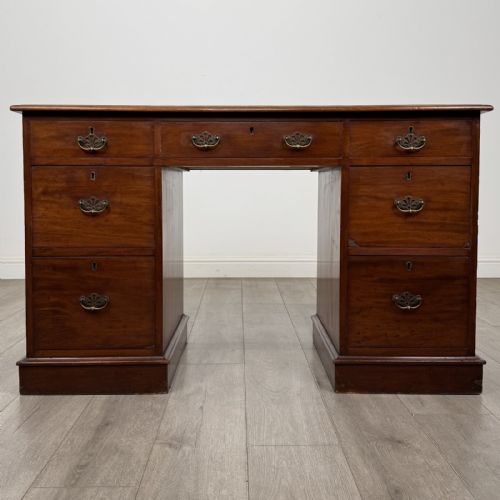
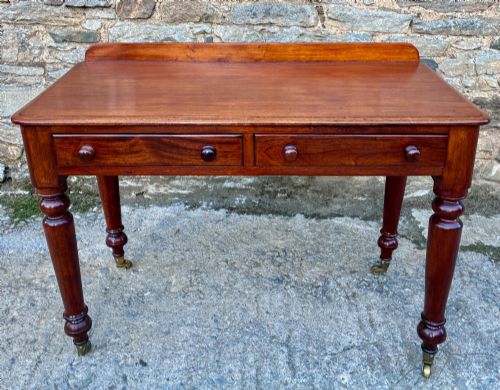
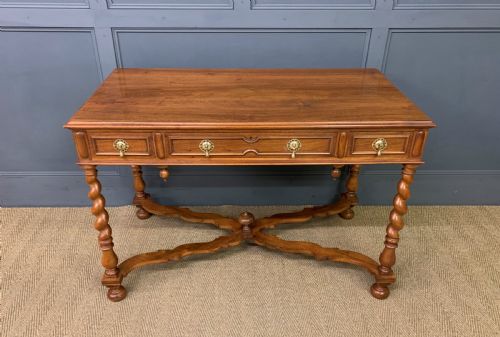
Victorian writing table drawers encompass a diverse array of forms, including pedestal desks, side tables, and freestanding writing tables equipped with functional storage compartments. These pieces emerge predominantly from the nineteenth century, spanning decades from the eighteen fifties to nineteen hundred.
Mahogany remains the primary timber encountered on this page, accompanied by walnut, satinwood, oak, pine, and rosewood. Makers incorporated brass hardware and leather inserts to finish the writing surfaces of these functional household furnishings.
Materials and construction methods
Cabinet makers utilised solid hardwoods like mahogany and walnut for the primary structure, occasionally applying satinwood veneers for decorative contrast. Secondary timbers such as pine appear within drawer linings and internal framing.
Hardware details involve brass handles, swan neck pulls, and fitted leather writing surfaces inset into the timber tops. Joinery methods of the period relied on traditional hand-cut joints to ensure durability across pedestal desks and side tables.
Victorian Writing Table Drawers Retail Price Guide 2026
Typical asking prices for victorian writing table drawers among the pieces listed under this phrase on Sellingantiques today, from the lower quarter to the upper quarter. They describe what is for sale here now, not the wider market.
Assessing quality in period desks
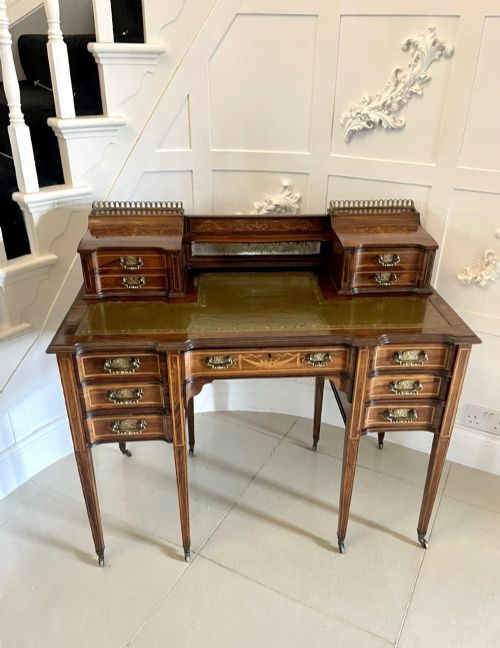
Quality separates through the selection of timber figures, such as burr walnut or finely grained mahogany, and the crispness of inlaid satinwood details. Superior examples display thoughtful proportions and careful attention to secondary woods.
The integration of fitted stationery drawers, sliding writing surfaces, and original brass hardware distinguishes finer pieces from simpler utility tables. Construction integrity in the drawer framing and frieze assembly indicates the level of craftsmanship invested.
Maple and Co·W. Walker and Sons·Heal and Son
The Victorian Writing Table Drawers Glossary
- Pedestal desk
- A freestanding desk comprising two supporting pedestals of drawers with a central kneehole space. This form provides substantial storage beneath the main writing surface.
- Frieze
- The horizontal band situated directly beneath the tabletop, frequently housing one or more integrated drawers. In many Victorian tables, this forms the primary storage zone.
- Davenport desk
- A compact writing desk featuring a sloping top and side-opening drawers accessed from a pedestal base. These pieces often incorporate internal stationery compartments.
- Partners desk
- A large double-sided desk designed for two individuals to work opposite each other, featuring banks of drawers on both sides. These substantial pieces served libraries and large studies.
Victorian Writing Table Drawers: Frequently Asked Questions
What defines a Victorian writing table?
A Victorian writing table is a nineteenth-century desk designed for correspondence and paperwork, typically featuring one or more drawers integrated into the frieze.
These pieces reflect the styles of the Victorian era, ranging from simple pine or oak utility tables to elaborate mahogany and burr walnut pedestal desks.
How do I use a desk with drawers daily?
These tables adapt well to modern home offices, providing surface space for writing or laptops alongside enclosed storage for stationery and documents.
Care involves protecting leather writing inserts and avoiding excess moisture on antique timber surfaces.
Are these tables freestanding?
Many Victorian writing tables and pedestal desks are finished on all sides, allowing them to sit centrally within a room rather than strictly against a wall.
Freestanding console and library tables offer versatile placement options within domestic interiors.
What woods appear most frequently?
Mahogany dominates the selection of woods, appearing alongside walnut, satinwood, oak, and pine.
Cabinet makers also incorporated decorative veneers, brass mounts, and inset leather to enhance the appearance of the writing surfaces.