

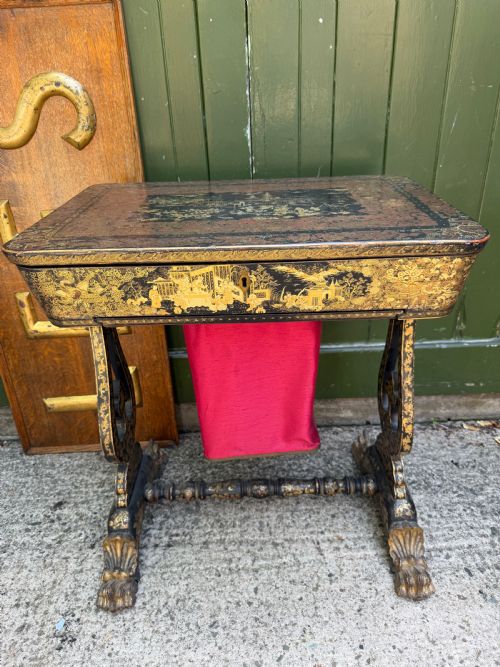


Victorian End Support Table
These Victorian end support table examples offer robust craftsmanship and rich timber character, making them practical centrepieces for traditional rooms.
Victorian End Support Table
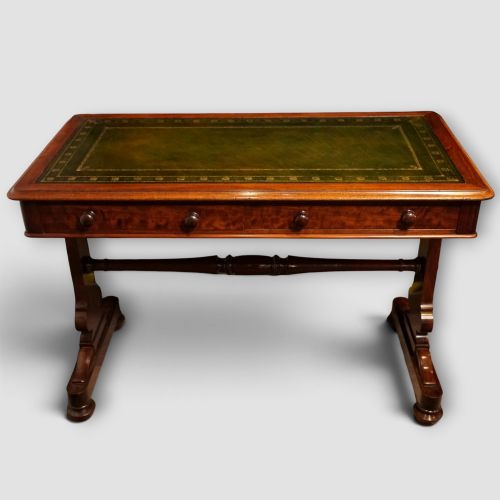
A Victorian end support table relies on solid upright columns or trestle ends rather than a single central pedestal or four corner legs to bear weight. These pieces function primarily as centre tables, writing desks, and library tables within nineteenth-century interiors.
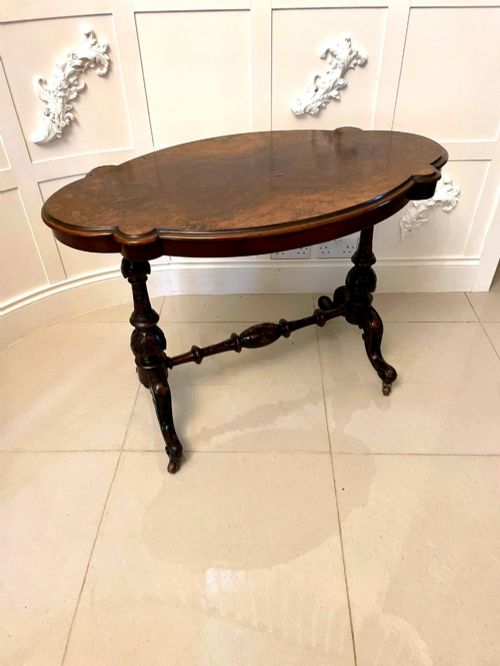
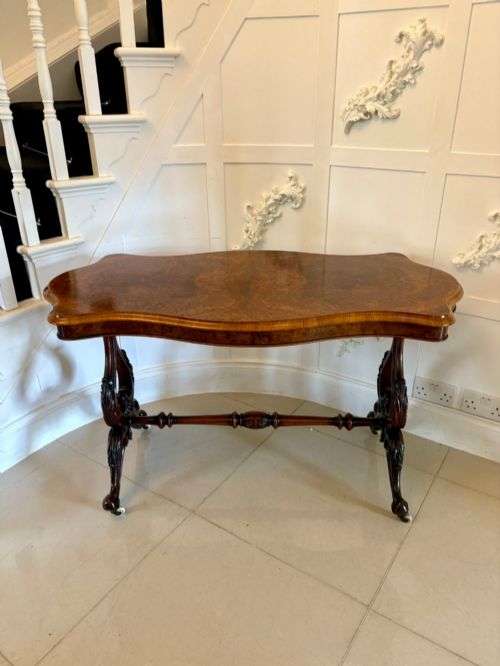
The version most commonly encountered on this page originates from the Victorian period, frequently constructed in rich burr walnut or mahogany. Makers also produced variations incorporating rosewood and satinwood, fulfilling diverse domestic requirements from sewing to study.
Forms range from simple stretcher tables to elaborately shaped centre tables featuring end drawers and turned supports. Buyers frequently select these designs for their stability and distinctive architectural silhouettes.
How they were made
Cabinet makers utilised dense hardwoods such as mahogany, rosewood, and walnut, often applying highly figured burr veneers to the primary surfaces. These timbers were selected for their rich grain patterns and durability under daily domestic use.
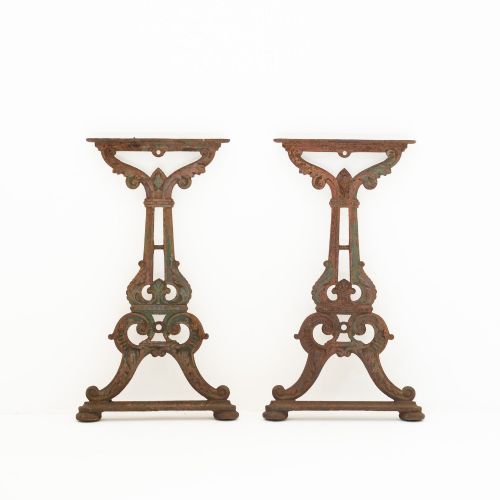
Construction involved traditional joinery techniques paired with structural elements like cast iron or brass fittings where additional rigidity was required. Surface ornamentation occasionally included gilded decoration or inset leather writing panels.
Turned supports and carved end assemblies required skilled carpentry to ensure the upright columns bore the weight of the heavy timber tops effectively. Drawers were integrated using precise dovetail joints and fitted with small wooden or turned pulls.
Victorian End Support Table Retail Price Guide 2026
Typical asking prices for victorian end support table among the pieces listed under this phrase on Sellingantiques today, from the lower quarter to the upper quarter. They describe what is for sale here now, not the wider market.
Listings feature pieces spanning the nineteenth century, utilising materials such as burr walnut, mahogany, brass, and cast iron.
What varies in quality
The refinement of the timber selection dictates the visual appeal of each piece, with choice burr walnut and figured mahogany commanding higher regard. Finely matched veneers and carefully executed turning on the end supports distinguish superior examples.
Construction integrity governs the longevity of these tables, visible in the rigidity of the stretcher joints and the smooth operation of integrated end drawers. Pieces retaining original brass fittings or leather inserts demonstrate greater authenticity.
The Victorian End Support Table Glossary
- Burr walnut
- A prized timber harvested from walnut tree growths, displaying intricate swirling grain patterns. Cabinet makers prized this wood for creating highly decorative table tops.
- End support
- A structural design where the main weight rests on two solid vertical columns or trestles at either end rather than four legs. This arrangement allows generous legroom beneath the surface.
- Stretcher table
- A table featuring a horizontal timber rail connecting the lower legs or end supports for added stability. This traditional construction method strengthens the entire framework.
- Centre table
- A freestanding piece designed to be viewed from all sides rather than pushed against a wall. These items typically occupied the middle of Victorian reception rooms.
Victorian End Support Table: Frequently Asked Questions
Where did these tables stand?
These tables typically occupied the middle of Victorian reception rooms or libraries, functioning as freestanding pieces rather than resting against walls.
Their finished backs and symmetrical end supports allowed them to be viewed from any angle within a grand interior.
How do I identify the wood?
Close inspection of the grain reveals the distinct characteristics of mahogany, walnut, or rosewood beneath the polished surface. Burr veneers exhibit swirling, knotty patterns that differ markedly from straight-grained timbers.
Lighting helps distinguish the deep reddish-brown tones of mahogany from the darker, richer figuring of walnut.
What were end drawers used for?
End drawers provided discreet storage for small writing implements, sewing accessories, or personal correspondence close at hand. Their placement at the terminal ends of the table kept the central workspace clear.
These compartments demonstrate the functional versatility demanded of nineteenth-century furniture.
How do I care for the surface?
Maintaining these timber surfaces involves regular dusting with a soft, dry cloth and avoiding placement near direct heat sources. Excessive sunlight can fade rich mahogany and walnut tones over extended periods.
Applying occasional appropriate wax preserves the polished finish without harming the historic timber beneath.