


Victorian Worcester Ornament
These Victorian worcester ornament pieces combine detailed porcelain moulding with classical or orientalist themes, offering collectors an intricate example of nineteenth-century ceramic artistry.
Victorian Worcester Ornament
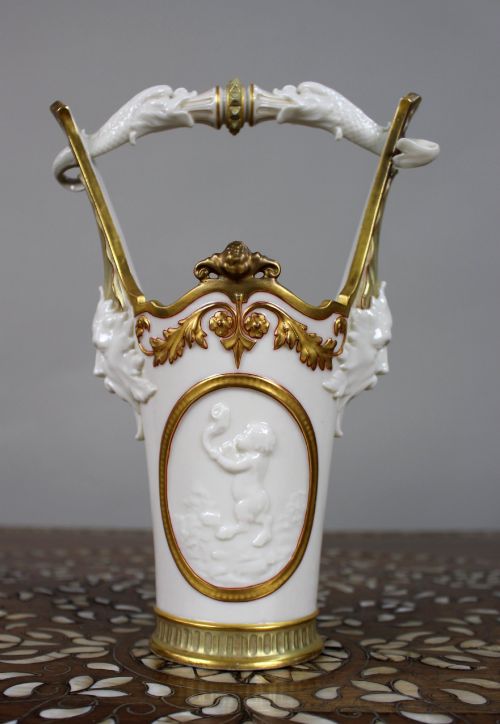
A victorian worcester ornament encompasses a variety of ceramic forms, most commonly featuring intricately modelled figurines, vases, and jardinieres. These pieces originate primarily from the nineteenth century, showcasing the diverse output of British kilns during the Victorian era.
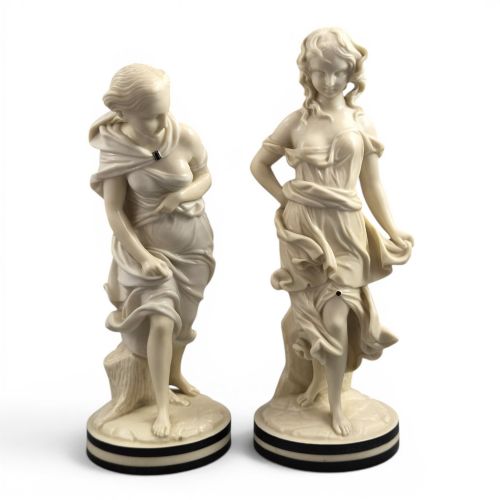
Collectors frequently encounter figures depicting classical maidens, musicians, and orientalist subjects alongside functional decorative items like candle snuffers. The selection on this page reflects the breadth of sculptural porcelain produced by Worcester factories during this period.
Materials and production techniques
Specialised techniques such as pate-sur-pate build up layers of slip to create low-relief ornamentation against a contrasting ground. Patent metallic finishes and tinted blush grounds further distinguish the decorated surfaces recorded in the evidence.
Listings feature porcelain and parian ware shaped into figures, vases, and jardinieres across Victorian stylistic revivals.
Judging the quality of the ornament
Quality rests heavily on the crispness of the modelling and the precision of the hand-painted decoration across the porcelain body. Finer examples retain delicate facial expressions and sharp detail in hair and drapery without blurring in the glaze.
The sophistication of the palette and the restraint or richness of the gilding separate standard production from more ambitious exhibition pieces. Attribution to known modellers adds another layer of distinction to individual figurines and vases.
Royal Worcester·Grainger's Worcester·James Hadley·Kate Locke·A.B. Daniell & Son·Kerr & Binns
The Victorian Worcester Ornament Glossary
- Parian Ware
- A fine-grained, unglazed porcelain resembling white marble that became popular during the nineteenth century. It allowed manufacturers to produce highly detailed sculptural figures without the need for extensive enamelling.
- Pate-sur-pate
- A ceramic technique where successive layers of liquid clay slip are applied to a body to build up a cameo-like relief design. This demanding method requires great skill from the artist.
- Blush Ground
- A soft, creamy ivory glaze developed by Worcester that provided a subtle background for floral and figurative decoration. It gained widespread favour during the late Victorian period.
- Jardiniere
- A large ornamental pot or stand designed to hold plants or flowers within a domestic interior. These ceramic vessels often mirror the sculptural themes found in contemporary figurines.
Victorian Worcester Ornament: Frequently Asked Questions
What periods do these ornaments cover?
The listings span the nineteenth and early twentieth centuries, capturing the height of Victorian ceramic production alongside later twentieth-century output.
Most items date from the mid to late Victorian decades, reflecting the specific stylistic revivals and technical experiments of those years.
How do I identify a Hadley figure?
James Hadley pieces often depict expressive human subjects, ranging from classical maidens to orientalist water carriers and musicians. His modelling stands out for its anatomical detail and character.
Look closely at the sculptural stance and facial definition, as Hadley's work departs from standard decorative symmetry to capture dynamic movement.
What is blush Worcester?
Blush Worcester refers to pieces finished with a distinctive ivory-tinted ground that serves as a canvas for hand-painted ornamentation and gilding. This technique created a warm, matte surface aesthetic.
Items utilising this finish often date towards the end of the nineteenth century and pair delicate floral motifs with figural elements.
How were these decorative pieces used?
Victorian households displayed these ornaments on mantelpieces, side tables, and within dedicated cabinets to demonstrate taste and refinement. Jardinieres held living plants, while vases and figures served purely aesthetic purposes.
Smaller items like candle snuffers combined everyday utility with whimsical sculptural designs intended for domestic display.