


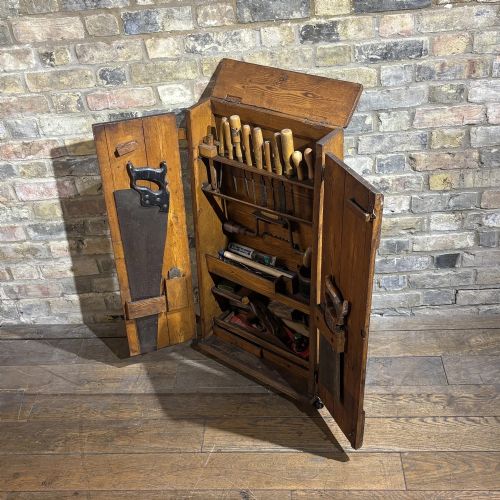


Victorian Wooden Tool Chest
A victorian wooden tool chest is a sturdy utilitarian box built to hold heavy iron tools, prized today for its honest craft and robust storage.
Victorian Wooden Tool Chest
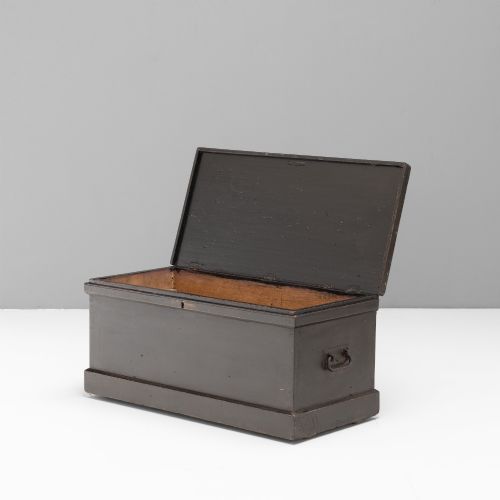
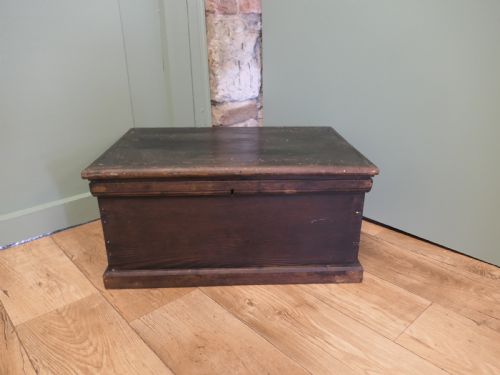
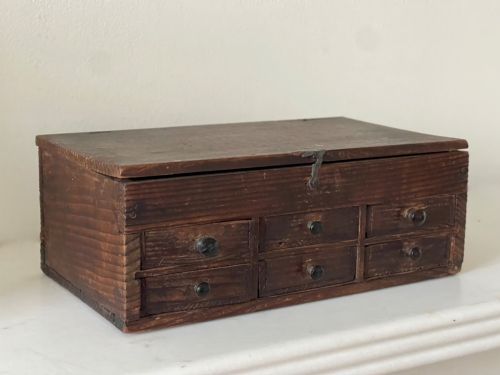
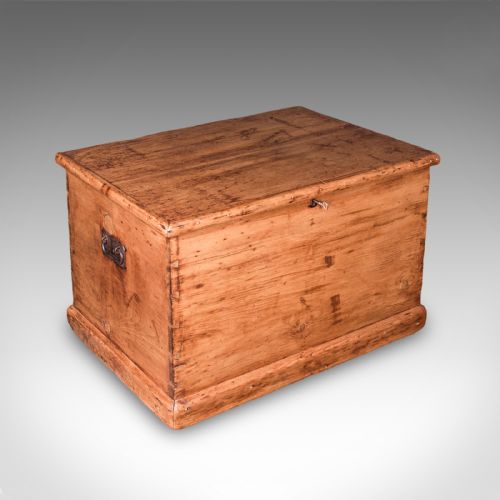
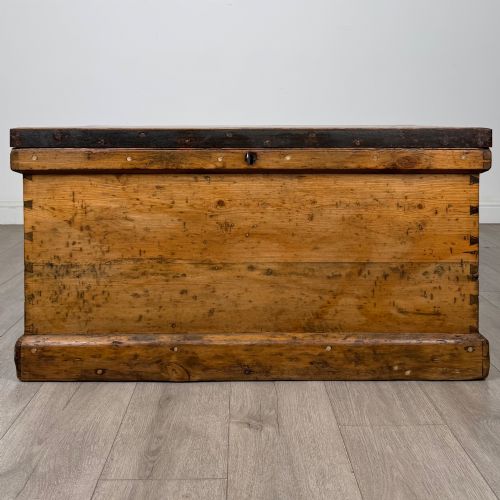
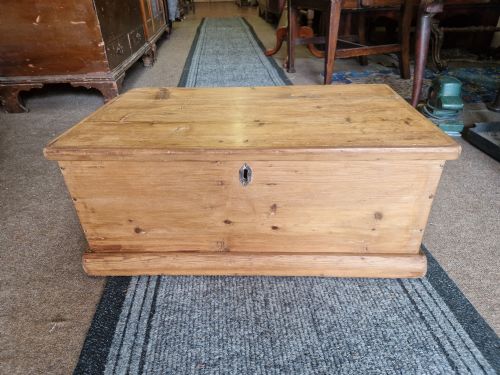
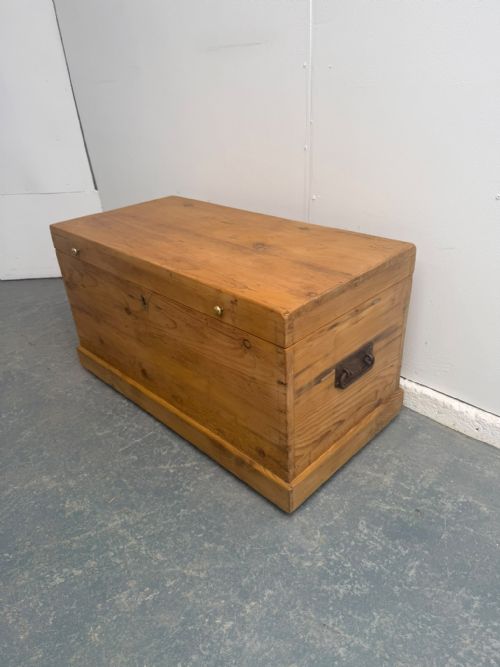
A victorian wooden tool chest represents the heavy-duty workshop storage of the nineteenth century, built by carpenters, shipwrights, and cabinet makers to transport and protect their trade implements. Most pieces on this page are constructed from pine, pitch pine, or elm, often taking the form of robust trunks and boxes with internal tills or fitted compartments.
The styles range from plain rustic farmhouse and Welsh vernacular examples to specialised maritime and fraternal pieces associated with masonic lodges. Buyers typically encounter straightforward pine boxes alongside more elaborate portable cabinets featuring original locks and side lifting handles.
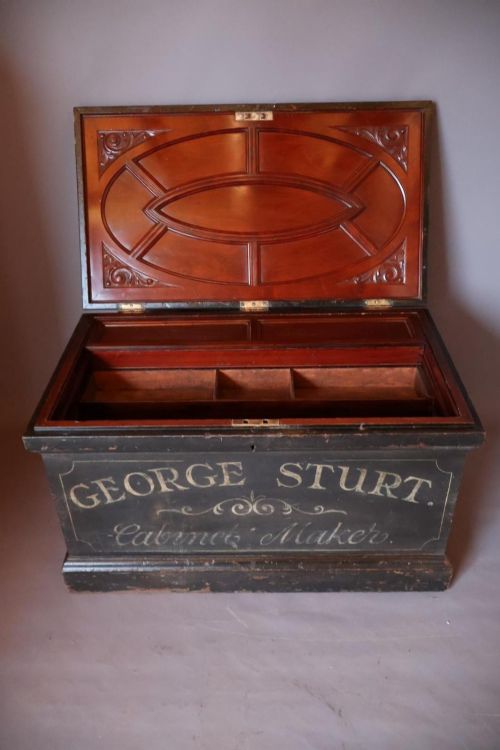
These chests served working tradesmen who needed secure transport for chisels, planes, and saws. Surviving examples reflect the practical demands of nineteenth-century artisans, whether fashioned from simple deal or finished in scumble paint and ebonised mahogany.
How they were made
Makers constructed these chests primarily from sturdy softwoods and hardwoods like pine, pitch pine, elm, and mahogany, selecting timber for strength and durability under workshop conditions. Boards were joined to withstand heavy loads of iron tools, while lids often featured robust construction to protect contents from damp conditions.
Hardware played a vital role in construction, incorporating brass and iron for corner reinforcements, hinges, and locking mechanisms. Side lifting handles made from iron or sturdy rope allowed tradesmen to transport these heavy trunks between jobs.
Victorian Wooden Tool Chest Retail Price Guide 2026
Typical asking prices for victorian wooden tool chest among the pieces listed under this phrase on Sellingantiques today, from the lower quarter to the upper quarter. They describe what is for sale here now, not the wider market.
Many a carpenter left secret hidden compartments beneath the internal tills for stashing private notes or tobacco tins.
What varies in quality
Quality in a victorian wooden tool chest depends heavily on the sophistication of the interior fittings, such as multi-tiered sliding tills, small drawers, and specialised compartments designed for specific hand tools. Simpler blanket boxes lack these internal complexities, whereas a master cabinet maker's chest reveals meticulous internal organisation.
The choice of exterior timber and surface treatment also distinguishes the pieces, ranging from basic painted deal to fine polished mahogany, teak, or pitch pine with bound brass details. Original working locks, keys, and untouched surfaces elevate a piece above later adaptations.
The Victorian Wooden Tool Chest Glossary
- Till
- A small internal sliding tray or compartment built inside a chest to hold smaller tools, nails, or personal items. It sits near the top for quick access during work.
- Scumble paint
- A decorative surface finish applied to imitate the grain of more expensive timber or simply to protect the pine beneath. Craftsmen manipulated the translucent glaze using combs or rags.
- Dovetail
- A corner joint formed by interlocking wedge-shaped fingers, prized for its exceptional tensile strength. It prevents the corners from pulling apart under heavy loads of iron tools.
- Ebonised
- Wood treated with a chemical stain or dark finish to simulate costly ebony. This treatment appears on specific maritime and workshop trunks.
- Pitch pine
- A dense, resinous softwood commonly used in nineteenth-century utilitarian furniture for its superior durability and resistance to wear. It often displays a pronounced grain pattern.
Victorian Wooden Tool Chest: Frequently Asked Questions
What were victorian tool chests used for?
Carpenters, joiners, and shipwrights used these robust wooden boxes to store, organise, and transport their livelihood of hand tools. The heavy construction protected delicate chisels, planes, and measuring instruments from workshop dust and damp job sites.
Today, buyers repurpose these practical trunks as coffee tables, blanket boxes, or statement storage furniture in living spaces and hallways.
How do I care for a wooden tool chest?
Keep the timber clean using a dry cloth and occasionally feed dry surfaces with a traditional beeswax polish to preserve the finish. Avoid placing antique pine or mahogany near direct heat sources or damp environments to prevent warping.
Ensure metal handles and hinges remain free of moisture, and treat original painted surfaces gently without harsh chemical cleaners.
How can I tell a shipwright's chest from a carpenter's chest?
Shipwrights and maritime workers often utilised denser hardwoods like mahogany or teak, sometimes with ebonised finishes and brass bindings to withstand marine conditions. Carpenter's and joiner's chests more commonly featured solid pine or elm with complex internal fitted compartments for woodworking tools.
Both types share robust side lifting handles and secure locking mechanisms built for heavy transport.
Are these chests suitable for modern coffee tables?
Their low profile, flat tops, and sturdy construction make these chests popular choices for positioning in front of sofas as makeshift tables. Many examples offer ample internal space for hiding away blankets, books, and household clutter.
Buyers should check the height and surface condition to ensure the timber can handle everyday domestic use.